RSS
 

Search results for ‘name’

Robin Hood King of Sherwood a review by Thomas McNulty

26 Apr

image A Review By Thomas McNulty

The name Robin Hood immediately brings to mind an image of Errol Flynn swinging on a vine in Sherwood Forest. Robin Hood has long been a captivating, popular folk hero, and many actors besides Flynn have tackled the role, including Russell Crowe whose current take on the legendary bandit of Sherwood is destined to remain popular, if not definitive.


From time to time various writers have put their imaginations to work recreating Robin of Sherwood’s exploits. Recently Stephen R. Lawhead realized great success with his “King Raven Trilogy” comprised of, “Hood,” “Scarlet” and “Tuck.” Perhaps the most unusual Robin Hood story I’ve read was written by Nancy A. Collins and appeared in her collection “Avenue X and Other Dark Streets.” The story is called “The One-Eyed King” and this is truly one strange version of the Robin Hood legend, but not without merit.


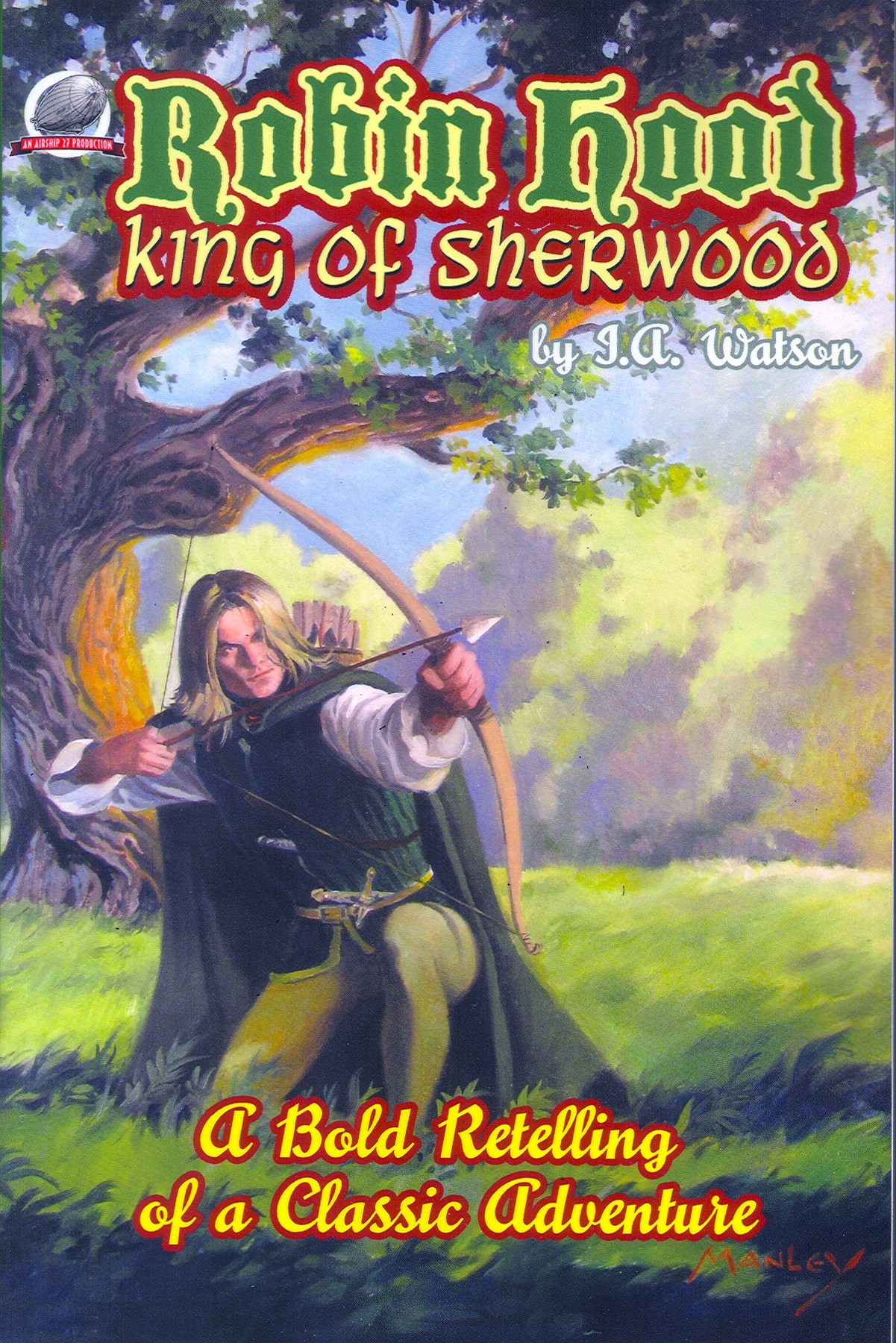
Of course the best known book is Howard Pyle’s “The Merry Adventures of Robin Hood” which remains in print and will undoubtedly find a new audience as interest in the Ridley Scott-Russell Crowe film gathers momentum. But there is another book on the market written by a British author named I. A. Watson that I believe deserves your attention. It’s called “Robin Hood – King of Sherwood” and it’s published by Cornerstone Book Publishers in conjunction with Ron Fortier’s Airship 27 Productions.


The beautiful cover is by Mike Manley with interior illustrations by Rob Davis. In his superb afterword, Watson provides an historical overview of the Robin Hood legend and explains his affection for the pulp magazines of a bygone age: “In writing “King of Sherwood” I was consciously trying to tell the story as if it had been commissioned for such a publication. This is Robin Hood as if he had appeared in Argosy or the Strand Magazine.”


Indeed, this is adventure writing at its finest, i.e., literate, suspenseful, action-packed and genuine. Nothing further need be said except this – for further information about series editor Ron Fortier and illustrator Rob Davis simply google “Airship 27.”


To purchase the book simply click onto Amazon right now and order a copy. Trust me, you won’t regret it!

— David DeWitt

 
3 Comments

Posted in Main Page


A Crazy Idea?

20 Apr

Hello everybody,

first I'd like to thank you all for the warm welcome you gave me. It feels good to be member of such a great community!

Then I would like to make a suggestion. Maybe it's crazy, but this idea has been on my mind for some time and I think it'd be quite unique…Why don't we create an “Errol Flynn Calendar” together? Meaning that we try to make a kind of “list” or overview of what Errol did every day of his life? For example, today is April 20th, and you could go to this site we'd create and have a look: Oh, today 60 years ago, Errol did this and that… He was shooting this or that film, had a party in the evening… What do you think? Possible? Crazy?

My second question for today: I read this wonderful book “Errol Flynn Slept Here” and I was wondering: who was the guy that eventually destroyed Mulholland House? His name is not mentioned, probably because he would have a hard time then? Is the name known at all?

Well, take care everybody and thanks for reading this!

— Inga

 
7 Comments

Posted in Main Page


Flynn in Vancouver 1936—Cricket, anyone?

17 Apr

Here is the 1985 article on Errol Flynn's Vancouver visit. Editorial comments [by me] are in square brackets.

———————————

The Vancouver Courier — Wednesday 27 February 1985, page 14

Saga of the Hollywood XI

By JACK LEONARD

We were “bowled over” by the response we received to a cricket photo published in the February 6 [1985] edition of the Courier, under the title “Those Wicket Ways”.

Donated by a local cricketer, the photograph taken [Saturday] July 4, 1936 at Brockton Point [in Stanley Park, Vancouver], showed members of the Hollywood Cricket Club posing with their Vancouver counterparts.

What made the photo all the more interesting was that Errol Flynn — who had just completed his first major motion picture”Captain Blood” — was seated in the front row. Seated in the centre of the front row was veteran English actor C. Aubrey Smith, captain of the Hollywood cricketers. [Flynn and Bruce had just finished CHARGE OF THE LIGHT BRIGADE. According to the TCM website, production started 30 March and wrapped 1 July 1936.]

With just that smidgen of information, we solicited help from Courier readers in identifying other members of both teams.
We were delighted with the response from all the people who wrote, called or came to visit us and can now complete most of the faces and stories behind the photo.

We quickly learned that the large gentleman wearing the wicket keeper’s pads seated adjacent to Flynn was “Dr. Watson” — veteran actor Nigel Bruce who so ably supported Basil Rathbone in the many Sherlock Holmes films.

A local celebrity was Alan Roughton, who had a radio program on CKMO (now CFUN) for 15 years called “British Varieties” and was also on the CBC Farm Broadcast and a local series entitled “Dick and Dolly”. Roughton was also in the original Theatre Under The Stars for nine seasons and was a long-time Kerrisdale resident.

A most pleasant visitor to our offices was Reginald Burleigh, himself in the photograph, and now a resident of Crofton Manor. A sprightly and active 86 year-old, Burleigh fondly recalled memories of those days.

“The Vancouver Cricket Club originally went down to play the Hollywood team in 1935 and they reciprocated by travelling here the next year. I met Flynn — he seemed a very approachable chap. And I really got along quite famously with C. Aubrey Smith. He wired me one year, saying: ‘Reggie, we’re short of cricket bats…can you help’. Well, I got some bats together and sent them right off.”

Burleigh said Smith’s nickname was “Round-the-Corner-Smith,” for his habit of suddenly nipping out from behind the umpire and firing down his fast ball.

This fact is confirmed in the late David Niven’s book, “The Moon’s A Balloon” in which he relates the origins of the club. Niven wrote that there were as many as 22 cricket clubs in the Hollywood area in the 30’s, what with the influx of British filmdom. Smith, incidentally, named his house on Mulholland Drive “The Round Corner,” and on his roof were three cricket stumps and a bat serving as a weather vane.

Other notables on the Hollywood team were Henry Stephenson (he played Oliver Twist’s father in the movie); E.E. Clive, Eric Blore and H.B. Warner.

A very descriptive letter of the match that actual day was supplied by Geoffrey Parkinson of Vancouver:

“…My father, Cecil Parkinson, played for Vancouver in the match and I was a spectator. I vividly remember the match because of the contrast in scene from the usually drowsy spectacle at Upper Brockton of a few friends and relatives sitting around the boundary in deck chairs.

“Instead, on this occasion, the ground was packed with an enthusiastic but non-cricketing crowd consisting principally of teenage girls anxious to see and get close to Errol Flynn.”

Another lesser-known Hollywood actor in the photo (right of C. Aubrey Smith) was Frank Lawton, who appeared in Noel Coward’s film “Cavalcade” and married British songstress Evelyn Laye.

Seated directly centre in the front row was J. Fyfe Smith, who arrived from Australia here in 1904. He opened the J. Fyfe Smith Co. Ltd. Hardwood Lumber Distribution yard on Seymour Street where the Hudson Bay parking lot is present!y located.

He was also involved in rugby and was instrumental in both rugby and cricket trips to Japan and China.

Others identified on the Vancouver team were Dr. Harry Warren, Professor Emeritus of UBC; Bunny Hobday, Meredith Berridge, Judge Stan Remnant, Fergie Ward, E.H. Grubbe, R.P. Woodward, Cecil Parkinson, Gerry O’Hara and David Seaton.

The Courier would like to thank George Hutchinson, W.B. MacWilliam, Pat Waldron, E. Sheppard, Vic Gowan, Robert Berridge, Reg Burleigh, Geoff Parkinson, Lyall Bell, G.F. Pearson and Doug Sturrock for their informative letters.

P.S. While Flynn went on to greater fame, ironically he died in Vancouver at the age of 50 while in the company of a young starlet named Beverly Aadland, the year was 1959…as Reg Burleigh aptly put it…”he left us at age 50 . . . not out.”

[The club house at Brockton oval still stands, and the photo may be hanging yet on a wall. It was still on display a few years ago. I don't know about now.]

— daveboz

 
5 Comments

Posted in Main Page


Which Night Club is this?

03 Apr

Zebra striped upholstery?
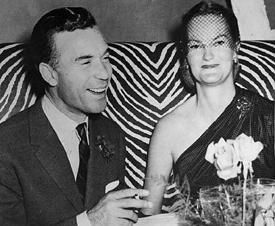
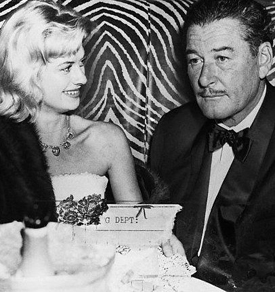
I have seen this Zebra striped upholstery in many other celebrity pictures, does anybody know what is the name of this place?  It must have been one of the celebrity “Hang-Outs”!

Porfirio Rubirosa and wife Doris Duke
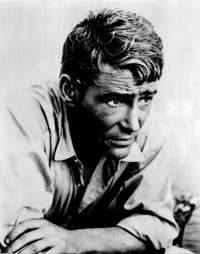
Errol looks quite sad, I wonder what he is thinking? What is on the table “G  DEPT: “? Who is the EFBlog author who knows everything?

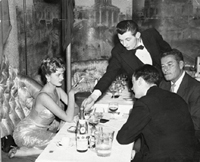
And while we are at questions, who knows where the Lido Club on Swallow Street is or was?  Hollywood? New York?  The picture below was taken on May 5th, 1959 at the Lido Club

— Tina


My Favorite Year!

22 Mar

Since Wednesday I am deep in bed with

influenza and last night, awakening
from a sort of marathon sleep, switching on the TV and with in seconds I
was Bright Eyes and what scene do you think is right     in front of my
very eyes at this very minute? 

The very scene John describes in
his Titchfield article, Errol going accidentally into the ladies'
bathroom    I couldn't believe my eyes or my ears – I was stunt and
again I laughed my head off!  They actually used Errol's incident in a
movie.  There you see, the poor man couldn't even go to bathroom without
a movie being made of it! Ha – ha – ha!

Maybe this is old news
to some of  you, sorry, but maybe not to all of you, it
is news to me! Let's Enjoy!

At the time I saw the movie TCM's
schedule was different “The Ruling Class” also with Peter O'Toole, but
as per my research the movie playing was “My Favorite Year” 1982 starring Peter O'Toole in a divine
comedy and parody of Errol Flynn.  My research about this movie took me
to You Tube, I thought due to missing the beginning I could maybe see
it there, but what I found instead is an actual presentation of the
passage. What would the British say that?  I say, I say old

chap on you tube, you don't say?

www.youtube.com…

image      
image

It
is a most delightful movie “A Must Watch It” for an Errol fan, in
addition containing a very profound precious scene when Benjy
Stone is mad at Allan Swann (Errol) for having fears and being in
self-denial. Priceless!
Alan Swann:
Stone… I'm afraid. I'm afraid. That's why I couldn't get out of the
car to see my Tess, my child.

Benjy Stone:
Alan Swann, afraid? The Defender of the Crown? Captain from Tortuga? The
Last Knight of the Round Table?

Alan Swann:
Those are movies, damn you! Look at me! I'm flesh and blood, life-size,
no larger! I'm not that silly God-damned hero! I never was!

Benjy Stone:
To *me* you were! Whoever you were in
those movies, those silly goddamn
heroes meant a lot to *me*! What does it matter if it was an illusion?
It worked! So don't tell me this is you life-size. I can't use you
life-size. I need Alan Swanns as big as I can get them! And let me tell
you something: you couldn't have convinced me the way you did unless
somewhere in you you *had* that courage! Nobody's that good an actor!
You *are* that silly goddamn hero!

I think this is a very beautiful passage, extremely
fitting and to the point!

Movie Review – A Perfect Film
Comedy!

Have you ever watched a film and wished it wouldn't end?
Where you loved
all
the characters, adored each scene, and laughed at every joke, even after
you'd seen the film so many times that you could quote the dialog? MY
FAVORITE YEAR is that kind of movie!

Directed with gusto by
Richard Benjamin, the film is both a loving tribute
to Sid Caesar's 'Your Show of Show', and the remarkable talents that
brought
it together each week, and a sincere homage to Errol Flynn, whose antics
and
larger-than-life persona, in the waning years of his life, still had a
kind
of magic that could enthrall a shy young fan, or make a woman
swoon.

Three dynamic performances dominate the film. Mark
Linn-Baker, as Benjy
Stone, based on the young Mel Brooks, is a shy kid who hides his
insecurities behind a rapid-fire wit. The dazzling young star in a staff
of
comedy 'pros', Stone suffers from an unrequited love from fellow staffer
K.
C. Downing (Jessica Harper), and has an inspiration, inviting legendary
swashbuckler Alan Swann (Peter O'Toole) to appear on the show. As King
Kaiser, star of the hit series, Joseph Bologna captures much of Sid
Caesar's
legendary physical 'presence' and irreverence to authority. When
threatened
by gangsters over a 'too close to home' series of parodies about crime
boss
Karl Rojeck (portrayed with brute menace by veteran actor Cameron
Mitchell),
Kaiser 'thumbs his nose' at them, mimicking the gangster mercilessly.
“I'll
KEEP doing it!” he taunts. “Why? Because it's FUNNY!”

Then there
is Peter O'Toole's 'Alan Swann'. With his own career a roller
coaster ride of alcoholism, resulting in the near destruction of his
health,
no actor could have 'channeled' Errol Flynn better. Just as Flynn, by
the
1950s, O'Toole was a nearly burned-out roué, his classic good looks long
gone,
O'Toole's matinee-idol appearance, after years of self-abuse, had aged
into
a gaunt mask, making Benji Stone's film montage of 'classic' clips more
poignant. What Flynn still had, in abundance, were charm and a ready
wit,
and O'Toole's 'Swann' is so enchanting a personality that you can't help
but
love him, and root for him to succeed.

From the opening nostalgic
strains of Nat King Cole's rendition of
'Stardust', through Benjy's futile effort to attempt to keep Swann sober
(Red Skelton loved to tell how he kept Flynn sober on his program…he
emptied all of the actor's bottles of vodka, replacing it with
water…and
Flynn couldn't tell the difference!), to a riotous Swann dinner with
Benjy's
family, to the near-disastrous broadcast, with Swann developing stage
fright, and Kaiser brawling with mob enforcers…MY FAVORITE YEAR has
one
glorious scene after another, each unforgettable!

One of the
AFI's '100 Greatest Film Comedies', MY FAVORITE YEAR will bring a
tear to your eye, even as you laugh. It was a time of legends, and
heroes
who would live up to boyhood dreams.

Film comedy doesn't get any
better than this!

— Tina

 
1 Comment

Posted in Main Page


Beverly Aadland in Perspective

19 Mar


Beverly Aadland passed on recently. Today, few know her name, but a little more than 50 years ago, she existed amidst a scandal that would have made for a downbeat last chapter to Errol Flynn’s life, except that his Cuban adventure was even worse! Flynn set eyes on shapely, leggy, natural-blonde dancer Aadland on the Warner Brothers lot while he was making Too Much, Too Soon. He was 48 at the time; he figured she was 18 or 20, but her driver’s license said otherwise. Or it would have if she had have been old enough to obtain a driver’s license.
  
Flynn had always liked younger women, which wasn’t such a problem when he was 25 and a girl, say, Olivia de Havilland, was 19. But when he passed 30 and then 40 and continued to like ‘em 18 or so, it started to get creepy. The funny thing with Flynn was that in the beginning, he found older women attractive, like the society dame he squired in Australia, and like Lili Damita, who claimed to have been born in 1905 but was probably older when Flynn hooked up with her in Paris in 1934—when he was 24 and she was at least 30. Lili became Mrs. Errol Flynn number one. Flynn also went in a big way for the boss’s wife, Dorothy Lamour look-alike Ann Warner, wife of Jack L. Warner. In fact, on his climb up the Hollywood ladder, there were lots of older women who Flynn used, and who used Flynn.
  
It seems to have been the cunning, manipulative actions of Damita as she steered toward divorce that caused Flynn to make a conscious decision to stick to younger, less sophisticated types. After all, control was the thing with Flynn—control and conquest. Younger girls fit the bill in both cases. Added to that, he liked to love ‘em and leave ‘em, and, on the way out the door, he was less likely to have a shoe or a flower pot thrown at him by a younger girl than an older one.
  
He was 15 years older than second wife Nora Eddington, whom he married in 1944, and almost 20 years older than his third wife Patrice Wymore, whom he married in 1950. It wasn’t a tremendous surprise, then, when at age 48 he would score with an 18 year old, with the complicating factor being that she was really 16, and an extra complicating factor being that they quickly formed a close emotional attachment. Oh, and one more problem: years of debauchery had left him a bloated wreck who appeared to be far older than 48, meaning that his paramour looked like his granddaughter.
 
Even today, historians and journalists sneer at the association between Errol Flynn and Beverly Aadland, which went against the social grain of the 1950s in all respects. Flynn himself wrote transcripts of the byplay between the older man and the young girl that was infantile on both sides and tinged with cruelty on his part, but there can be no doubt that Beverly adored Errol and became his caretaker in the last year of his life when he had driven everyone else away.  By now he was a brittle man who had survived many broken bones and a bad back. He had had a cancerous tumor removed from his mouth and perhaps a melanoma from his face. His lungs were shot from smoking and TB, and his liver from drinking. He had no money, was taking every TV appearance he could land, could no longer remember his lines on screen or on the stage, and couldn’t write when he used to be able to make a buck selling words. What a catch!
 
It was to Beverly’s credit that she stuck with him through the thick and thin of all that, and that she formed relationships with Flynn’s ex Nora and daughters Deirdre and Rory. Flynn’s October 1959 death was a nightmare for Beverly, played out on the world stage and what do you know; she reacted like an 18 year old and threw a tantrum and collapsed. But in subsequent days she pulled herself together and was sturdy through the funeral and aftermath.
 
Despite the notoriety of her association with Flynn, which led to a Mercury Records contract, TV appearances, and some discreet pictorials in men's magazines (see photo), Beverly Aadland had a hard life marked by diabetes and other ailments. Her passing at age 68 may go unnoticed, which signifies how much the world is changing and how far the flamboyant Errol Flynn, number-one Hollywood bad boy, has himself receded into the pages of history. But back in the day, the Flynn-Aadland scandal matched anything that today’s stars can offer, and at a time when America was far less shock-proof and, in fact, ready to send them both packing.

— Robert Matzen


“Beside Errol Flynn”

17 Mar

This is a wonderful song by Amanda McBroom the daughter of Hollywood actor David Bruce!  It is very moving and touching – very worthwhile to listen too.  A quite different tribute to Errol, but a very nice tribute! Enjoy!

www.youtube.com…

Attached is David Bruce's picture for you to recall him as Errol's friend and in his movies!

Addendum:
I contacted Amanda McBroom through her website to ask her if she composed the song and if she had some memorabilia to add to the blog:

Amanda's Reply:

Dear Tina:
Thank you for your lovely e-mail.
I wrote the song, called ERROL FLYNN, with a man named Gordon Hunt,
father of actress Helen Hunt, as a tribute to  my father, David Bruce.
They did several movies together in the 30's and 40's and were very
close friends. I don't remember ever meeting him. I was quite young when
Errol died, but I know my father was very fond of him. The song is directly connected to “Santa Fe Trail”. that was the movie poster
Gordon and I both had hanging on our walls which inspired us to write
the song.
I am glad you enjoy it.
Cheers,
Amanda

David Bruce (left) in “Santa Fe Trail”!

Now my dear Blog readers one thing is very interesting in Amanda's reply – it is Gordon Hunt her co-composer, father of Helen Hunt.  A-ha –  was it Helen Hunt who purchased Errol's Mulholland Farm?  Did she ordered the removal of Errol's house?  Did she build her house on the very spot Errol's house stood?  Did she sold it then to Justin Timberlake who owns it now.  Anybody have the correct answers???

— Tina


Who knows anything about that?

15 Mar

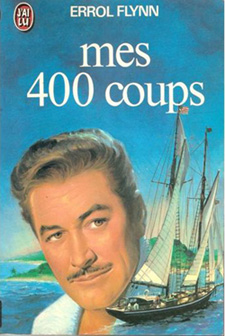
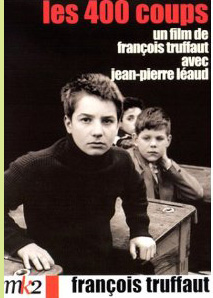
Today I was on Amazon and found this French titled book advertised, as the title is unknown to me I went to Google and found the story of a movie (1959) of a boy extremely similar to Errol's life as a youth titled “Les 400 Coups” = The 400 Blows. Please go to Google and read it I could hardly believe it.  There is somewhere a connection – I think?
Errol's title is “Mes 400 Coups” = My 400 Blows and he supposedly is the author???
If it has anything to do with MWWW why the parallel to the movie “Les 400 Coups”
Any insides to this – Errolists???

image    image
                                                                                        Good looking French kid too!
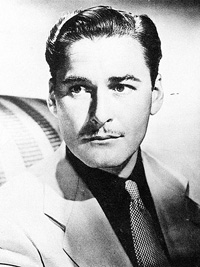
Wonderful picture of Errol!
This artist's rendering accentuates by giving great emphasis to his chevron eyebrows representing him with that lovely devilish look.

— Tina

 
5 Comments

Posted in Main Page


Alan Hale

15 Mar
Date of Birth
February 10, 1892, Washington, District of Columbia
Date of Death
January 22, 1950, Hollywood, California, USA (liver ailment and viral infection)  Age 57

Birth Name  Rufus Alan MacKahan 
Alan Hale decided on a film career after his attempt at becoming an opera singer didn't pan out. He quickly became much in demand as a supporting actor, starred in several films for Cecil B. DeMille and directed others for him. With the advent of sound Hale played leads in a few films, but soon settled down into a career as one of the busiest character actors in the business. He was one of the featured members of what became known as the “Warner Brothers Stock Co.”, a corps of character actors and actresses who appeared in scores of Warner Bros. films of the 1930s and 1940s. Hale's best known role is probably in The Adventures of Robin Hood (1938), one of several films he made with his friend Errol Flynn, in which he played Little John, a role he played in two other films – Robin Hood (1922) and Rogues of Sherwood Forest (1950).

IMDb Mini Biography By: fr*******@***oo.com…

Played either a supporting role or a cameo in 13 of his friend and fellow actor Errol Flynn's films. (Adventures of Robin Hood, Dawn Patrol, Private Lives of Elizabeth and Essex, Adventures of Don Juan, Prince and the Pauper, Dodge City, Santa Fe Trail, Virginia City, Footsteps in the Dark, Desperate Journey, Gentlemen Jim, Sea Hawk, The Sisters)

He holds the record for appearing as Little John in separate productions: he played the part in Robin Hood (1922), The Adventures of Robin Hood (1938) and Rogues of Sherwood Forest (1950), filmed just a year before he died.


— Kathleen


Guinn “Big Boy” Williams

15 Mar

Guinn 'Big Boy' Williams 

Date of Birth

26 April 1899, Decatur, Texas, USA

Date of Death

6 June 1962, Burbank, California, USA (uremic poisoning)

Birth Name

Guinn Terrell Williams Jr.

Height

6' 2″ (1.88 m)

Mini Biography

The son of a rancher-turned-politician, Guinn Williams was given the nickname “Big Boy” (and he was, too – 6' 2″ of mostly solid muscle from years of working on ranches and playing semi-pro and pro baseball) by Will Rogers, with whom he made one of his first films, in 1919. Although his father wanted him to attend West Point (he had been an officer in the Army during World War I), Williams had always wanted to act and made his way to Hollywood in 1919. His experience as a cowboy and rodeo rider got him work as a stuntman, and he gradually worked his way up to acting. He became friends with Rogers and together they made around 15 films together. Williams starred in his own series of silent westerns and easily made the transition from silents to talkies. Although he also starred in a series of low-budget westerns in the early and mid-1930s, he really came into his own as a supporting player in the late 1930s and early 1940s, especially at Warner Bros., where he appeared in such resoundingly successful westerns as Dodge City (1939) and Santa Fe Trail (1940) with his friends Errol Flynn and Alan Hale. Williams specialized in the somewhat dim and quick-tempered but basically decent sidekick, a role he would play for the next 20 years or so. He also made films other than westerns, and was in, for example, A Star Is Born (1937) and played strongly against type as a vicious, sadistic killer in The Glass Key (1935). In the early 1960s Williams' health began to deteriorate, which was noticeable in his last film, The Comancheros (1961), in which he had a small part and, sadly, did not look well at all. He died of uremic poisoning shortly afterwards.

— Kathleen