RSS
 

Search results for ‘name’

Neil Young: Hollywood Reporter Review of new film In Like Flynn!

03 Sep

Neil Young sends us to his Review of In Like Flynn, the new film based loosely on Errol’s book Beam Ends, produced by Luke Flynn.  Thanks, Neil!


“Thomas Cocquerel takes the title role in cult Australian director Russell Mulcahy’s early-years biopic of famed swashbuckler Errol Flynn.

Reveling in the exploits of a legendary Lothario who is a most unlikely subject for a celebratory biopic during the current #MeToo era, comeback-kid Russell Mulcahy’s In Like Flynn triumphs as a disgracefully entertaining romp that packs an unexpected emotional wallop.

Chronicling the adventurous late youth of golden-age Hollywood swashbuckler Errol Flynn, the handsomely mounted production is inevitably brimming with boozing, brawling and bedding. But while rising Aussie star Thomas Cocquerel is suitably dashing as his notorious countryman — whose name, 59 years after his premature demise, remains a byword for bawdy offscreen excess — the real breakout here is British actor Clive Standen, comprehensively stealing the show in a flashy supporting role.”

Read more

— David DeWitt


Roma Newport

26 Aug

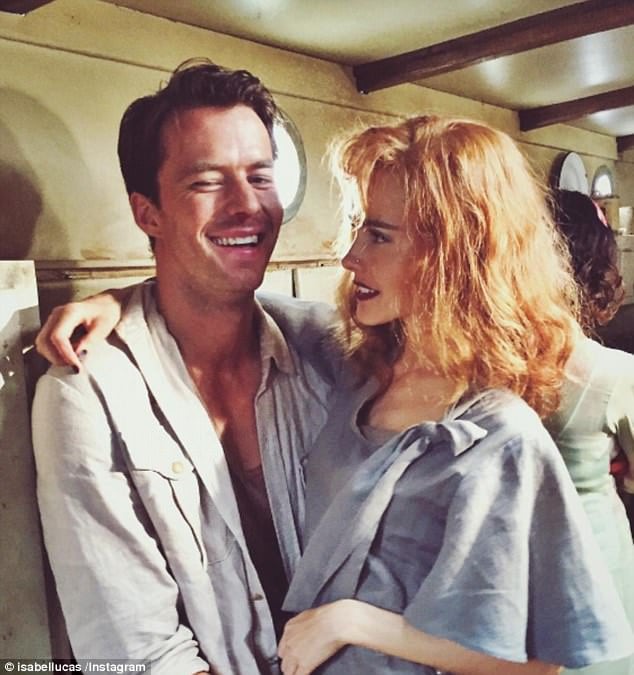
Was Roma Newport the Magnetic [Island] personality behind the character of Isabel Lucas in In Like Flynn? [What a Flynntastic name for one of Errol Flynn’s flings!]

www.pressreader.com…


— Tim


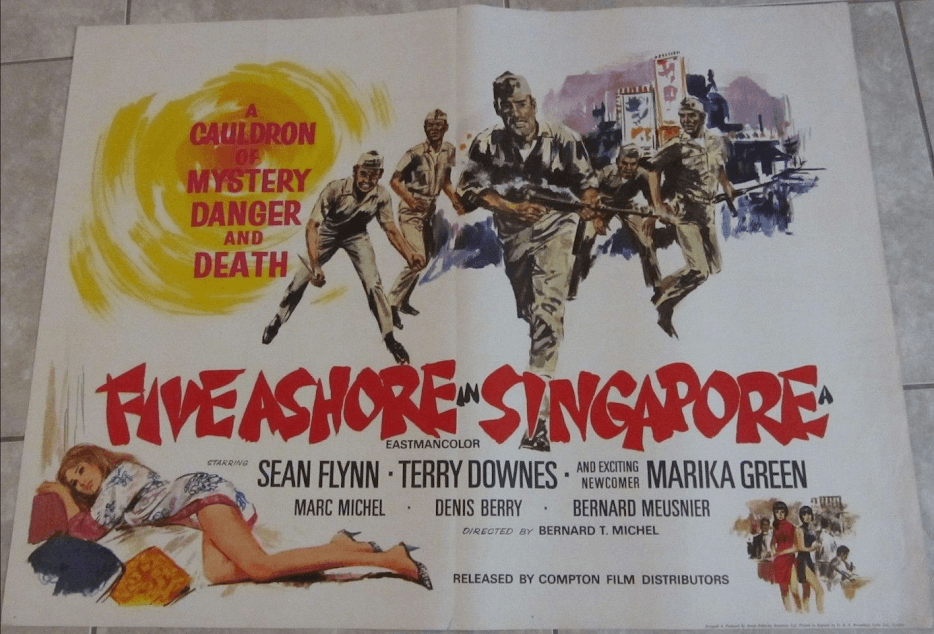
Sean Flynn in FIVE ASHORE IN SINGAPORE

18 Aug

In the Mail Bag we receive this nice inquiry from French film director Raphael Millet. Unfortunately, I do not have any hi res scans or photos of this poster and am wondering if any of you can help him out?  He writes:

Bonjour,

I found your contact on the Errol Flynn blog.

I am a French film director, producer and critic.

I love Errol Flynn’s movies.

I also have a passion for Sean Flynn, and great interest in the later part of his life (from 1965 onwards).

I am currently writing a long article about the movie FIVE ASHORE IN SINGAPORE for a magazine published in Singapore.

I have many images of it, including French lobby cards, posters in various languages. But I have no poster of the film in English, and I think this would be most relevant for a publication in English.

I noticed that you have a very nice poster in your collection (see image here attached).

Would it be possible to ask you for a very good high res copy or photo of it, if you have any, in order to have it reproduced in the magazine, together with my article?

It would be a nice way to celebrate Sean Flynn and to pay tribute to his Singaporean adventure.

In exchange, I’d be very happy to have a copy of the magazine being mailed to you, upon publication (around October).

Looking forward to your kind reply.

Raphael Millet

— David DeWitt


Errol Flynn’s Ship Model

06 Aug

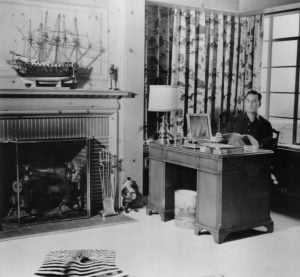
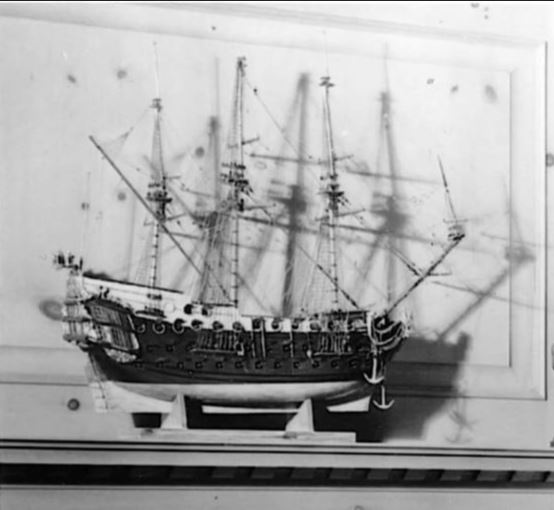
To all Flynn aficionados out there, I’m looking for the name of this ship, that was in Errol’s den.  I think it was a Dutch man of war, but I don’t know.  I have seen many ships on the internet and on many ship model makers that are very similar but it isn’t this exact ship.

I also think that this ship model could be one of the smaller models used in Captain Blood and the model dept at Warners could have given this to Flynn as a gift.  They must have copied it from photos of a real ship that had a name to it.

I have a close-up view of this ship but for some reason, I can’t post it in my post here.  I’m looking to have a replica made of this ship for my home office.  Any help in finding this ship or the name would be an awesome help to me.  I’m calling on Gentleman Tim who can find just about anything on Flynn…

Best wishes to you all

Jack Marino


— Jack Marino


A Sunday Quiz

05 Aug

During his “college” days in London, Errol used to salivate on Sundays for this weekly treat.

Clues:

– He first took a very long walk in formal clothing.

– Before eating he used to mumble a little Latin.

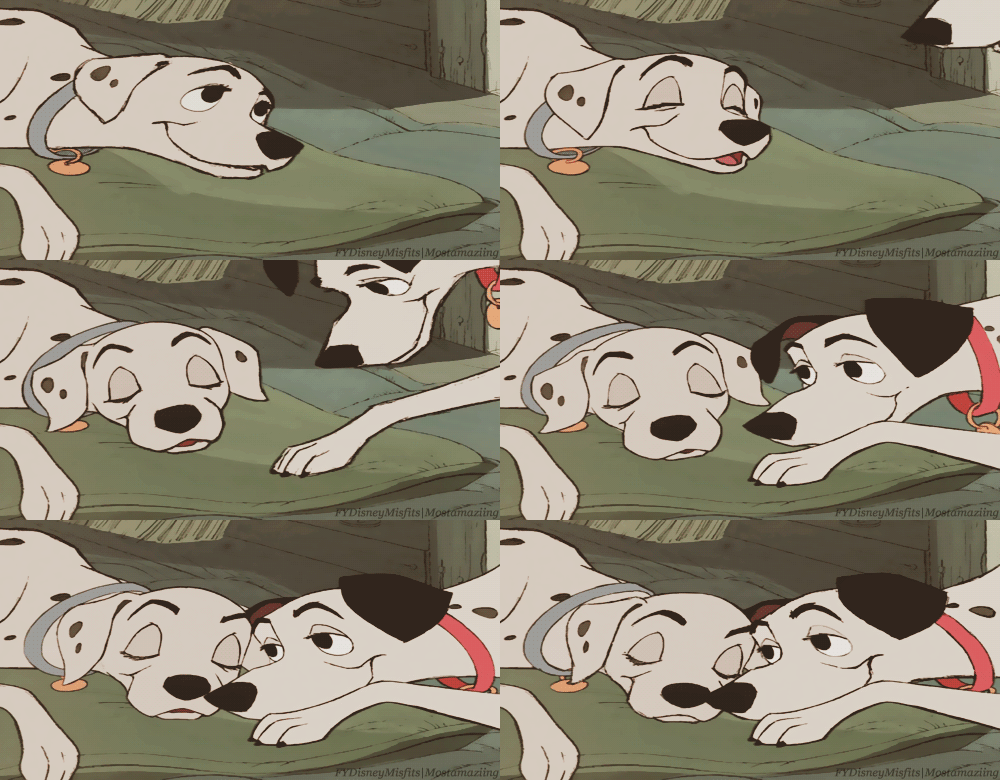
– Evidence is very spotty but the name of this quiz dish may derive from the beloved breed depicted below.

— Tim


Sailors compete in 41st race

31 Jul

www.keyt.com…

Great story about race they say the yacht a 42 foot wooden yawl named Cheerioo 11 once belonged to Errol. Is this right. Is this the Zaca renamed. Genene.

— tassie devil

 
3 Comments

Posted in Main Page


Dr. Flynn

26 Jul

Eighty-two years ago this week …

Eight years ago when adventuresome Errol Flynn, now Warner’s new film rave, represented the British Government at New Guinea, one of his many odd duties was to act as physician and surgeon.

When a native named Joe Speedie appeared at headquarters with a gangrenous toe as a result of having been bitten by a poisonous fish,it was “Dr” Flynn who performed the necessary amputation of the infected toe. The emergency operation saved Joe’s life.

Last week, “Dr” Flynn received a belated fee for his surgical gesture, a valuable gold-headed cane. Joe explained in the accompanying letter that he had seen Errol in Captain Blood and was most happy to have located his benefactor of long ago. And Errol’s quite proud of his ‘fee.’

Jimmy Starr
Los Angeles Evening Herald Express
Published July 27, 1936

— Tim


Eighty Years Ago Today — At The Mermaid Club

18 Jul

July 18, 1938

“Errol Flynn alone at the Mermaid Club.”

Erskine Johnson
LA Examiner, Behind the Makeup

It’s very hard to find imagery of the Mermaid Club, but the 1930s WPA film video below does show the club, about three-quarters of the way into the film, between Western Market and Cafe Lamaze. It’s also shown briefly in the second video.

The Mermaid Club was later renamed Villa Nova, and ultimately the Rainbow Club, by co-owner Vincent Minelli it is said, after his former wife Judy’s most famous song. Their daughter, Liza, used to party there much later, in her heyday.

This is the where Joe Dimaggio first met Marilyn Monroe, introduced by Mickey Rooney. It’s also where John Belushi had his last meal. For decades now, it has been a rock-and-roll landmark, where legends from Elvis, to the post-Beatle Beatles, to most all of Rock royalty, have raised hell.

Please note that this first video has negligible action until about 45 seconds in, then it has great old film of what one side of Sunset Strip used to look like during Errol’s early years in town.

According to this very cool Vintage Los Angeles video interview of the owners:

“Errol used to hang from the rafters!”

— Tim


Diamonds are a Damita’s Best Friend

17 Jul

July 19, 1935

Filmland learned for the first time today the romantic history of the diamond that Errol Flynn, dark-headed Irish actor, put upon the finger of Lili Damita, who is now his bride.

It was five years ago that Flynn came into possession.

A young adventurer, he was working as a British agent in New Guinea to help preserve peace among the native tribes. One day, he made a gold strike in the jungle.

Trekking back to civilization, Flynn sold his discovery for $10,000 in gold. He decided to leave New Guinea, but couldn’t carry his new found riches. So he put the money into rough-cut diamonds.

It was one of these diamonds that the young actor, soon to play the starring role in the Warner film, Captain Blood, had made into the engagement ring his bride now wears.

Harrison Carroll
Evening Herald Express

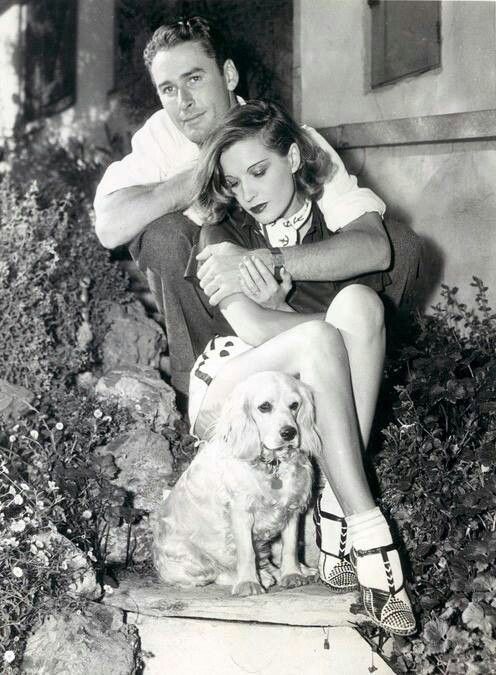
Errol, Lili, and Man’s Best Friend, on the very-appropriately named Lookout Mountain – with a glimpse it appears at Diva Damita’s new diamond:

— Tim


A PNG BIO

15 Jul

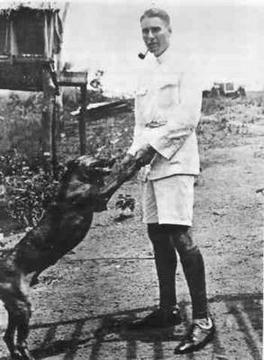
A primer on Flynn’s time and adventures in Papua New Guinea, quoting “Malum Nalu”.

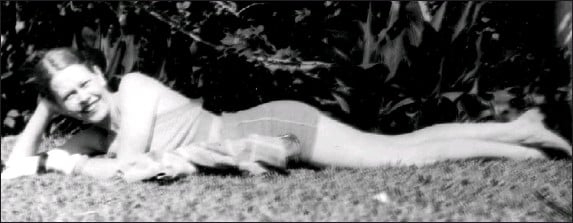
Photo of girl believed to be Tuperselai provided by EFB Author, Tina. Thank you, Tina.

…….

Papua New Guinea’s rich and colorful history is littered with the names of likewise gaudy characters that have carved a niche for themselves.

Few, however, have made more of an impact than the flamboyant and swashbuckling Errol Flynn.

With the discovery of very good paying gold in 1926 at Edie Creek above Wau – six days walk from Salamaua – a gold rush of massive proportions started, not only from Australia but from beyond.

With the major discovery of gold came the last two categories of what the White population of New Guinea was divided into: Missionaries, Moneymakers, and Misfits or Fools, Freaks, and Failures.

Not least among the Misfits was the one who became a Hollywood star – Errol Flynn. And none, probably, has done more to promote PNG than this lovable rogue who went on to become the world’s top sex symbol.

The superb scenery, glorious hills and harbours, white beaches, and shady copra plantations are still today as Flynn describes them in his famous autobiography, My Wicked, Wicked Ways.

Places like Salamaua, Wau, Bulolo, Lae, Finschhafen, Port Moresby, Laloki, Rabaul, Kavieng, Madang, and the Sepik River have become famous because of My Wicked, Wicked Ways.

His book remains a bestseller to this day and, in places like Salamaua or Wau – just to name two – people still talk about him.”Flynn used to drink here,”they’ll tell you in Salamaua, or, “this is where he went mining for gold”, they’ll reminisce in Wau.

Legendary Australian patrol officer, JK McCarthy, recalls in his book, Patrol Into Yesterday, how Flynn stepped in once to protect a small man from a bully: “It was done in the most dramatic style and all of us should have foreseen that he had a movie career ahead of him. There was the noisy bar, the crowd of onlookers, the challenge and the hero knocking the loud-mouthed one cold, right on cue.”

The true-life story of movie superstar Errol Flynn was more dramatic and incredible than even the wildest of his many Hollywood-starring roles.

Panoramic portrayals of his amazing past have brought the true legend of Flynn explosively to life, blowing the lid off his rabble-rousing time in the gutters of Sydney, and his death-defying escapades searching for gold in the jungles of New Guinea.

Flynn was simply the sexiest, most charismatic star of the Golden Era of Hollywood.

The epitome of a lusty, virile hero, Flynn turned the World into his stage as millions fell for his wicked, wicked ways.

Superstar and legend, Errol Flynn was Hollywood’s symbol of male virility during the Golden Era of moviemaking.

He was adored by fans worldwide, admired by millions, despised by many.

Flynn was the quintessence of the swashbuckling hero, but his on-screen exploits were pale echoes of his real life adventures.

Flynn’s prowess with women was so infamous that the expression “In like Flynn” became a common phrase used to describe the ease with which a man might conquer a woman.

As an actor, Flynn built the foundation for characters later elaborated by Mel Gibson, Arnold Schwarznegger, Harrison Ford, and Kevin Costner.

He died at age 50 of a heart attack, having had a good run in Hollywood with 53 films – some for Jack Warner, others contracted out to MGM – across from great female players such as Olivia De Haviland, Maureen O’Hara, Bette Davis, Greer Garson and others.

Errol Flynn was born Errol Leslie Thompson Flynn on June 20, 1909 in Hobart, Tasmania, Australia.His parents were Professor Theodore Thompson Flynn and Lily Mary Young.

Professor Flynn was a well-known marine biologist and zoologist who later went on to receive an MBE for his work at Queens University, Belfast. Errol also was a direct descendant – on his mothers’ side – of Midshipman Young from the infamous HMS Bounty Mutiny of 1789.

The 18-year-old Errol Flynn arrived in New Guinea in October 1927 to make his fortune on the newly discovered goldfields at Edie Creek, Wau.

From his arrival he tried unsuccessfully to bluff himself into money as a cadet patrol officer, gold prospector, slave recruiter, dynamiter of fish, trapper of birds, manager of coconut and tobacco plantations, air cargo clerk, copra trader, charter boat captain, pearl diver and diamond smuggler.

He was also a prolific writer and contributed regularly to Australian newspapers and magazines with absorbing tales about the untamed jungles of New Guinea.

Flynn soon discovered that the Australian government had a severe shortage of patrol officers, and he hoped to bluff his way through in Rabaul, but this colonial career was short-lived when his background was discovered.

He moved restlessly from one job to another, acquiring many different skills but no great competence.

Hoping to get rich fast, he lived by his wits and ran up many debts.

In Rabaul, although considered a likeable and capable young man, his reputation for roguery quickly spread and he ceased to be with the Administration.

His best memory of Rabaul was of “a wonderful saloon where you encountered everything the world could yield up – miners, recruiters, con men, thieves, beachcombers, prospectors – cubicles both downstairs and upstairs, several phonographs playing, cards.”

Long after Flynn had left he was remembered around Rabaul, mostly for the unpaid bills he left behind.

Even after he became famous as a film star, he never paid any of those bills. If people wrote asking him to pay, he would send them autographed photographs of himself, saying these were worth much more than what he owed them.

The story is told of the famous occasion when a film of Flynn’s was showing in Rabaul, and at the end of the credits, a dentist to whom Flynn owned a large account jumped up and shouted: “And teeth by Eric Wein.”

In 1928, with money from his work on a coconut plantation and a loan from a shipping company in Sydney, Flynn bought a schooner and took an American film company to make a documentary about headhunters on the Sepik River.

He recalls: “The last place in the world I wanted to go was the Sepik River, a human graveyard. I cruised to the north-east coast, where the red, muddy Sepik River flowed into the sea.

“We moved into the broad stream, running against a strong current.

“The Sepik is a monster waterway 600 miles long.

“No white man has been up the river more than 200 or 300 miles and the nature of the river or the land beyond that was practically unknown and remains little known to this very day.

“The waterway was heavily populated with mosquitoes, kanakas, and pukpuks (crocodiles).

“As we traveled the garamuts, tomtoms made of crocodile skins, kept up a steady communication: ‘Outsiders, big magic on the water, beware’.

“When we came in close to shore and tried to get film of the natives, we got arrows instead, real ones, and poisoned.

“In 1929, Flynn sailed from the offshore islands to Salamaua, to fulfill his original ambition.

He hired eight men, bought marching gear and gold-digging equipment, and set out for the goldfields at Edie Creek.

The tough march from Salamaua to Wau – through a region filled with blackwater fever and poisoned arrows – tested men’s limitations.

The rigorous walk between Salamaua and Wau took up to a week, Flynn writing of how the gold fields had to be approached from Salamaua by 10 days’smarch through leech-infested jungle, in constant fear of ambush, and at night wondering ‘whether that crawly sound you heard a few feet away might be a snake, a cassowary or maybe only a wild boar razorback…I have seen Central Africa, but it was never anything like the jungle of New Guinea’.

At Edie Creek, temperatures were high during the day and fell steeply at night.

There was an epidemic of dysentery and malaria, with no trained doctors to attend to the sick.

His men left, and Flynn quickly realised that, “I had neither the provisions, nor the money, nor the necessary men to work a claim properly. The competition with other prospectors who were better set up was too much”.

He lost everything he owned and was forced to take a job as manager of a tobacco plantation in Laloki, near Port Moresby.

Six months later, Jack Hides, a flamboyant patrol officer and old Papua hand, turned up at Flynn’s place and noted in his diary that Flynn was doing a creditable job.

Flynn had criticised the Australian administration in a letter to his father in Tasmania.

Writing to The Bulletin soon after his arrival, he protested against a government policy that affected his own plantation, the high import taxes imposed on tobacco: “Papua is one of the natural homes of the tobacco plant, and, as Papua is part of the Commonwealth and is in receipt of a yearly subsidy of £40,000 from the federal government, the obvious market for its tobacco is Australia. But the market is closed by a prohibitive tariff.”

At Laloki, the man who was to become the world’s top sex symbol, wrote about his affair with Tuperselai, a beautiful Papuan girl: “We let ourselves be carried down by the current of the stream and, on the shores, in a secluded nook of shade, at last we made love.

“I can only say that I don’t know when again my heart pounded so.

“I was less alone and soft-aired Laloki River is one of my most precious, poetic memories.”

Flynn later observed that, “If you spend more than five years in New Guinea you were done for, you’d never be able to get out, your energy would be gone, and you’d rot there like an aged palm”.

In April 1933, he sold his property and suddenly left the island with some smuggled diamonds and a case of malaria that would plague him for the rest of his life.

During his years in New Guinea, from the age of 18 to 24, Flynn came to maturity and formed his adult personality. New Guinea brought out the worst and the best in him.

He was willing to try anything, but wouldn’t work at anything for very long.

He said, “There is no thrill like making a dishonest buck” and always expected others to support him when he had no money of his own.

He lived by his wits, bluffed his way through crises, and used his fists when he had to.

One of Errol Flynn’s greatest loves was writing. Apart from his autobiography My Wicked, Wicked Ways, he wrote two semi-autobiographical novels Beam Ends and Showdown and in addition wrote articles for the Sydney Bulletin whilst in PNG under the pen-name “Laloki.”

Errol Flynn loved many women, but he is said to have once confided to a close friend that two of his greatest loves were New Guinea, and writing.

— Tim