RSS
 

Search results for ‘name’

Errol, Robin Hood and The Red Earl

28 Jan

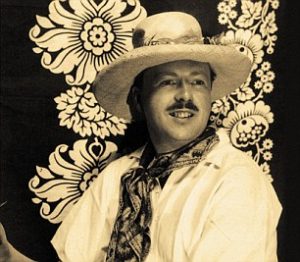
When Errol was in Mexico in the 1930s and visited the house of the renowned Marxist artist Diego Rivera, he met his then assistant, a moustachioed Englishman, who introduced himself as Jack Hastings. His full name, however, was Francis John Clarence Westenra Plantagenet Hastings, 16th Earl of Huntingdon, one of the oldest titles in England.

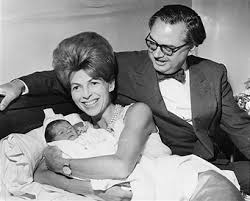
In Britain, Hastings was known as the ‘Red Earl’, for his left-wing politics and rapscallion behaviour. (The ‘Red Earl’ was to become part of my family when my father married his eldest daughter, Moorea.)

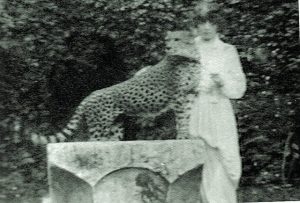
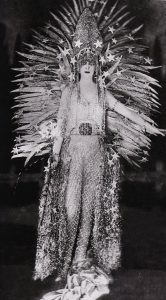
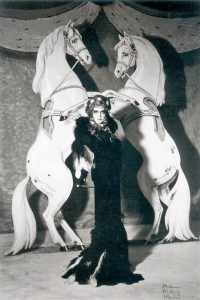
In the late 1920s, Jack had scandalised English Society by espousing Marxism, announcing his intention to become a painter and having an illicit affair with Cristina Casati, the young daughter of the notorious Italian Marchesa, Luisa Casati.The Marchesa lived in a Venetian palazzo (now the Guggenheim Museum) with two pet cheetahs and 10 footmen, whom she had painted gold. She was also a legendary style muse, captivating everyone from Diaghilev and Jean Cocteau to Man Ray and Cecil Beaton. She wore live snakes as jewellery and once went to a party dressed as St Sebastian, with metal arrows attached to light bulbs. Unfortunately, she electrocuted herself and had to retire for the evening.
Luisa Casati and cheetah

Luisa Casati with one of her cheetahs

The Marchesa dressed as Saint Sebastian for a party.

Luisa as St Sebastian

The Marchesa Casati, photographed by Man Ray.

The Marchesa Casati, photographed by Man Ray.

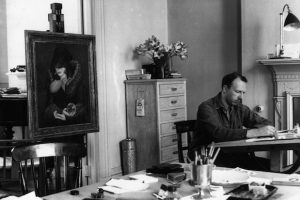
Jack soon married Cristina and they ran off to the South Seas and lived for a time on the island of Moorea (after which he named their daughter). Jack painted several canvasses and then went to Mexico to show his work to Diego Rivera, whom he revered as both an artist and a fellow Marxist. Rivera was so impressed he engaged Jack as his assistant and took him on as a pupil.

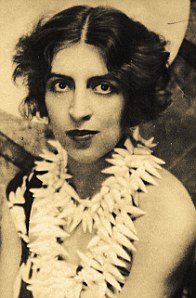
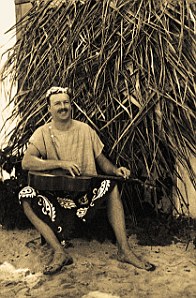
The Earl of Huntingdon and his wife Cristina Casati.

The Red Earl at work and play, and below left, his wife Cristina

article-0-2193D5A400000578-234_196x298 article-0-2193D32700000578-730_196x298

There he lived for nearly a decade, in between trips to Hollywood, where his notoriety caused him to be much in demand and, as he told my father, he socialised with Douglas Fairbanks, John Barrymore, Ronald Colman, Dietrich, Livvie, whom he attempted to kiss, and – most importantly – a newly famous Errol Flynn. Jack and Errol had something in common apart from being rebels with a taste for young women and living close to the edge.

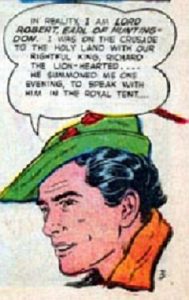
The family tradition was that the Earls of Huntingdon were directly descended from Robin Hood, a claim supported by English folklore (the title of Earl of Huntingdon has often been associated with Robin Hood). Some of the male Earls have been given the name Robin, and the present Earl of Huntingdon is called William Edward Robin Hood Hastings-Bass.

Robin Hood, Earl of Huntingdon!

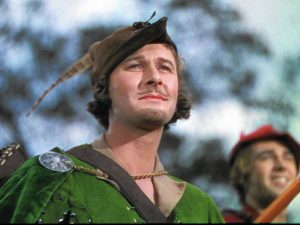
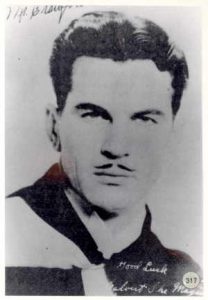
When Jack heard that Errol was to play Robin Hood in a film, he jotted down some notes. One was:’It must be made clear that he is the Earl of Huntingdon.’ Another said: ‘Your moustache should be grown thicker, like mine,’! He was rather annoyed when both these directives were ignored.

The Red Earl's Moustache

The Red Earl’s Moustache

Errol's Robin Hood Moustache

Errol’s Robin Hood Moustache

Jack could be volatile. He was so wedded to the idea that he was a descendent of Robin Hood that when one man had the temerity to question the outlaw’s historical existence, Jack threw him down the stairs.
His marriage to Cristina failed, partly due to her being equally hot tempered. Though she claimed to be a Communist, she once hit her maid so hard she broke her arm. After they divorced, Jack married the novelist Margaret Lane.

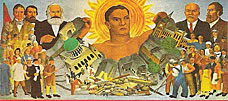
Jack Hastings was a man of unique talent as an artist who has now become known as ‘The English Diego Rivera.’ He painted a mural for my father called ‘The Snake in Eden,’ which he had hung in our dining room in Italy over the objections of some, who found it a trifle explicit. His murals are now considered lost masterpieces as very few exist. There is one in the Marx Memorial Library in London and two in the US. I would be fascinated if anyone knew the whereabouts of other murals. In the meantime, there is a wonderful biography of Jack, called ‘The Red Earl’, by Selina Hastings, his other daughter. I recommend it strongly, as he and the Flynnster were definitely fellow travellers!

One of Jack's political murals

One of Jack’s political murals

My father with Moorea and my brother, Pericles.

My father with Moorea and my brother, Pericles.


— PW


The Sea Fox

19 Jan

sea fox

Dear fellow Flynn fans,

I came across a funny Aussie anecdote loosely attached to our Hollywood hero.

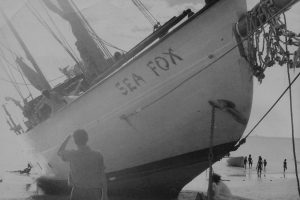
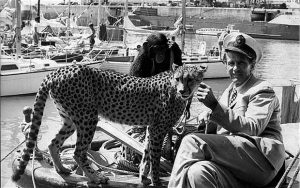
In July of 1959 a seasoned schooner by the name of “Sea Fox” got lost in the Timor Sea. She had sailed from Darwin and was reported missing a few days later. On board were magician John Calvert, female singer Pilita and monkey Jimmy of Tarzan film fame.
cal
When brought in by the Australian Navy she at least had not sunk, but bunked at a sand bank. Soon rumours made the rounds that Errol Flynn had stranded his yacht.

The combination of a charismatic moustacheod yachtsman accompanied by an exotic woman plus a monkey actor in tow seemingly always equalled Fynn in Down Under. Hear more here: blogs.abc.net…
john_calvert
Enjoy,

— shangheinz


Leader of the Pack

12 Jan

pack

Dear fellow Flynn fans,

take heart and treat yourself to a Packard! One of those originals Errol used to drive is to be auctioned off: www.invaluable.com…

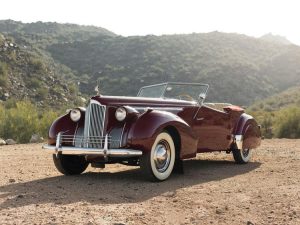
The Packard “Darrin” was a remarkable blending of all the glory that was Packard in the Classic Era with all the impudence that was the stock in trade of Howard “Dutch” Darrin. The result was glamour with lots of pizzazz—a perfect fit in the luxury maker’s lineup for an exclusive, halo automobile.

Without Darrin’s insistence, the car likely would never have been built. Following his days in Paris, the inimitable Darrin settled in Hollywood, where he immediately established himself as the purveyor of custom coachwork to the stars. The polo-playing Darrin was quickly accepted by the Hollywood crowd; his well-cultivated French accent fit in perfectly. He named his shop “Darrin of Paris,” and his first client was Dick Powell, for whom he fashioned a two-passenger Ford roadster in 1937. Shortly thereafter, he built a two-seat convertible victoria roadster on a 1937 Packard One Twenty chassis for actor Chester Morris. It led to the idea of building a five-passenger version and selling Packard on the idea of including it as part of its lineup. The initial word from Detroit was no, but that didn’t stop him.

Darrin began with a standard Packard Eight Business Coupe, little of which remained when the transformation was completed. Most memorable were the sweeping cut-down curves of the doors, the car’s signature styling feature commonly referred to as the “Darrin Dip.” The rakish body looked downright racy when compared to competitor Lincoln’s Zephyr Continental, yet the car remained unquestionably and distinctly, a Packard.

Darrin arranged to have the car parked outside the Packard Proving Grounds at the time of the annual dealer’s meeting, precisely where the dealers could not help but see it. That, as they say, was that! Under pressure from its dealers, Packard included the “Darrin” as part of its catalogue for 1940 with three models: Sport Sedan, Convertible Sedan, and Convertible Victoria. It is estimated that 100 were built through 1942 when production was halted prior to World War II. “Darrins” were real celebrity cars—Tyrone Power, Errol Flynn, Al Jolson, Ruby Keeler, Preston Foster, and Gene Krupa all had one

I wonder if it comes complete with folding down front seats.

Enjoy,

— shangheinz


What 1 actor…

05 Jan

also appearing on the Perry Mason series, has a most unusual connection to Flynn. A quadruple threat in the arts: stage, screen, radio and (of course) television. Pondering the full import of his name, gives a strong indication as to not only a special location, but also its special contribution to a MOST SPECIAL film. Any one up for a SPECIAL challenge this evening?

— Karl


Castro away

10 Dec

Dear fellow Flynn fans,

when guerilla commandante Fidel Alejandro Castro Ruz ousted the despised dictator Fulgencio Batista on January 1st of 1959, everybody including Errol thought Cuba would turn from US backyard brothel into Paradise Island International. www.theerrolflynnblog.com…

The high hopes were fueled by the high motives of the eloquent revolutionary. Freedom and equal birth rights were the proclaimed pillars of Fidel`s philosophy. Communism seemed not a top priority. The lowest common denominator between El Maximo Lider and Karl Marx was a full beard.

Born out of wedlock under the name of Fidel Hipolito Ruz Gonzalez, Castro was the kid of a wealthy landowner and his housekeeper. Maybe the the itch of being an illegitimate child triggered the urge to become an usuper.

His birth date had to be altered by a year, in order he could attend the Jesuits` college one year earlier than allowed. At university he stood out for his crisp mind and sharp tongue at a early age too. Top baseball outings on Cuba`s canefields led to unconfirmed tryout offers by the Boston Red Sox and New York Yankees, but he opted for a more deceptive profession and became a lawyer.

He first brought on a law suit against Batista and when it failed to make the military leader leave his office as new Head of State, Semper Fidel organised a coup of his own with 160 men trying to take the second largest barracks with 1500 soldiers. The historic quote “History will absolve me” stems from a letter he wrote out of prison after being captured as one of few survivors.

After his release Castro fled to Mexico with his younger brother Raul, where they met perennial poster boy Ernesto “Che” Guevara, another unscrupulous idealist. The chain smoking asthmetic medic became the spark to the Castro Bros. fuze. The rest is his story: nyti.ms/2gqyc4l…

El Fidel would go on to control the fate and faithfuls of the largest Caribbean isle seeing 11 US presidents come and go, survive 638 assassination attempts acknowledged by the Guiness Book of Records and a nuclear Mexican stand-off at sea between Khrushchev and Kennedy.

El Flynn saw the Robin Hood in Fidel Castro when only the post of Sheriff of Nottingham was vacant.

Power seekers with brains, big egos and bank accounts will stop at nothing- today more than ever!

Hasta la Flynntoria siempre,

— shangheinz


Egged by the Mob

19 Nov

fef9ca1cebe02d219a39cbc18c998e1f

Dear fellow Flynn fans,

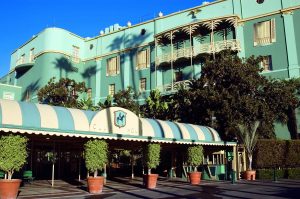
on April the 24th in 1944 at the Mocambo Nightclub Errol narrowly escaped an assassination attempt by the Mafia. But it was not his life that was in danger, but rather his fair hair.

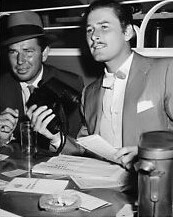
He became involved in a ladies`wrestling match between casino society member Virginia Hill and showgirl singer Toby Tuttle. It is not entirely clear what and who started the socialte scuffle, but somehow Flynn got between the lines of fire. An egg was thrown at our Hollywood hero and hit him bullseye on the head. Later one of them ready-to-hitwomen would say that was because he wasn´t galantly stepping up for her after a crude remark from the other fighting hen. Another source stated it was for his grinning and watching appreciatively while sport commentating the scene to his pest pal Freddie McEvoy.
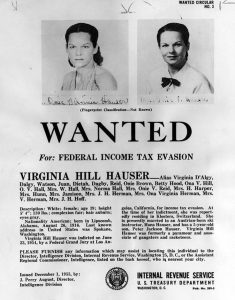
Now while some papers spotted Miss Tuttle as the perpetratorette, others held Miss Hill responsible. She of course was “Bugsy`s girl”. Not Bugsy Malone, mind you, but Benjamin Siegel, jewish mobster debonaire, the founder of Murder Inc. and the builder of the Las Vegas Flamingo Casino Hotel.

Born and raised like cettle in Lipscomb (Alabama) Virginia ran away to Chicago at age 17.

“Where I lived was prison. There were ten kids in the family and no money. My father worked in a livery stable as a horse and mule trader while my mother ran a boarding house. My grandmother at eighty was still chopping cotton for a living. I swore the same wouldn`t happen to me.”

Starting out as waitress, she was always looking over her shoulder for police detectives coming to drag her back home.

“I had a story all figured out in case they found me. I was going to tell them I got married and had the wedding annulled. If they wanted to know in what court all that took place, I would tell them to find out for themselves, because I was under no legal obligation to tell them. I died a million deaths before I reached 18. All my life I have been afraid, maybe that`s why I do so many crazy things, just to prove myself that I´m not scared.”

Fatherfigure Joe Epstein made her a figurehead for his bookie joint. Soon the resolute redhead made so much money, she had trouble to account for her incredible income. She`d always claim her good fortunes resulted from the horse track. Her cross-my-heart-hope-to-die-tongue-in-cheek reference promptly got her summoned to Senator Kefauver`s crime- investigating comittee.

“Winning bets does only account for $15.000. Where does the rest of your money come from?”
“Men give it to me.”
“Why should they give you such large sums of money?”
“I`d rather not say.”
“You`ve got to answer or face up to three years imprisonment for contempt of court.”
“Alright, then, if you must know, it`s because I am the best goddamn lay in the country!”

She was a two time divorcée before settling in California, where she threw lavish parties for the Hollywood Community. The road to the Bug lead via Joey Adonis and over George Raft, who got introduced to her by Pat DiCicco. Her stalksy legs lent the Flamingo Club its name. The most modern and ornate gambling house opened on Dec. 26th, 1946. Night after night it came out $20000 in the red. Local townsfolk boycotted the temple of doom. Bugsy swore he would bury them all before he got out. It never came to that. Benjamin “Bugsy” Siegel got shot and killed in Virginia`s monumental mansion at 810 Linden Drive in Beverly Hills on Errol`s birthday, June 20th of 1947. When Virgina got the news in Paris, her statements somehow varied.

“Please get that straight. People are saying I was his mistress and such stuff. That`s nonsense. I never spent much time with him.”

“The death of my friend Benjamin Siegel has caused me immense chagrin and I am seeking solitude because of my suffering.”

“Ben was the only man I loved. I could kill myself.”

She indeed attempted suicide at least four times with sleeping pills but walked away unfazed every time. That is what being used to downing 15 sundowners before noon will do for you. When she met the Austrian world class skier Hans Hauser (instructor of Ernest Hemingway amongst others) at Sun Valley, she knew time had come to get away from Inc. all. Using marriage as an exit strategy they settled near Salzburg, where she penned her 600 page boudoir memoir. In 1966 she finally succeeded with another suicide attempt. Her husband hanged himself years later. Their son Peter, a Vietnam veteran, died in a crazy car crash in France. Rumors in Europe never seized that the long strongarm of organized crime had gotten to all of them at last.

Virgie for sure was no vigilante, but “let (s)he who is without sin cast the first egg…”

Enjoy,

— shangheinz


The Great Race

06 Nov

Arrogate v. California Chrome. Names that would have worked well in Errol’s own stable.

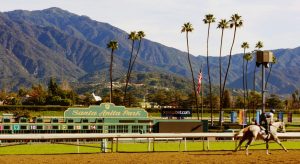
It was a great day at the races today at Hollywood’s hometown horsetrack, Santa Anita, one of Errol’s favorite haunts, where he often played the ponies, and occasionally raced some of his own.

www.advantagewagering.com…

www.telegraph.co.uk/travel/destinations/northamerica/usa/8495591/Horse-racing-in-America-The-Hollywood-glamour-of-Santa-Anita-Park.html…

“America’s biggest race may be the Kentucky Derby, but Santa Anita – or ‘Hollywood’s Racetrack’ – in California wins in the glamour stakes.”

“Since Santa Anita Park opened back in 1934, the horse race track has been featured in numerous films, including A Star is Born (1954), Bob Hope’s The Lemon Drop Kid, the Marx Brothers film A Day At The Races and National Lampoon’s Vacation to name just a few.”

press-santa-anita-01

at-the-races-1-1

satrack

— Tim


In should`ve been Flynn 11

07 Oct

Dear fellow Flynn fans,

here is a Errol Flynn would be hit and narrowly missed movie with a tailormade theme to his torrid temperament.

The circumstances courtesy of TCM.com…:

Charles Nordhoff and James Norman Hall’s novel was serialized in The Saturday Evening Post (28 December 1935-1 February 1936). A December 5, 1935 Hollywood Reporter news item reported that producer Samuel Goldwyn purchased the film rights to their novel for $60,000, and various news items in the spring of 1936 noted that he originally intended to produce the film in Technicolor, but was prevented from doing so because of the cost involved. The film’s pressbook stated that Goldwyn had hoped to shoot the entire picture on location in the South Seas, but the expense and difficulty of transporting the equipment, combined with the possible adverse weather conditions, necessitated that the picture be shot in Hollywood. A great deal of background footage was shot in the village of Pago Pago, on the Tutuila Island in American Samoa, however, where the camera crew received the cooperation of the U.S. Navy. A November 22, 1937 Life article reported that the location crew shot “140,000 feet of scenic shots in Samoa, enough to make 14 movies.” Among those who went to the South Seas for location scouting in the winter of 1936 and filming during the following spring were: director John Ford, associate director Stuart Heisler, unit location manager Percy Ikerd, art director Richard Day, photographers Archie Stout and Paul Eagler and an eighteen-member technical crew. Although a November 1, 1936 New York Times news item stated that Gregg Toland would be leaving in a week to film exteriors in Samoa, his participation in the completed film has not been confirmed.
Among the actresses listed by contemporary sources as being considered for the role of “Marama” were Merle Oberon and Movita Castenada, the latter of whom appeared in the picture as “Arai.” According to Hollywood Reporter news items, Goldwyn first signed Margo for the part of Marama, then borrowed Dorothy Lamour from Paramount after Margo asked to be relieved of the role. “Moon of Manakoora” became Lamour’s signature song, and the role of Marama helped establish her career identification with a sarong, which was begun with the 1936 film Jungle Princess. A Hollywood Reporter news item reported that Charita Alden was being tested for an uspecified role, and a Hollywood Reporter production chart includes Barbara O’Neil in the cast, but their participation in the completed film has not been confirmed. Basil Rathbone was originally considered for the part of “Eugene DeLaage,” which, according to a September 25, 1938 New York Times article, he turned down. Photographer Bert Glennon and actor C. Aubrey Smith were borrowed from Selznick International for this production.
A November 19, 1936 Hollywood Reporter news item reported that Goldwyn would star Mala as “Terangi” if Errol Flynn were unavailable for the part, while a November 21, 1936 Film Daily news item stated that Goldwyn contract players John Payne and Frank Shields were being tested for the role. In early February 1937, Goldwyn announced that Joel McCrea would be playing “Terangi,” although by late Mar, he was removed from the cast and placed into another Goldwyn film, Dead End. After much publicity announcing that he was looking for and casting an “unknown” as “Terangi,” Goldwyn finally revealed that he had placed Jon Hall in the role. Although Goldwyn’s publicity, contemporary news items and reviews variously asserted that Hall was an “unknown,” a “newcomer,” or that he had “never appeared in a picture” before, Hall had made numerous films in the mid-1930s under the names Charles Locher and Lloyd Crane. Contemporary and modern sources variously state that Hall was the cousin, second cousin or nephew of author James Norman Hall, and that he was a next-door neighbor of Ford, all of which contributed to his being cast as “Terangi.” Hall, who was born in Fresno, CA, was reared in Tahiti, although some sources incorrectly state that he was born in Tahiti as well.
According to Hollywood Reporter news items, William Wyler directed tests of the actors while Ford was finishing direction on Wee Willie Winkie at Fox, and location shooting was also done on Santa Catalina Island, CA. A March 24, 1937 Hollywood Reporter news item announced that Goldwyn was going to produce a 1,000 foot short about the filming of The Hurricane in Samoa. The news item stated: “The short titled ‘Samoa for the Samoans’ will be released to theatres in advance of the feature’s distribution and will show the manner in which a picture company works on location.” No other information about the short has been found. Although Frank Loesser and Alfred Newman’s song is entitled “Moon of Manakoora,” contemporary sources refer to the island on which the film’s action takes place as “Manukura.”
The widely praised hurricane sequence was created by special effects expert James Basevi and his assistant, Robert Layton. Basevi and Layton, who had been with M-G-M for fourteen years, left the studio in September 1936 after creating the earthquake special effects for San Francisco (see below). According to Life, Goldwyn gave Basevi a budget of $400,000 to achieve his effects, and “of this amount, $150,000 was spent to build a native village, fronted by a lagoon 200 yards long. The other $250,000 was spent in destroying it.” A pressbook for the film notes that the native village set occupied two-and-a-half acres of the United Artists studio backlot. With the aid of numerous twelve-cylinder Liberty motor wind machines, large wave machines, firehoses and an elaborate system of pipes, chutes and holding tanks, thousands of gallons of water were sent crashing down onto the sets to create the winds of the hurricane and the subsequent tidal waves. Contemporary sources note that doubles were not used for the actors during the storm sequences, and as an article in New York Times related: “Dorothy Lamour and Mary Astor were really lashed to that tree and buffeted about like chips.” According to another New York Times article, the rigors of shooting resulted in Hall losing thirty pounds by the time the picture was completed. In her autobiography, Astor describes the shooting: “Huge propellers kept us fighting for every step, with sand and water whipping our faces, sometimes leaving little pinpricks of blood on our cheeks from the stinging sand.”
According to a remark by Goldwyn printed in a New York Times article, the film cost $2,000,00 to produce. The article relates that Goldwyn spent another $35,000 on the picture’s premiere at the Carthay Circle Theatre in Los Angeles. The film was named one of ten best pictures of 1938 by the Film Daily annual critics poll, and a modern source notes that it was “one of United Artists’ most successful releases in years.” Thomas Mitchell was nominated for an Academy Award for Best Supporting Actor, and Alfred Newman was nominated for Best Score. The Hurricane won an Academy Award for Best Sound Recording. Information in the MPAA/PCA Collection at the AMPAS Library reveals that the picture was the object of much criticism by the French government. French officials in Washington, D.C. demanded cuts of the scenes in which prisoners were flogged and tortured by French guards. The eliminations were made, but the film still encountered difficulty in Paris, where censors refused to pass a dubbed version. According to a letter from Harold L. Smith, who apparently was a PCA foreign staff member, “there was a unanimous decision of the censors not to pass the film for two reasons: first, the original version was considered anti-French in accord with reports received from the French Embassy in Washington and second, the local office of United Artists presented to the censors a revised version of the film whereas the regulations require that the original version be presented.” Correspondence in the file indicates that the French representative of United Artists was fearful that the original verison would not pass and so instead submitted a revised version. The correspondence does not specifically state which version was exhibited in Paris, but apparently the censors did agree to review both the original and dubbed versions.
According to modern sources, Goldwyn originally wanted Howard Hawks to direct the picture, for which Ben Hecht was hired to do an uncredited rewrite just before going into production. A 1974 New York Times news item noted that Paul Stader was Hall’s stuntman for a jump off a cliff. The picture was remade in 1979 as Hurricane, which was produced by Dino De Laurentiis, directed by January Troell and starred Jason Robards, Mia Farrow and Dayton Ka’ne. According to a 1978 New York Times article, De Laurentiis “reportedly paid $500,000 for the rights to the original film.” The remake, which was filmed on location in Bora Bora, cost eleven times more to produce than the original. The Variety review of the later film incorrectly states that Glen Robinson created the hurricane special effects for the 1937 picture.

Here`s a torn sails` snippet:

www.youtube.com…

Enjoy,

— shangheinz


Chuck and the club- just another Higham hoax?

04 Oct

img_4186

Dear fellow Flynn fans,

I came acoss a curious statement in the obituary (www.smh.com…) of nazitorious biographer Charles Higham.

Higham had a delight in the macabre and the absurd, exemplified by his invitation to the English widow of Hermann Erben for dinner in Los Angeles with a Flynn double, Chuck Pilleau. Higham coaxed from her a bizarre revelation: SS agent Erben was circumcised.

Now more interesting than Dr. Erben`s anatomy is that another little known stuntman, stand- in or stooge of Errol is brought into play, a certain Charles Pilleau.

I found an entry on this virtually unrecorde go- to gent, posted by a friend of his, a one time actor and passionate golfer:

All I know is that I found a picture on the web of a suppossedly Errol swinging a golf club. And it was a lefty swing? I wish I knew how to post it here. I was given an old “Brassie, driver” by my old friend that I used to rent an apartment from in Hollywierd in the early 80’s ( N Franklin & Hollywood Blvd ). I was studying acting, rasing hell around town and just enjoying my youth (srtaight). His name was Chuck “Sir Charles Pilleau”. What a charachter and friend. He was long in the tooth with some great stories. He took a liking to me cause I’m a Texas boy. I as well enjoyed his company as I used to help him around town to get his tasks done since he only had one eye and a lung left. Don’t feel sorry. I saw some of the gals that old Chuck had over from time to time. He had the charm. Another of our friends eventually aided old Chuck in finding his way back to Australia where I heard he passed a few years later. I know that he was FLynns buddy cause he had all the pictures hangin on the walls and the stories were abundant and in line with everything that I had heard about Flynn. Except there were no gay stories from Chuck. The gay stories according to him were an attempt to ruin him. I believe my friend Chuck Pilleau………Still Puzzled About This Old Brassie Driver……….Was Errol right handed or not? I haven’t answered it yet. Pardon…..distracted with memmories of my pal Chuck. He seemed almost “life like” to Errols immage and mannerisims…..John Horton el************@*ol.com….

Unfortunately when I tried to contact Mr. Horton to putt him the photo pictured above as answer to his question, I came across another obituary: dfw.cbslocal.com…

Enjoy while you can,

— shangheinz


Flynn was “Fleeing” in ’37

07 Aug

from “HOLLYWOOD”, January 1937

“News Scoop for January”

“Why Errol Flynn is Fleeing Hollywood”

In Charge of the Light Brigade Errol Flynn plays another dashing, adventurous role. Finished with this and two other pictures, Flynn is deserting Hollywood. Read why in this article!

To Some Mortal souls on this earth the call of the South Sea islands is greater
than any other thing in the world. To them the Song of the Islands is more than
a beautiful tune, a romantic interlude. It is a call to adventure in unknown places, an urge to move restless feet toward the mystery of antiquity, a willingness to dare uncharted reefs for the beckoning things beyond.

Errol Flynn is one of these souls, forever restless, forever in the pursuit of
adventure. For him there is no glamour in the present, not even in glamorous
Hollywood. The restless, haunting look you see in his eyes is not from clever
acting. The Errol Flynn of the screen is Errol himself, a man of the far horizons
who refuses to linger long in one place. And lately he has heard the call of distant lands.

Errol was just completing work on Another Dawn for Warner Brothers when
we talked with him about the mysteries of Tahiti, and other islands so remote that they remain nameless to this day.

“I guess the South Seas would lure most anyone,” he told us, pacing up and down the sound stage floor as the cameraman worked for new shooting angles. “I don’t think I’m much different from anyone else. We’d all go down there if we could. I guess the only difference is that I am going just as soon as I wind up this picture.”

And there the difference is, as plain a fact as you could ask for. The lure of big
money as a dashing movie star, the adulation of fans all over the world, the peacefulness of serene security — these things mean nothing at all to Errol Flynn.

You doubt that?

Then consider the facts. Errol has been in pictures only a brief year. He was
discovered” while the studio was testing for the lead in Captain Blood. It needed a dashing young man full of the spirit of adventure. Fate gave Errol that particular screen test, and overnight he became one of Warner’s most triumphant personalities.

Years of adventure in the South Seas made Errol Flynn a husky, stalwart adventurer. He’ll stack up nicely with Atlas anytime!

The studio knew its man all too well. It deciphered that faraway look in Flynn’s
eyes and sent out an order that might well have read like this:

“Attention all producers: we have a marvelous hit in Errol Flynn. But he is
a natural born adventurer who is hard to hold in one spot. Maybe we can keep him
inside Hollywood for a year, but not much longer. Do things fast with him.”

Of course they didn’t send out that exact order. But it is a fact that Errol, in that brief year, completed not only his first picture, but leads in the following master-pieces: Charge of the Light Brigade, An- other Dawn and Green Light.

All of these pictures are top notch productions. Most stars would consider it good fortune to do only one of these in a year. With the exception of Green Light, all of the films are costume pictures. And in Green Light Errol plays the role of a doctor who flees misfortune, battles spotted fever amid the backwoods roughness of Montana. So you see he is fundamentally the adventurous type of man in all three films.

Captain Blood made such a hit that they ran it many months longer than usual.
Charge of the Light Brigade’s release was held up for that reason. Last month we previewed the latter picture. It will make your masculine or feminine heart pound. Adventure is here in copious quantities, and romance too. It is another tremendous Errol Flynn hit. Soon you will be raving about the picture, and it seems destined for as long a run as Captain Blood.

That means only one thing: it will be many months before both Another Dawn
and Green Light are released to the theaters, and it is during these months that Errol will venture into the South Seas to get some of that restlessness out of his system.

Something to Think About

Warner Brothers might well worry about this trip. Why? Because, Errol Flynn being what he is, might decide never to return to Hollywood and motion picture fame. Just like that — with a cool snap of his fingers. But he will come
back. Warners are sure of that. They gave him a good reason for returning from the land of beyond.

__________

Several months ago Errol joined Fawcett Writer William Ulman, Jr. in writing
a story on some of the actor’s personal adventures before he became a star. The
title of that picture is The White Rajah. The idea came about during a lazy week- end in Palm Springs when Ulman was visiting Flynn, gathering material for a series of stories for Movie Classic.

Out there in the desert the two reminisced together. Errol talked about a picture he would like to do, a picture full of the nostalgia of the South Seas, of thrilling incidents from his own life.

“Why don’t we get together and turn that story into a scenario?” Ulman asked
Errol after several hours discussion.

It was a deal. They worked it out, and sold the opus to Warners for a princely
sum. And that’s why the studio is sure that Flynn will come back!

Flynn ‘s itinerary is the kind you love to speculate about. He will take the last
scheduled steamer run to Tahiti and em- bark from there. (After this trip all regular ships will dispense with making Tahiti a port of call, there not being enough business to make it worth while.)

What he will do in Tahiti is still as much a mystery to Errol as to anyone else how he will leave Tahiti for other islands is a matter for fate and time to decide.

But by and by a tramp steamer, a fishing schooner, or some wandering ship will drop anchor off the dreamy shores of Tahiti, and Flynn will find his time to move has come.

While restlessness is perhaps a prime factor in luring Errol away, he has a
couple of real objectives in his Odyssey. Among the countless islands of the South Seas mandated to Japan is one particular lump of land that catches his fancy. He calls it The Lost Island, although of course it technically is nothing of the sort.

On this strange Lost Island, Japan is said to have secret fortifications. And
Nippon is usually extremely reluctant to allow visitors within the sacred precincts. Nevertheless, the intrepid Flynn will visit that island shortly, with the official permission of high Japanese dignitaries. And all because Errol, in one of his previous adventures, developed a close friendship
with a son of one of these influential officials.

A Lost World

What Errol wants to see is not any secret military outpost, but to delve into the
mysteries of a lost civilization which once flourished on the isle. Here, under the perpetual shade of dense palm groves, are the ruins of another era, said to rival even the mystical Mayan ruins of Central America.

That spells adventure to Errol. He is taking with him a 16 mm. camera with a
supply of natural color film. When he returns he hopes to have adequate proof
of another Yesterday in human existence.

From the Lost Island the actor will swing down to the East Indies, a familiar
sight to him, for it was here that he had some of his most exciting adventures
before he climbed the heights of Hollywood.

This country is the background of his White Rajah story. So somewhere along
the line he will pick up a professional cameraman likewise afflicted with wanderlust, and film familiar scenes as a basis for the actual production. Didn’t we tell you there was a good reason for Errol to come back to Hollywood?

Yes, Errol will come back, even if it wouldn’t surprise anyone that he didn’t.

He will make White Rajah and perhaps by then he will be willing to settle down for awhile. One cannot make any accurate predictions regarding his future. Errol is forever independent. And he loves the region “down under,” where he had his first mad adventures with life.

____

Here’s Errol Flynn in a scene from Green Light, due for spring release. The
faithful dog is an important character in the film adaptation of Lloyd C. Douglas’s
famous book.

Green Light

— Tim