Mail Bag!
Thanks, Ross!
— David DeWitt
Mail Bag!
Thanks, Ross!
— David DeWitt
Not everyone (?) here may be old enough to remember 2 Brits of note: Edward VIII and King George VI, and how a film of Errol Flynn’s, literally, came BETWEEN them… if you don’t remember~ read on courtesy of Wicki:
“The Prince and the Pauper is a 1937 film adaptation of the 1881 novel of the same name by Mark Twain. It starred Errol Flynn, twins Billy and Bobby Mauch in the title roles, and Claude Rains and has been described as “a kids’ fantasy.”[2]
The film was originally intended to coincide with the planned coronation of Edward VIII in 1936. However, its release was delayed until the following year.[3] The film was released on May 8, 1937, four days before the coronation of King George VI and Queen Elizabeth.
According to Warner Bros records, the film earned $1,026,000 domestically and $665,000 foreign making it the studio’s most popular film of the year.[1]
Frank S. Nugent of The New York Times wrote, “Bobby and Billy justify their twinship completely, not merely by investing the Twain legend of mistaken royal identity with a pleasing degree of credibility, but by playing their roles with such straightforwardness and naturalness that the picture becomes one of the most likable entertainments of the year … The novel and the screen have been bridged so gracefully we cannot resist saying the Twain and the movies have met.”[9] Variety published a negative review, reporting: “The fragile plot scarcely holds together a full length screen play”, and suggesting that its running time could have been trimmed at the beginning so Flynn could enter the film earlier.[10] John Mosher of The New Yorker praised the film as “a fine spectacle”.[11] Harrison’s Reports called it “An excellent costume picture” with “outstanding” performances.[12]”
— Karl

Leicas have a value that never diminishes. Their provenance and limited editions are a prized gold standard, their value magnified even more if they are known to have created a certain iconic image or if they have an interesting history.
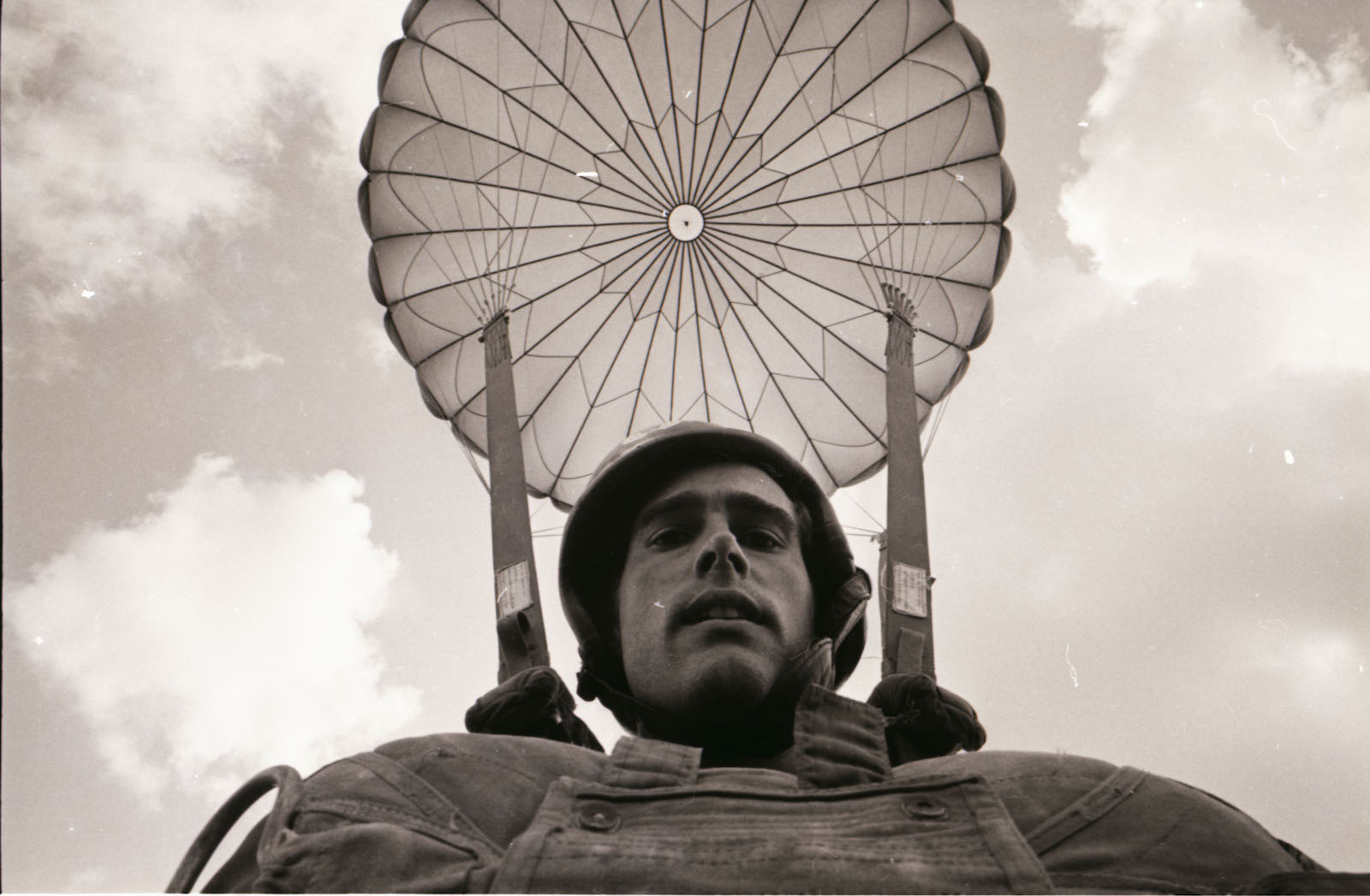
American actor and photographer Sean Flynn’s Leica M2 was purchased in Spain, where he was starring at the time in B grade spaghetti westerns. It was his camera of choice when commissioned by Paris Match magazine to shoot a three-month stint in Vietnam in 1966.
Five decades on, that camera, along with the contact sheets from those shoots, have only just re-emerged, bringing with them a kaleidoscope of haunting memories.
In 1967, after a particularly fraught day up on the demilitarized zone (DMZ) being hit by North Vietnamese and friendly fire, we both promised that if we survived we would be out of there.
We arrived back in the world just in time for the Six-Day War. The camera went to Suez, Sean shooting from the Israeli side and me from the Arab side. His pictures were of Arab soldiers surrendering and mine of Bedouins forced from their homes into dry, stony, inhospitable refugee camps.
We wound down in France, hanging out with The Living Theatre, who were performing Pablo Picasso’s play Desire Caught by the Tail, jazz fusion band The Soft Machine and performance artists Ultra Violet, Taylor Mead and Jean-Jacques Lebel.
After watching images of the 1968 Tet Offensive on television, we broke our promise and, as Mike Herr would later write in Dispatches, were drawn back to Vietnam like junkie moths to a flame.
Sean’s return to ‘Nam took the camera further afield than before. It made it to Angkor Wat, to Bali, president Richard Nixon’s visit to Indonesia and then into the remote highlands of Papua, following in the footsteps of his father, the late swashbuckling actor Errol Flynn.
But for all that, he didn’t have it on him when he and Columbia Broadcasting System (CBS) cameraman Dana Stone, both aboard scrambler motorcycles, vanished forever on the Vietnam-Cambodia border on April 6, 1970.
It is hard to believe that it’s now more than 50 years ago that we sat around stoned on marijuana in my air-conditioned room at “Frankie’s House,” the address we shared in wartime Saigon, performing what we called “arts and crafts.” In reality, arts and crafts was about assembling the photographic gear we needed to pass muster in the field.
Sean had decamped from the Hotel Royal to Frankie’s after we first met at the “Five O’clock Follies,” the Military Assistance Command of Vietnam’s daily briefing.
We had a couple of cold ones on the Continental Shelf, the iconic open-air bar at the Continental Hotel, and drove back to the four-story house at 47 Bui Thi Xuan for a night of passing the pipe.
Sean moved in the next day to my old room on the top floor. The house was home to a tight-knit band of brothers, all photographers or reporters working for United Press International and various television outlets. As folks rotated home, the longer-stayers graduated to a better room.
Frankie was in fact Tran Ky, a married Vietnamese draft dodger who was our live-in domestic and procurer of all necessities. His job, among other things, was to replenish the joints in the sandalwood box that had been gifted to the house by Look magazine’s Sam Castan, killed in the Central Highlands in 1966.
Working in the field was a roulette of choice, from the Mekong Delta to the DMZ. American, Korean, Australian or South Vietnamese Army (ARVN) operations on land and sea or in the air, often all three on one sortie. Sean and I both liked to hang out with special operations units that pushed the edge and took the fight to the enemy.
Vietnam was the first uncensored war, the first television war, the first war of the freelancer and the photo agency. And the first war America would lose.
We would drop in on medevac and resupply runs, ride the back seat of F4 Phantoms or descend by helicopter into a hot landing zone, green tracers lancing at us out of the jungle.
Your raison d’être was around your neck, your camera or cameras. Your mission was to document history in the raw, to bring home the unalienable truth and reality of whatever was the most profane and horrific you had ever witnessed.
You were not there as a medic, radioman, machine-gunner or officer, you were just there to make photographs.
Spasmodically, you would have to use other self-survival skill sets when the shit really hit the fan and your neutral role was discarded.
Sean found himself in that position more than what was normal. He had been a white hunter in Africa and a gun buff since he was a teenager. He was a good shot and initially went the military way before finding a Dao Buddhist path to realization in Bali.
It was a hard war to leave, a constant thrill surrounded by a coterie of brothers, bonded by experience and the heady rush of revolution and rock and roll that was the 1960s. There was nothing back in the world to match it.
You also made better and better images, understood how things were and what to do, whom to focus on. Almost like a snapper at a sports match.
But the conflict took its toll. Given 20 minutes to live after being caught in a landmine blast near Tay Ninh in 1969, I somehow survived.
While recovering from yet another surgery a year later as the first foreign civilian to be admitted to Washington’s Walter Reed Hospital, I heard that Sean and Dana had gone missing on Route One in Cambodia, close to where it crosses the Vietnamese border.
In the space of two weeks, 10 of our brothers were captured or killed on that same stretch of highway by combined Viet Cong and Khmer Rouge units.
Not a single body has ever been found in a zone that now lay in the path of a mega US-ARVN) incursion into North Vietnamese bases in neutral Cambodia.
My personal search for Sean and Dana has now gone on for 48 years, all the while assembling bits of information from the memories of old villagers, past interrogations of prisoners and official excavations. Back in 1990, we believed that we had at last found the remains of my missing friends.
But 15 years later, new DNA testing by Hawaii’s Joint Prisoners of War, Missing in Action Accounting Command discovered they belonged, ironically, to two peaceniks who had hijacked a ship full of napalm and ammunition into the Cambodian port of Sihanoukville. Like Sean and Dana, one was tall and the other short.
The search continued and became the genesis for a memorial for all the fallen media on both sides of the Indochina War. A book and exhibition called Requiem (Hoi Nhiem in Vietnamese) displayed the frames by our dead and missing comrades.
The exhibit still resides at the War Remnants Museum in Ho Chi Minh City, the renamed Saigon, and rates as one of the most visited tourist sites, even if the Vietnamese themselves hardly ever mention the war.
When Sean and Dana disappeared on Route One, 6 kilometers east of Chi Pou, Sean was packing his Nikons, one a trusty F200 F4. Dana was shooting for CBS on a small hand-held film camera that allowed for freedom of movement.
Eventually, John Steinbeck IV took Sean’s belongings from our old Tu Do flat back to Paris. Sean’s half-sister, Rory, put the Leica, still field-cruddy, into a safe where it remained until she recently decided to place it in a collection.
This is where it started to turn weird. I got a call from Ho Chi Minh City. On the other end of the line was an Australian who had gotten my number from another old Saigon bureau survivor, Frank Palmos, author of Ridding the Devils.
A film director and also a collector of vintage camera equipment, much of it from the Vietnam War era, the new owner wanted to know if the camera he had acquired was the real thing before money actually changed hands.
He knew it was for real because he had already bought it. But as Henri Thoreau would say in Walden Pond, “You only ask a question when you need reassurance.”
He wanted me to hold it and really check it out. Was there a roll of film inside? No. Did it still work? Yes. Could I shoot a roll of Tri-X and re-christen it? Yes, yes, yes. It was Tet and Christmas rolled into one.
Miraculously, some years ago, a parcel turned up from Atlanta. A lawyer had been at a car-trunk sale and found a Hasselblad camera bag with Sean’s name inside it, along with a plane ticket and other bits and pieces.
An amazing gift, it arrived with a card saying, “I thought this bag had one more journey to make.”
Now, we are hoping to reunite camera, lens and bag in an exhibition beneath Sean’s iconic frames in both Hanoi and Ho Chi Minh City. Alongside will be Indochina Media Memorial Fund workshops to honor our long-lost colleagues.
Sean would have one helluva grin on that lean handsome face I still remember so well.
Dear Flynnstones,
the late Tim Page wrote this ultimate tribute to his friend Sean on March 31,2018.
Enjoy,
— shangheinz

Dear Flynnstones,
2023 marks the 100th birthday of outstanding Austrian actor Oskar Werner. Vienna celebrates this terrific thespian with an exhilarating exhibition in one of the oldest cinemas alive, the theatre boothed METRO KINO.
While Werner and Flynn very probably never met, I couldn’t help but notice parallels between the two men, who could draw an audience by name alone. Both were promoted to demi-god status early. Errol went from Blood to Hood, Oskar from Hamlet to leading lad. The two were hailed, held back, written off, resurrected and rediscovered by an industry which applies band aids to searching souls in the form of cheques, contracts and chateaus.
Hollywood will eventually give you an Academy Award for a life of misuse and abuse, provided one survives it.
Watch it again tonight,
— shangheinz

Dear Flynnstones,
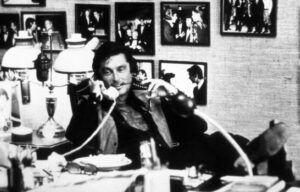
Errol helped launch one of the most unlikly careers in Hollywood. That of actor/studio boss/film producer Robert Evans.
The Bob
Robert J. Shapera was born into a well off New Yorker Jewish family (the father being a dentist in Harlem) on June 29, 1930. His career choice was rather optional than conventional.
From an early age he was drawn to showbusiness, starting with speaking roles in radio, then working as a DJ in Miami and Cuba. When his older brother Charles launched a clothes line, Bob used his good looks, cunning and theatrics to promote the brand setting up a boutique in Hollywood. Soon they went nationwide and made a fortune under the name of Piccione and Evan. He remembered his contribution to their family enterprise: “In the beginning I was into women’s pants.“ But the suits to riches story doesn‘t stop here.
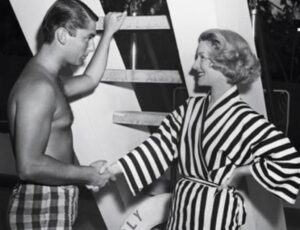
One hot day in Hellywood of 1956, at the pool of the Beverly Hills Hotel, silent and sound screen siren Norma Shearer noticed Robert-new-surname-Evans had a striking similarity with her former husband, the late Irving Thalberg. She cast the youngster on the hot spot as whizkid producer, whose short life became legend, for the biographical “The Man of a Thousand Faces“. Subsequently the Juliet from the 1936 classic “Romeo and…” coached Bob E. to a T. His first scene put him opposite James Cagney in the role of Lon Chaney. All he had to do was to portrait a self assured studio executive who is instructing an insecure newcomer on how to act for the big screen, when in fact it was the other way round. Evans turned mannequin again and no word of the five page script left his lips. It took Cagney doing his Yankee Doodle Dandy shuffle to loosen his young collegue up and things went smoothly from then on. Talk of the town was, a new Valentino had been found.
Fiesta forever

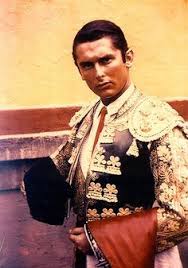
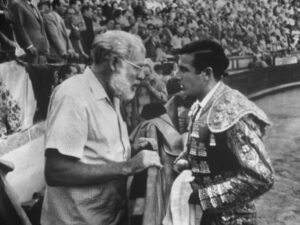
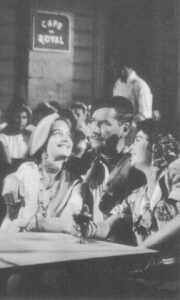
While former Twentieth Century-Fox boss Darryl Zanuck was assembling an all star cast for his independant production of Hemingway`s novel “The Sun also Rises”, he was still on the outlook for Mr. Right for the part of the bullfighter, who takes Lady Ashley by storm. John Gavin was tested and Ava Gardner was busy lobbying for her Italian lover, actor Walter Chiari. But when Zanuck saw Evans doing a tango at El Morrocco nightclub, he knew he had found his ideal Pedro Romero. Happy as a puppy, Bobby arrived in Morelia, Mexico, and was met with unexpected opposition. Outside temperatures were sweltering hot, on the set they were icey cold. Hem himself declared the movie a flop in advance, if Robert really was to don the montera of Pedro. Its script writer Peter Viertel took a quick look (down) at Evans and closed the door of his hotel room in his face. A petition against using Bob as matador was drawn up and signed by Ava, Tyrone Power, Mel Ferrer, well, by about everybody except…Errol Flynn.

“F_ck `em, they are all jelous. Tyrone, Mel, both of them played bullfighters. Now they are just too f_cking old. Sit down, old boy. Have a drink!”
Evans felt embraced at last. He started practicing his moves with a real bullfighter and a vengeance. When D. Zanuck arrived on the set he immediately wanted to know what this fuss was all about. Into the rolling cameras of director Henry King, Pedro/Bob went through the motions, swirling his cape under the scrutiny of friend and foes. Within minutes D.Z. took the trademark cigar out of his mouth bellowing into a bullhorn.: “The kid stays in the picture. And anybody who doesn`t like it can quit.” Spoken like a true Tinseltown tycoon, standing tall at five foot three.
Ol`Errol and young Evans made for a good combo, the apprentice always eager for advice. Flynn gave a plenty: “As long as you are here, old chap, don`t forget, don`t touch the food, the water, or the ladies- they`ll all give you dysentery.”

Filming turned into a never ending fiesta, each day`s work usually culminating in Errol`s bungalow. “Three girls were waiting for us. Sweeping everything off the table, he switched on a phonograph. Hot Latin music blasted out. Undress, undress!, he laughed. Now on the table, on the table, dance, dance! Settling back into a chair, hysterically laughing, he turned on a tape recorder and began speaking into a microphone. I`m doing my biography, old boy. The wilder the music, the wilder the dancing, the wilder Flynn`s memories became-none of them printable.”
Despite all the fun and games, Robert Evans soon decided to quit his act of acting the actor. Deep down he knew his ablities were limited at best. Switching sides was the way out. He now wanted to become the eye behind the lenses. Zanuck`s display of omnipotent producer had instilled the will in Evans to do likewise. He was looking for the job of literally calling the shots. Opportunity arose when Vienna born, Austrian emigré Karl Georg Bluhdorn, called Charly, the magnate of Gulf+Western Industries, bought Paramount Pictures in 1966. It was the least successful film studio out of nine at that time.

Like Shearer and Zanuck, Bluhdorn saw something in the kid. He installed him first as head executive of Paramount`s London branch. There Evans witnessed the making of a very successful mini movie starring Cockney turned leading man Michael Caine: Alfie. An unlikely success story he took by heart, which payed hefty dividends later on. Half a year after his return from England, R. Evans finally became Vice President of Paramount. Back in the black heartland of magic movies, the local media had a field day. Bob was riduculed as everything but a new Thalberg. Variety even declared him “Bluhdorn`s BJ”. Evans vowed to prove the industry wrong and surrounded himself with powerful wingmen. One he found in the shade, the other in permanent spotlight.
Consigliere Korshak & Godfather Kissinger
The Racquet Club in Palm Springs. Founded by Ralph Bellamy and Charlie Farrell in the 1930s. It`s Easter Sunday. The temperature 103 in the shade. Top of the mountain exec Robert Evans and the melting creme de la creme of movie makers and shakers watch a celebrity & pro mixed doubles tournament. In walks a man in a black suit and tie, who is not breaking a sweat. Who is he and why the outfit!? Robert Evans is intrigued by Sidney Korshak, born in Chicago and nurtured by Big Al, like in Capone. “Is he a mobster?”, Evans asks himself.
Worse, he`s a lawyer. Korshak represents the Hiltons, the Hyatts, the LA Dodgers and is giving airtight advice legally to Playboy Magazine, Max Factor and Diner`s Club. He has friends in high places like Lew Wasserman from MCA/Universal, Kirk Kirkorian from MGM and Ronald Reagan starring in the Errol Flynn movie “Santa Fe Trail”. Once an actor always an actor. S.K. is also a part owner of the Riviera Casino in Las Vegas. Rumour has it, Jimmy Hoffa must vacate his suite whenever Sidney comes to Sin City. Hoff has just left the building… After dinner at Le Pavillon in New York, Evans and Korshak become an unseparable duo doing lunch daily at the Bistro. E.A. is in awe again: “A nod from the Consigliere and the teamsters change management, the Santa Anita racetrack closes and The Dodgers suddenly play night baseball.” Sid`s connections would come handy, when Al Pacino had committed to another film, while Evans wanted him urgently for the lead in “The Godfather”. “Hold on, how do you spell Pacino?” “P-A-C-I-N-O.” “Ok.” One telephone call from El Sid was all it took.

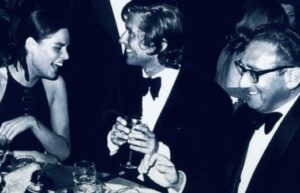
Early 1972. Palm Springs again. Residence of Leonard Firestone, the tireless tire maker. Hollywood head honcho Bob Evans and Henry Kissinger, the national security adviser to President Nixon, play a round of golf. They had met at a Paramount dinner two years before and taken a liking to each other instantly. “Bobby, can you help me? You said politics is nothing more than a second rate show business. A week from Wednesday I am turning in my resignation.” “What? “Why!?” “Why is not the question. I`m being told to!” Heavy Henry, according to Bob Evans a charmer equalled only by Cary Grant (though with a thick German accent), is looking for a way out of his political predicament. He hopes like in his flicks, Evans comes up with a magic trick. Indeed he does. PR prone he gets LIFE and TIME Magazine to run a cover story each about Kissinger`s importance as elder statesman for the nation. The government resigns, but H. Kissinger stays on. The speed of this feat is incredible. Keep in mind, Time Magazine awards Man of the Year only once, sometimes even for all the wrong reasons, and Henry Luce`s Life Mag sat on the Zapruder tape for 12 years before it was shown for the first time on US television- sans frame 313. Kissinger would return the favour attending the grand premiere of the Godfather. His comment as remembered by his saviour Bobby: “Reminds me of Washington. Just different names. Different faces.”

Korshak and Kissinger. And never the twains shall meet.
A spare pair of glasses
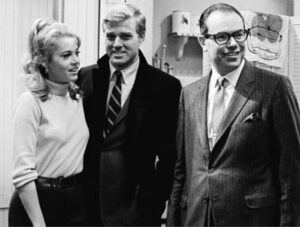
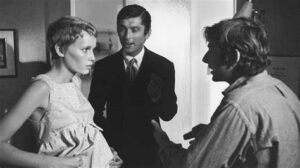
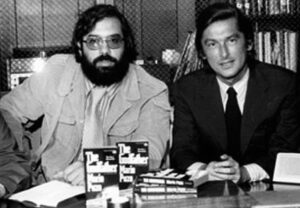
Barefoot in the Park. The Odd Couple. Harold and Maude. The Italian Job. Love Story. Paramount Studios went from last to first courtesy of Bob Evans. The constant limelight made him wear tinted glasses wherever he went. The equivalent of ventian blinds. A dark knight`s full visor. He even brought a spare pair as backup, in case he`d lose one. Maybe clear ones for perspective. On a clear day you can see forever. During interviews he was wearing the spare one on one hand like brass knuckles. With great power came great hostility. Newcomer Ryan O`Neal blew Evans off when begged to carry the promotion of Love Story alone, after Evan`s wife Ali McGraw almost miscarried their first and only child. Frank Sinatra had Mia Farrow served with their divorce papers on the set of Paramount`s adaptation of Ira Levin`s best seller “Rosemary`s Baby”. Mostly because the movie wasn´t wrapped up in time. Actually because she failed to play doting wife, while Sinat` was filming “The Detective”. His way or the highway. The love hate hate story between R. Evans and Francis Ford Coppola is an often cited folklore in the City of Stars. Bob would forever claim he saved “The Godfather” with his editing (Zanuck style) in the cutting room. Francis would forget to thank Evans when receiving his Godfather Oscars every time.

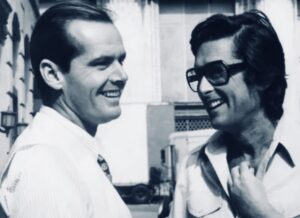
Robert Evans always credited himself with two major achievements. First and foremost for promoting a performer in Roger Coreman movies by the name of Jack Nicholson to A- list actor. They became good friends over the years. Evans nicknamed Nicholson “Irish” and Nicholson labelled Evans in turn “Keed”. Secondly and not the least for bringing Polish director Roman Polanski in from Europe.

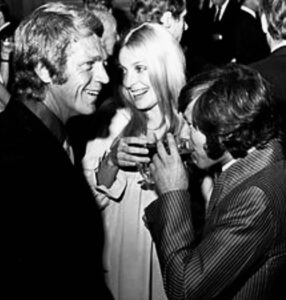
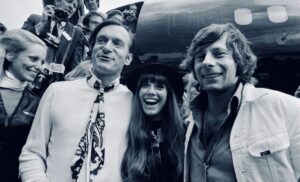
Then tragedy hit. More devious than the Mob. Knives were used instead of bullets. All American sweetheart and rising starlet Sharon Tate was murdered together with four more persons in her cottage on 10050 Cielo Drive.The estate had once housed Michèle Morgan, then Cary Grant and later Candice Bergen and Terry Melcher, son of Doris Day. It was situated in a Cul-de-Sac right across the villa of flynnmate Doris Duke. While the devil`s deed was done, Polanski was tinkering on a screen play or preparing the film “Day of the Dolphin” in London only 11 hours away. His agent Willam Tennant reached him via telephone at the Londoner Playboy Club the night after the murders to give him the horrible news.

Tennant had been summoned by authorities to identify the victims. The sights haunted him to such an extent that the up and coming dynamo from Ziegler Ross Agency became a homeless drifter thereafter and camped in Griffith Park in years to come. Upon his return Roman Polanski found himself weeping in the arms of his ex-boss Robert Evans to no end. Evans was comforting his asset the best way he could and hid him away from public, press and police on the Paramount lot. The Hollywood Executive Apartments had 64 single rooms, each with bathroom but no kitchen. Originally called the Paramount Hotel it gave Roman much needed shelter. He regrouped enough to visit the house of horrors and posing in a cover story for LIFE two weeks after the crime. He even managed to display some sort of gallows humour during a lie detector test, to see if he had anything to do with the murder, done by the LAPD . “Officers, I am gonna lie at first, so you can see clearly how it looks like when I am lying.” Once a director, always a director. He vowed to find the murderers of his eight months pregnant wife like a detective in a film noir. Policemen at the crime scene gave a pair of glasses, which did not belong to any of the victims, to the father of Sharon, a top US Army official. He forwarded them to Polanski. Sharon`s self defence instructor Bruce Lee casually said he had lost his glasses. Roman took Bruce to an optician to see if the found ones matched the bad eye sight of the martial artist. Lee was cleared. Friends of Roman collected reward money for any hint on the hit. Amongst them they were whispering: “If one of us was the culprit, who could it possibly be?” Hollywood royalty went in hiding. Frank Sinatra was gone quicker from the scene than one can spell “Tannis Root” backwards. Steve McQueen, who had been invited by Sharon to join them on the night of the assault, but had other romantic plans, never again left the house without a gun. His coiffeur Jay Sebring, former fiancé and closest friend of Sharon had been amongst the victims. McQueen did not attend S. Tate`s funeral. Bob Evans did. There he told Sharon`s younger sister Patty that whenever she missed her sis, she could call her and she would be there. Once a producer, always a producer.
Gone and Dead
There is nowhere to go when you are on a mountain top, right? Robert Evans found a way. He went over the top. He had made millions for other people, now he wanted to earn the big green, or FU-money as he called it, for himself as an independant producer. The project was “Chinatown”, a coveted script of renowned writer Robert Town. Bob E. went into high gear and secured the services his best buddies Jack Nicholson and Roman Polanski. Add diva Faye Dunaway, a haunting score of Jerry Goldsmith and Old Sport John Huston basically playing himself and you have a winner.

How do you top going over the top? You develop a story about a legendary nightclub in Harlem, announce Sylvester Stallone and Richard Pryor in the leads. You tell everybody this will be another Godfather with musik. You convince yourself that after all the great editing only you can direct this unfailable endeavor. And then you do none of the above. Evans projected mammon behemoth “Cotton Club” proved to be as unsinkable as the Titanic. Plus it was a money pit. In a desperate attempt to steer clear from the inevitable iceberg, he b(r)ought in the director he loved to hate F.F.Coppola and granted him for the first time final cut! Talking about promising your first born to the devil. Out went Stallone and Pryor, in came Gere and Hines. Out went music, in went crime. Out went creative control, down went Evans.

With rising production costs by the minute, Evans resorted to dubious funders. His only highs by now were coke induced. In a stupor he was approached by a well connected to Colombia lady called Laney Jacobs. She told Bob about New York debonair entrepreneur Roy Radin who had made a fortune with Vaudeville old timer comeback shows of the likes of George Jessel, Milton Berle and Joey Bishop in Police gyms and Masonic temples. A buck is a buck. And those bucks bought Radin Ocean Castle, an enormous mansion in the Hamptons. Mingeling with the Rothchilds, he too was thinking big and felt ready to make a splash in the film business. He told Laney he represented a country willing to invest 35 millions into the “Cotton Club”. They sealed the deal on a white line. Jacobs refered this to Evans, who was ecstatic. The Bob was back in the game. He and Laney even became an item. Sometimes it snows in April.

Matter of fact it is a long way down from the top. Things went bad, when R. Radin didn`t want to compensate Laney for her services and B. Evans true to form investigated via his laywers if the country with money was willing to eliminate their middle man Radin. This three party mexican standoff left one man dead, a woman in prison and a once prominent producer a pariah. Radin was found shot in a canyon outside of LA with half of his face missing. Somebody had stuck a stick of dynamite between his teeth. Bob Evans eventually was cleared of envolvement in the Cotton Club Murder Trial. Needless to say, consigliere Korschak did not take any more calls. For a fixer this was sloppy business. The abduction of a public figure, having him killed AND found was one thing too many. And as far as Kissinger goes, well Robert Evans, despite all his innocence, did not dare to approach him for more than a decade.
This is the life story of one whirlwizkid Robert Bob Evans. An actor who`s first role was in Lydia Bailey, a film Errol Flynn did not get to make. Who turned down the lead in Marjorie Morningstar, where Errol found his last love. And who lost out to Dean Stockwell, Flynn`s co-star in Kim, for the part in “Compulsion“.

It is also the story about a man, who modelled himself a little too closely after his mentors, be it swashbuckler, hit producer or kiss-the-ring counsellor.
Enjoy,
— shangheinz
Throughout his career, Cem served as a tech consultant, tech buyer and tech entrepreneur. He advised enterprises on their technology decisions at McKinsey & Company and Altman Solon for more than a decade. He has also led commercial growth of deep tech company Hypatos that reached a 7 digit annual recurring revenue and a 9 digit valuation from 0 within 2 years. Cem’s work in Hypatos was covered by leading technology publications like TechCrunch and Business Insider. He graduated from Bogazici University as a computer engineer and holds an MBA from Columbia Business School. Generative Adversarial Networks modeling (GANs) is a semi-supervised learning framework.
Adobe’s Firefly generative AI tools exit beta phase, now available for everyone.
Posted: Fri, 15 Sep 2023 12:54:09 GMT [source]
Future Adobe Firefly models will leverage a variety of assets, technology and training data from Adobe and others. As other models are implemented, Adobe will continue to prioritize countering potential harmful bias. We’ve augmented the model with a powerful style engine, to help you explore the generative capabilities and create photos, art, graphics and text effects with impressive style, color, tone, lighting and composition controls.
Adobe has the capability to pull off a rich generative AI experience and has the principles and guidelines in place to do it responsibly. But as David Wadhwani, president of digital media at Adobe, said, it is “A long journey from where we are now to where we know we can get.” I believe he is right about that. For one, the question of whether images produced using AI can be copywrited still needs to be answered.
We’re starting with images, text effects, and vectors, with Generative Fill and Generative Expand in Adobe Photoshop, Text to Image in Adobe Firefly, Generative Recolor in Adobe Illustrator, Text Effects in Adobe Express, and more. Each groundbreaking generative AI feature unlocks new creative possibilities, empowering users to play, experiment, dream, and create the extraordinary. Firefly will be made up of multiple models, tailored to serve customers with a wide array of skillsets and technical backgrounds, working across a variety of different use cases. Adobe’s first model, focused on images and text effects, was trained on Adobe Stock images, openly licensed content and public domain content where copyright has expired and is designed to generate content safe for commercial use. This new enterprise-level product isn’t an unexpected move from Adobe, especially if you’re already familiar with its Firefly AI model.
Artbreeder – This platform uses genetic algorithms and deep learning to create images of imaginary offspring. The most commonly used generative models for text and image creation are called Generative Adversarial Networks (GANs) and Variational Autoencoders (VAEs). Once a generative AI algorithm has been trained, it can produce new outputs that are similar to the data it was trained on. Because generative AI requires more processing power than discriminative AI, it can be more expensive to implement. Arguably, because machine learning and deep learning are inherently focused on generative processes, they can be considered types of generative AI, too. During the beta, creatives around the world have generated billions of assets with Adobe Firefly.
Once customers have used their allocated number of Generative Credits, the ability to create generative AI images and text effects will remain, albeit at a slower rate. Customers can buy additional Generative Credit subscription packs, although Adobe has not provided information on how much these will cost. “Adobe Express has empowered our creatives to focus on high-impact, high-value work while equipping other teams with a powerful but easy-to-use design tool. We can bypass repetitive, manual tasks and save time without compromising our brand or creative output,” said Bridget Esposito, vice president and group creative director at Prudential Financial.
Yakov Livshits
Founder of the DevEducation project
A prolific businessman and investor, and the founder of several large companies in Israel, the USA and the UAE, Yakov’s corporation comprises over 2,000 employees all over the world. He graduated from the University of Oxford in the UK and Technion in Israel, before moving on to study complex systems science at NECSI in the USA. Yakov has a Masters in Software Development.
Everything is designed, from the ground up, to be embeddable into your existing workflows across Adobe Creative Cloud, Document Cloud, Experience Cloud and Adobe Express. Adobe is also planning to make Firefly available via APIs on various platforms to enable customers to integrate into custom workflows and automations. The number of monthly generative credits each user receives depends on their subscription. The consumption of generative credits depends on the generated output’s computational cost and the value of the generative AI feature used. Generative AI is a type of artificial intelligence that enhances creativity by producing amazing results from simple text prompts. Generative AI features powered by Firefly are now available in our core creative tools and the standalone Firefly web app.
Adobe’s “transparency in AI” message displays when users download an AI-generated image. Even though artificial intelligence has existed for decades, marketers should pay attention to the ongoing seismic shifts in this growing segment. According to a recent report, the value of the global generative AI market is estimated at $110.8 billion by 2030 (compared to $7.9 billion in 2021). Adobe Stock credits are used to license content from the Adobe Stock website as defined in the Adobe Stock additional terms or your customer agreement, as applicable. But Adobe has pushed Firefly despite these early issues, and its integration into Generative Fill at the end of May felt like the most impressive application of the technology yet. As a result, at launch, Firefly was woefully behind its competitors, especially Midjourney.
To this end, we want to make sure you see opportunities to benefit from your skills and creativity and protect your work. It is our intent to build generative AI in a way that enables you to monetize your talents, much like we’ve done with Adobe Stock and Behance. We are developing a compensation model for Stock contributors to benefit from Firefly and will share details once we’re out of beta. We’re also taking steps to prevent artists’ names from being used in Adobe’s generative AI actions and pushing for open industry standards through the Content Authenticity Initiative (CAI). It’s critical that generative AI models honor a universal “Do Not Train” tag that remains attached to an asset wherever its used, published or stored.
At launch, Adobe is calling Firefly a beta, and it’ll only be available through a website. But eventually, Adobe plans to tightly integrate generative AI tools with its suite of creative apps, like Photoshop, Illustrator, and Yakov Livshits Premiere. Aside from its assured commercial viability, Firefly’s explosive popularity — largely fueled by its high-quality results — will likely hold plenty of appeal for businesses looking to explore generative AI solutions.
That’s one reason why people are worried that generative AI will replace humans whose jobs involve publishing, broadcasting and communications. DeepDream Generator – An open-source platform that uses deep learning algorithms to create surrealistic, dream-like images. If you have the full Creative Cloud subscription, which gets you access to all of Adobe’s software for $55 per month, you can produce up to 1,000 creations a month. If you have a single-app subscription, for example to use Photoshop or Premiere Pro at $21 per month, it’s 500 creations a month.
Adobe Firefly AI Is Out of Beta in Photoshop and Illustrator.
Posted: Wed, 13 Sep 2023 17:00:26 GMT [source]
— Kathleen

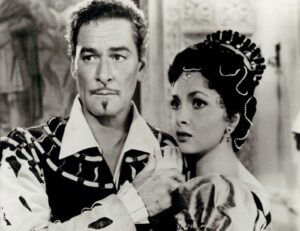
The famed Italian film actress and International movie star Gina Lollobrigida has died at age 95. “Lollo” (nicknamed in her native Italy) starred in 67 films, including co-starring with Errol Flynn in the under-rated, comic swashbuckler, “Crossed Swords” (1954). Miss Lollobrigida was by far a finer dramatic screen actress then her rival Sophia Loren. On top of that Gina displayed a genuine, natural flair for comedy in such films as “Hotel Paradiso” (1966) with Alec Guiness and Robert Morley, the hilarious “Buona Sera Mrs. Campbell” (1967) with Peter Lawford, Phil Silvers, Telly Savalas, and Shelley Winters, and wartime laughs in “The Private Navy Of Sgt. O’Farrell” (1968) starring opposite lucky Bob Hope, with Jeffrey Hunter and Phyliss Diller!
Gina Lollobrigida’s passing means that as of this date there are only four, surviving leading ladies of Errol Flynn. Whom? Do not include the charming child actresses Patti Brady of “Never Say Goodbye” (1947), or Sherry Jackson from the unseen “Hello God” (1951), both of whom are still with us.
— Ralph Schiller