RSS
 

Search results for ‘name’

7th Michigan, CHARGE!

01 Oct

Flynn and Custer, a perfect match – brilliant, discipline-proof, dashing, and destined for greatness.
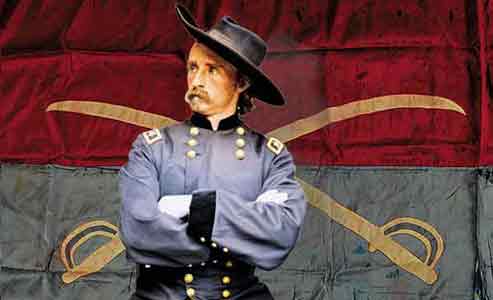
THEY DIED WITH THEIR BOOTS ON
(Benton Harbor News-Palladium, December 29, 1941.)

Monroe- The premier of the motion picture “They Died With Their Boots On” depicting the career of General George Armstrong Custer, was shown here Sunday. Seven members of the Custer family residing here attended the performance. Brigadier-General Custer, slain in the Battle of the Little Big Horn, attended school and married here.

ERROL FLYNN PLAYS GEORGE CUSTER
(Benton Harbor News-Palladium, January 10, 1942)

Custer’s last stand is an epic of the old west, but the rest of Custer’s life is a Michigan story. As shown in They Died With Their Boots On, the new Errol Flynn, Olivia de Havilland film opening Sunday at the Liberty, George Armstrong Custer’s adventures were intimately concerned with his native state.

He made a name for himself in the Civil War at the Battle of Gettysburg depicted in the film by leading a series of charges by gallant Michigan regiments. Thrown back time and time again, they kept up the fight under his inspirational leadership and finally turned the tide of battle.

After the Civil War ended, Custer like so many brilliant young officers of the Union Army, was retired. A peacetime Army had no use for the vast number of officers developed by the war. Young General Custer settled down with his wife in their native Monroe, Michigan, to live a life of peace.

It was from the same Monroe that Custer had gone before the Civil War to become the most discipline-proof cadet that West Point had seen in years.

According to the film, the most famous song of Custer’s Seventh Regiment, the Gary Owen, was taught to the General in Monroe by an English soldier who was a Union veteran. When the regiment rode forth in battle on the Little Big Horn, the song Custer learned in Monroe, sped them on their way.

George Custer was only 37 when he died. Life in Monroe had bored him. In order to get back into active Army service, he accepted colonel’s rank. He was sent to the most dangerous territory in America, Sioux Country. The Indians called him “Long Hair.” The tribute they paid him in his last stand shows the esteem in which he was held, even by his enemies. Every man killed in the battle was scalped – except Custer.

GENERAL CUSTER AFYER 45 YEARS
(Detroit Free Press, June 27, 1921)

It has been remarked that George Armstrong Custer’s chief contribution to the history of his country was his personality. Such a statement looks like a truism, but in his case it was more peculiarly true than in most. An operose, impetuous spirit, his tepidity, his dash, his verve, has passed into legend while there are still people living in these states who thrill to the memory of the day when Custer fell, who remember the clash of opinion that arose before his gallant blood had cooled.

The forty-five years that have passed since June 25, 1876, have not settled the argument. Was Custer’s death with his three brothers, his nephew, and all of the old fighting Seventh Michigan Cavalry , due to mis-wisdom, an untutored impetuosity, or were the trap and the barbarous slaying inevitable? How much of the mistake can be placed on the two commanders under him, Benteen and Reno, and was the natural indignation of the country justified? The exact facts are obscure, for we are unwilling to accept the only evidence which came from an Indian.

The significant thing now is that Custer’s story is not allowed to die – it is too romantic, too fraught with the perilous spirit of the frontier days which have rapidly dimmed and receded. The story has been woven into pageants, it has been vividly acted before the camera in its own historic setting. Today, out in Hardin, Montana, it is being commemorated again, re-enacted with Indians, some of whom are from the fierce tribe of Sitting Bull. Tamed now and submissive, forgetting the hot rage of the warrior, they are acting for the pleasure of the conqueror and perhaps for the lost glory of their tribe, scenes which were part of the destructive tide that swept them from their last entrenchments in the badlands of the prairie.

What history will do with Custer a hundred years, hence it is impossible to judge; it is probably that no matter what the historian of the future makes of his case he will be handed along in the legends which gave the thrill to cold facts as the perfect cavalry type, the temerarious General of Horse. The nation will remember him as Edward Clark Potter has pictured him when in that significant moment during a lull in the Battle of the Little Big Horn, he spurred forward from the line, and hat in hand, his golden curls flowing from a head thrown back, he stood for a moment surveying enemy lines. His striking uniform, his youth, his daring, combined to make him a glorious, a charmed figure.

The nation will remember him too, however much they may doubt his judgment, as the general who immensely brave, immensely daring, overpowered twenty to one, stayed with his men and died fighting in place. They will honor him as the Sioux honored him, Sitting Bull’s warriors who killed him but held his body inviolate because he was a warrior of whose prowess they stood in awe.

CUSTER’S LAST GUIDON
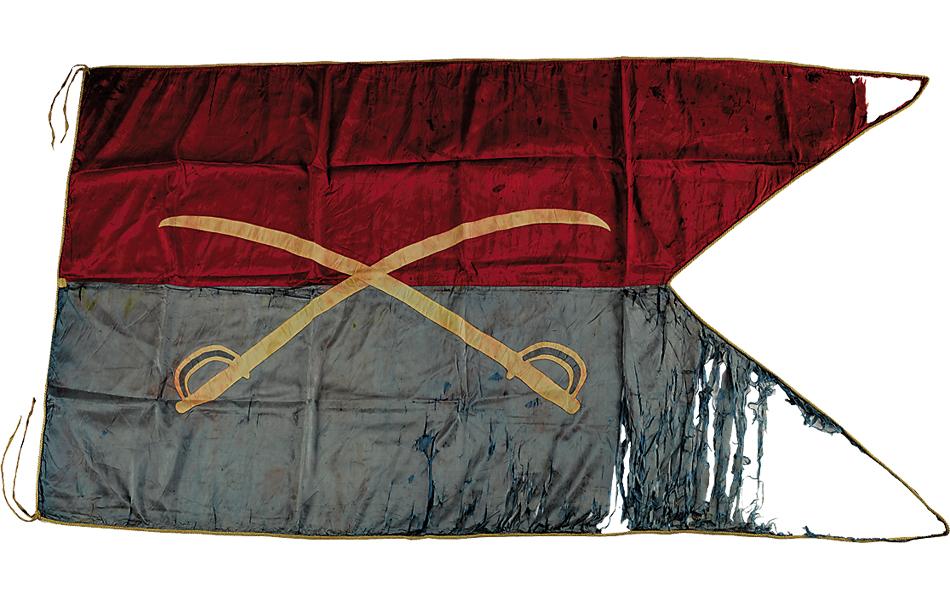
— Tim


Neil Young: Hollywood Reporter Review of new film In Like Flynn!

03 Sep

Neil Young sends us to his Review of In Like Flynn, the new film based loosely on Errol’s book Beam Ends, produced by Luke Flynn.  Thanks, Neil!


“Thomas Cocquerel takes the title role in cult Australian director Russell Mulcahy’s early-years biopic of famed swashbuckler Errol Flynn.

Reveling in the exploits of a legendary Lothario who is a most unlikely subject for a celebratory biopic during the current #MeToo era, comeback-kid Russell Mulcahy’s In Like Flynn triumphs as a disgracefully entertaining romp that packs an unexpected emotional wallop.

Chronicling the adventurous late youth of golden-age Hollywood swashbuckler Errol Flynn, the handsomely mounted production is inevitably brimming with boozing, brawling and bedding. But while rising Aussie star Thomas Cocquerel is suitably dashing as his notorious countryman — whose name, 59 years after his premature demise, remains a byword for bawdy offscreen excess — the real breakout here is British actor Clive Standen, comprehensively stealing the show in a flashy supporting role.”

Read more

— David DeWitt


Roma Newport

26 Aug

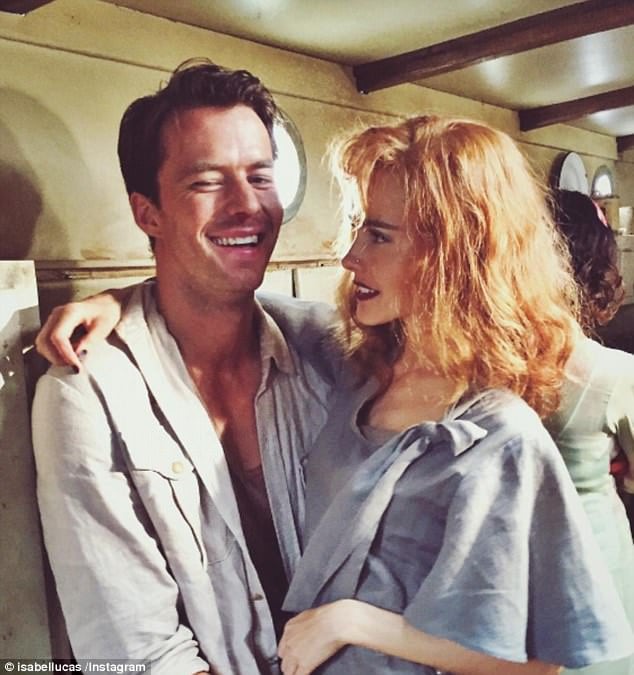
Was Roma Newport the Magnetic [Island] personality behind the character of Isabel Lucas in In Like Flynn? [What a Flynntastic name for one of Errol Flynn’s flings!]

www.pressreader.com…


— Tim


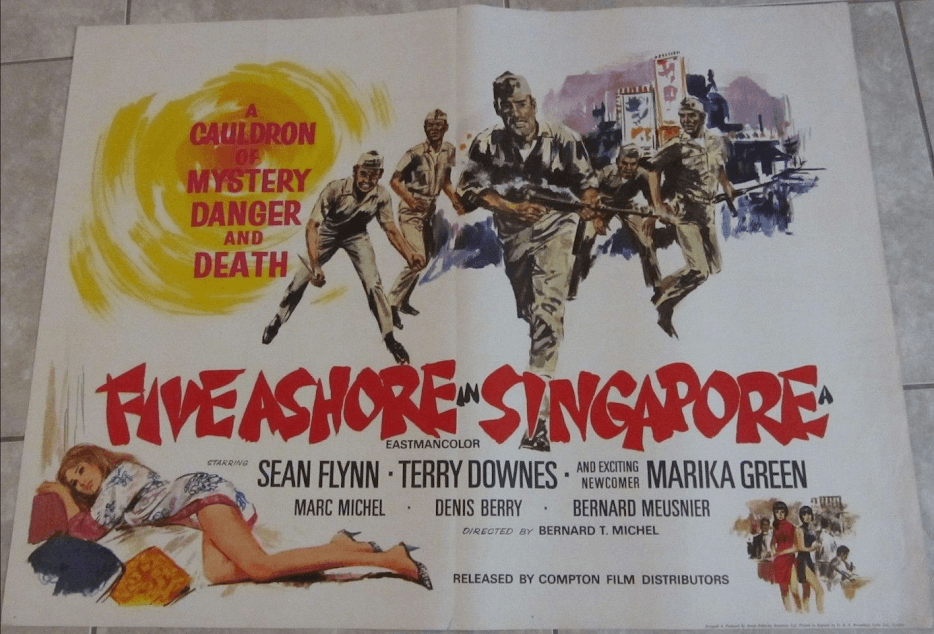
Sean Flynn in FIVE ASHORE IN SINGAPORE

18 Aug

In the Mail Bag we receive this nice inquiry from French film director Raphael Millet. Unfortunately, I do not have any hi res scans or photos of this poster and am wondering if any of you can help him out?  He writes:

Bonjour,

I found your contact on the Errol Flynn blog.

I am a French film director, producer and critic.

I love Errol Flynn’s movies.

I also have a passion for Sean Flynn, and great interest in the later part of his life (from 1965 onwards).

I am currently writing a long article about the movie FIVE ASHORE IN SINGAPORE for a magazine published in Singapore.

I have many images of it, including French lobby cards, posters in various languages. But I have no poster of the film in English, and I think this would be most relevant for a publication in English.

I noticed that you have a very nice poster in your collection (see image here attached).

Would it be possible to ask you for a very good high res copy or photo of it, if you have any, in order to have it reproduced in the magazine, together with my article?

It would be a nice way to celebrate Sean Flynn and to pay tribute to his Singaporean adventure.

In exchange, I’d be very happy to have a copy of the magazine being mailed to you, upon publication (around October).

Looking forward to your kind reply.

Raphael Millet

— David DeWitt


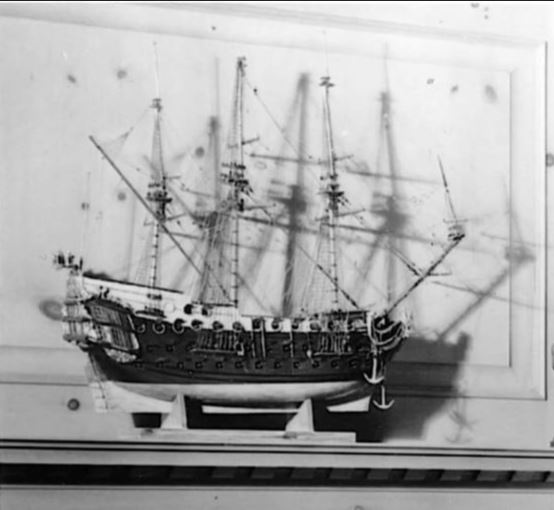
Errol Flynn’s Ship Model

06 Aug

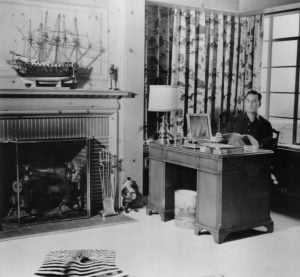
To all Flynn aficionados out there, I’m looking for the name of this ship, that was in Errol’s den.  I think it was a Dutch man of war, but I don’t know.  I have seen many ships on the internet and on many ship model makers that are very similar but it isn’t this exact ship.

I also think that this ship model could be one of the smaller models used in Captain Blood and the model dept at Warners could have given this to Flynn as a gift.  They must have copied it from photos of a real ship that had a name to it.

I have a close-up view of this ship but for some reason, I can’t post it in my post here.  I’m looking to have a replica made of this ship for my home office.  Any help in finding this ship or the name would be an awesome help to me.  I’m calling on Gentleman Tim who can find just about anything on Flynn…

Best wishes to you all

Jack Marino


— Jack Marino


A Sunday Quiz

05 Aug

During his “college” days in London, Errol used to salivate on Sundays for this weekly treat.

Clues:

– He first took a very long walk in formal clothing.

– Before eating he used to mumble a little Latin.

– Evidence is very spotty but the name of this quiz dish may derive from the beloved breed depicted below.

— Tim


Sailors compete in 41st race

31 Jul

www.keyt.com…

Great story about race they say the yacht a 42 foot wooden yawl named Cheerioo 11 once belonged to Errol. Is this right. Is this the Zaca renamed. Genene.

— tassie devil

 
3 Comments

Posted in Main Page


Dr. Flynn

26 Jul

Eighty-two years ago this week …

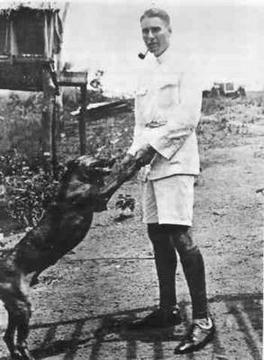
Eight years ago when adventuresome Errol Flynn, now Warner’s new film rave, represented the British Government at New Guinea, one of his many odd duties was to act as physician and surgeon.

When a native named Joe Speedie appeared at headquarters with a gangrenous toe as a result of having been bitten by a poisonous fish,it was “Dr” Flynn who performed the necessary amputation of the infected toe. The emergency operation saved Joe’s life.

Last week, “Dr” Flynn received a belated fee for his surgical gesture, a valuable gold-headed cane. Joe explained in the accompanying letter that he had seen Errol in Captain Blood and was most happy to have located his benefactor of long ago. And Errol’s quite proud of his ‘fee.’

Jimmy Starr
Los Angeles Evening Herald Express
Published July 27, 1936

— Tim


Eighty Years Ago Today — At The Mermaid Club

18 Jul

July 18, 1938

“Errol Flynn alone at the Mermaid Club.”

Erskine Johnson
LA Examiner, Behind the Makeup

It’s very hard to find imagery of the Mermaid Club, but the 1930s WPA film video below does show the club, about three-quarters of the way into the film, between Western Market and Cafe Lamaze. It’s also shown briefly in the second video.

The Mermaid Club was later renamed Villa Nova, and ultimately the Rainbow Club, by co-owner Vincent Minelli it is said, after his former wife Judy’s most famous song. Their daughter, Liza, used to party there much later, in her heyday.

This is the where Joe Dimaggio first met Marilyn Monroe, introduced by Mickey Rooney. It’s also where John Belushi had his last meal. For decades now, it has been a rock-and-roll landmark, where legends from Elvis, to the post-Beatle Beatles, to most all of Rock royalty, have raised hell.

Please note that this first video has negligible action until about 45 seconds in, then it has great old film of what one side of Sunset Strip used to look like during Errol’s early years in town.

According to this very cool Vintage Los Angeles video interview of the owners:

“Errol used to hang from the rafters!”

— Tim


Diamonds are a Damita’s Best Friend

17 Jul

July 19, 1935

Filmland learned for the first time today the romantic history of the diamond that Errol Flynn, dark-headed Irish actor, put upon the finger of Lili Damita, who is now his bride.

It was five years ago that Flynn came into possession.

A young adventurer, he was working as a British agent in New Guinea to help preserve peace among the native tribes. One day, he made a gold strike in the jungle.

Trekking back to civilization, Flynn sold his discovery for $10,000 in gold. He decided to leave New Guinea, but couldn’t carry his new found riches. So he put the money into rough-cut diamonds.

It was one of these diamonds that the young actor, soon to play the starring role in the Warner film, Captain Blood, had made into the engagement ring his bride now wears.

Harrison Carroll
Evening Herald Express

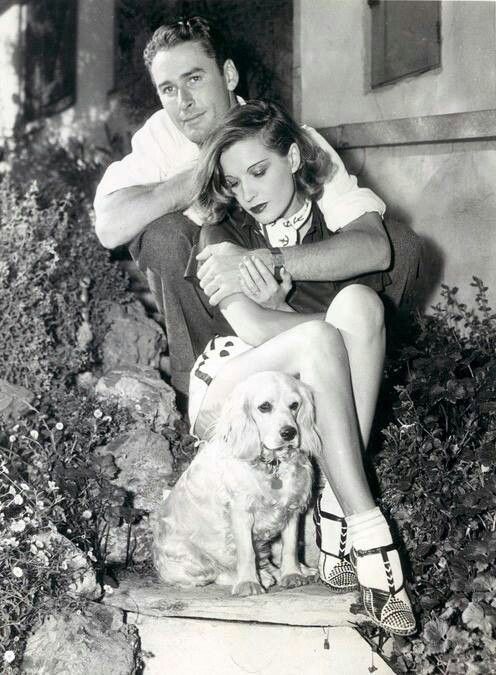
Errol, Lili, and Man’s Best Friend, on the very-appropriately named Lookout Mountain – with a glimpse it appears at Diva Damita’s new diamond:

— Tim