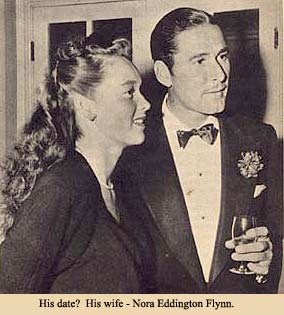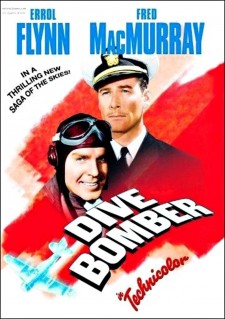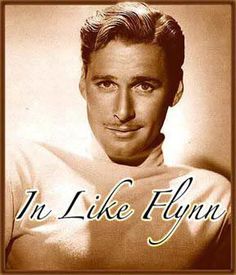
“In Like Flynn” is commonly said to be a reference to Errol Flynn, the Australian film actor. Flynn was famous for his romantic swashbuckler roles in Hollywood films and for his flamboyant private life. His reputation as a hard-drinking, hell-raising ladies’ man was apparently well justified, although it has doubtless been enhanced by his delight in playing up to his image. For instance, he titled his autobiography – My Wicked, Wicked Ways and also did nothing to dispel the incredible but nonetheless widespread rumours as to the the size of his penis and the number of women who had shared his bed. Flynn was fully acquitted in February 1943 for the statutory rape.
‘In like Flynn’ – was that Errol Flynn?
The word in had been used with regard to success, good fortune or sexual conquest for some years prior to the 1940s; for example:
John Mills’ Life Race-Horse, 1854:
“The handicapper … considerately classed me among the middle ones, and awarded 6 st. 12 lb. as my burthen. ‘He’s vell in,’ said my owner, ‘very vell in.'”
Alfred Mason’s Clementina, 1901:
“His luck for the moment was altogether in.”
E. Wilson’s Twenties, 1923:
“Well, did Mr. Wilson get it in tonight?”
All of the above might lead us to believe that origin of the phrase ‘in like Flynn’ is clear. As so often though, things aren’t quite as tidy as they might first seem. The earliest recorded use of the phrase is in a December 1946 edition of American Speech:
“In like Flynn, everything is O.K. In other words, the pilot is having no more trouble than Errol Flynn has in his cinematic feats.”
That doesn’t have the sexual connotations that the phrase acquired later. There’s also an earlier, albeit oblique, reference from 1942 – in The San Francisco Examiner (Sports section):
“Answer these questions correctly and your name is Flynn, meaning you’re in, provided you have two left feet and the written consent of your parents.”
Errol Flynn’s particular notoriety as someone especially likely to be ‘in’ in a sexual sense came about after his trial in 1943, although he was already known as a screen romantic lead. If the phrase does derive from his name then it appears to have been coined in regard to his all-round flamboyance and fame – which were both considerable by 1942 – rather than specifically his sexual success.
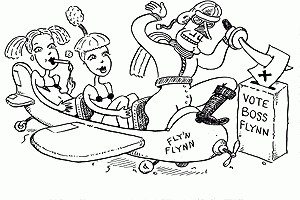
Another possible figure who could plausibly have been the source of the phrase is the political organizer Edward J. Flynn. He was a campaign manager for the Democratic party during the 1930s and 40s and was well-known to be highly effective at arranging political successes. Such machiavellian organizers were known as bosses. Flynn, with some irony, called his autobiography ‘You’re the Boss’, in a reference to the American voting public.
Edward J. Flynn had not been associated with the phrase ‘in like Flynn’ prior to the efforts by etymologists to explain it though and no records from the 1940s make any such link. It seems very much more likely that Errol Flynn is the Flynn in question and, although the phrase may have been used before he was at the peak of his celebrity, it became well-known by association with him.
Adapted primarily and quoting from:
The Phrase Finder
www.phrases.org…
See, also:
www.worldwidewords.org…
www.straightdope.com…
— Tim