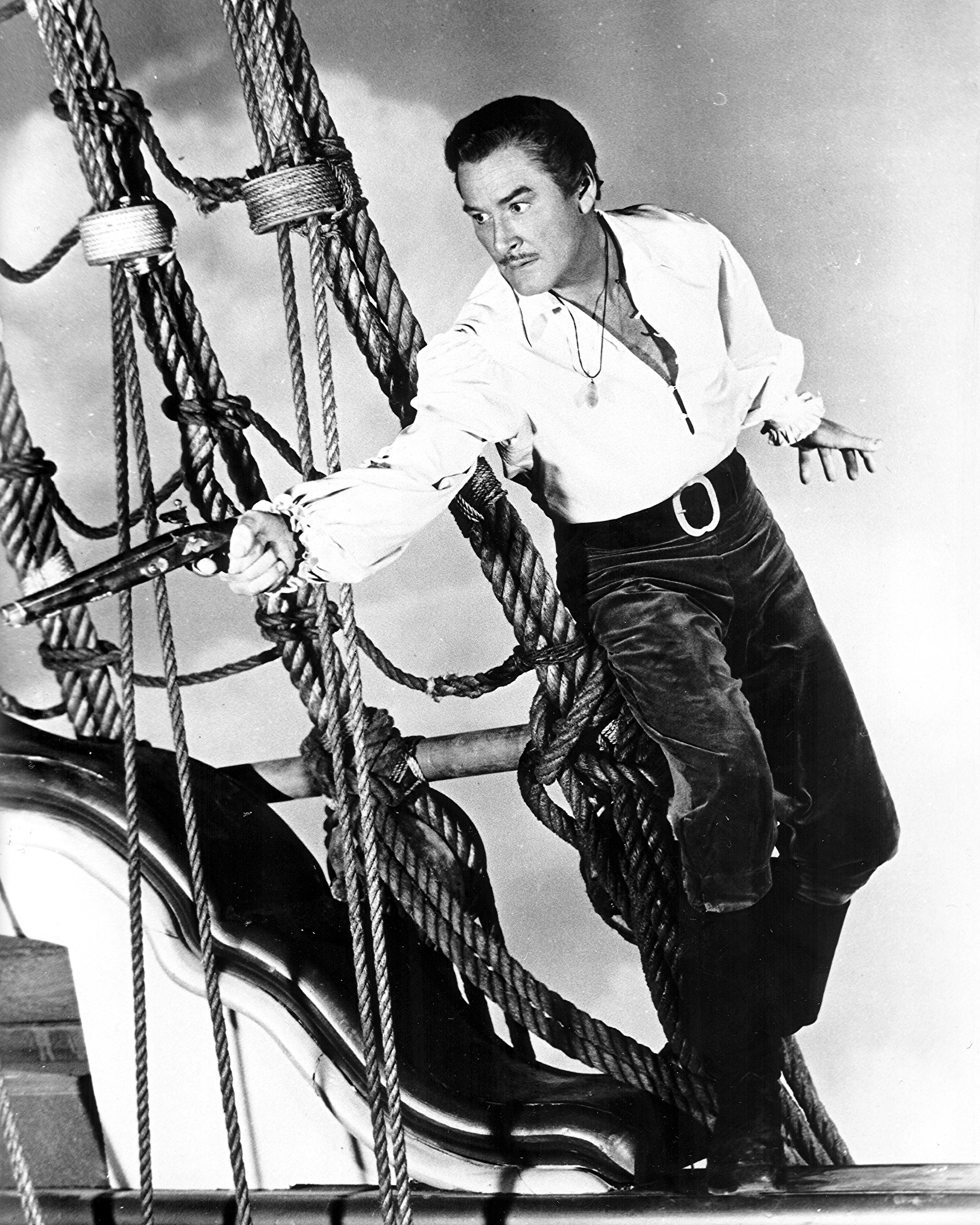
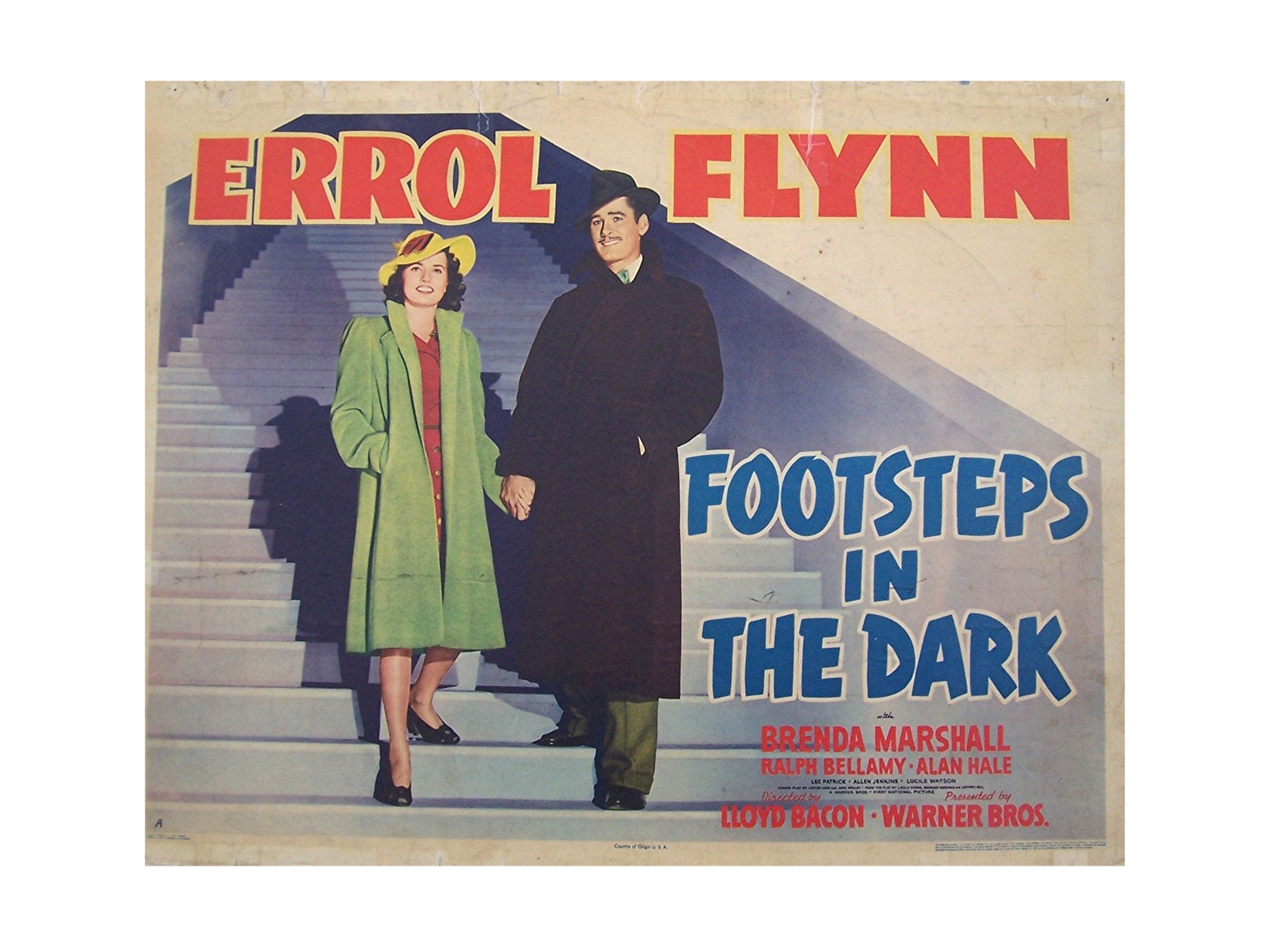
Here is the way they saw it back then…

WEEKEND Magazine – November 14, 1959

This was not the Beverly Aadland that Flynn knew. This was not the girl he had described as “my little wood nymph.” But this WAS Beverly when she landed back in Hollywood from Vancouver, Canada, after Flynn's death. She fainted and was carried away by friends. WEEKEND Magazine – November 14, 1959
Errol and me
by Beverly Aadland
WEEKEND Magazine – Sydney, Australia – November 14, 1959
- WE think Beverly Aadland is one of the silliest little girls we have heard of.
- WE even wondered if we should publish her sensational story of life with the fantastic Flynn.
- WE have decided to publish it—in her own words—because it is one of the most extraordinary human documents known to modern journalism.
- BUT FOR HEAVEN'S SAKE! — WHEN YOU READ IT KEEP YOUR SENSE OF PROPORTION AND DON'T TURN THIS UNFORTUNATE AND MISGUIDED GIRL INTO A HEROINE.
- Treat this story of the long-legged lovely who at 15 fell for the 50-year-old Flynn as an extraordinary self-indictment of the shiftlessness of modern-day American youth.
By BEVERLY AADLAND
As told to David English
I HAVE no regrets. I was 15 years old when I fell in love with Errol Flynn. With a man like him there could only be one kind of love—all or nothing. I gave him all.
For two years, with his help, I flouted convention and traveled the world with him—a married man three times my age.
I DID NOT CARE THEN. I DO NOT KNOW.
Why should I be ashamed? Ours was a passionate love relationship of depth and breadth on the emotional, intellectual, and physical plane, and it brought us together as one entity.
We gave everything we had to each other and each received more than we gave… yes, it was that kind of love. Errol told me that I was the greatest love of his life. And I believed him.
From that belief I gained dignity and strength.
A close friend of mine said to me after he died: “If only he could have married you.”
I ANSWERED QUICKLY: “LOOK, I WAS MARRIED. I WAS AS MARRIED AS ANY WOMAN IN THIS WORLD — THE ONLY THING THAT WAS MISSING WAS A SCRAP OF PAPER.”
A crazy cycle.
IN those years with Errol I touched heights that few women can imagine. I was in a crazy, emotional cycle winging me upwards through joy into happiness, into peaks of unexplainable ecstasy. There were depths, too.
Depths of sadness—and the last one at his death when I was there beside him holding his hand—that were too deep to bear.
But emotion makes a woman. Though I am only 17 I feel a whole woman now, proud and defiant, so deeply, deeply grateful to Errol Flynn for what he has made me.
I LAUGHED FOR HIM, I DANCED FOR HIM, I LIED FOR HIM, I BIT HIM, I SCRATCHED HIM, I FOUGHT HIM, BUT I NEVER STOPPED LOVING HIM.
Which is the reason why I have written this story.
Enemies of Errol Flynn, who were frightened of him in life, crucify his memory because he was different. Because he defied convention.
Because he was a social Robin Hood.
They would like to leave only the picture of a drunken dissolute, a man preoccupied in seducing young girls.
I INTEND TO ANSWER THEM.
Our love affair had integrity and meaning. Whatever the world said, to my mind there was nothing sleazy or sordid about it.
We loved each other with a madness, a passion, yes—but it all had meaning.
But enough of the arguing. Let the facts speak for themselves.
I will tell my story simply and honestly and let the whole world read it.
I am — or I should say was — no different from thousands of other teenage girls in America.
My father was an industrial chemist, my mother is in show business—a dancer. I grew up in the sprawling confusion of Los Angeles in a nice middleclass neighborhood.
As a child I was happy and carefree. My greatest pleasure was to dance and sing.
One day in a launderette I was quite unconsciously singing and jigging about when suddenly I saw that a woman was staring at me.
There was nothing sinister in this. She thought I had talent, phoned my mother and told her so.
And so the talent spotter in the launderette, who turned out to be an agent, sparked off a latent desire in my mother that her daughter, too, should go into show business.
From these beginnings came the path that led straight to my meeting with Errol.
It can be told simply. I had dancing lessons and singing lessons and soon I was taking part in shows.
My mother was delighted and my father intensely proud. On the surface all was fine.
But I was growing fast and my parents, instead of helping me over a difficult adolescent period, became strangely Victorian.
Mom was not too bad. When I turned 14 she did not mind me going out with boys as long as I was home by 11 and as long as she had met and investigated them.
I rebelled.
McCARTHY was child's play to Mom when it came to investigating them. She knew just about everything there was to know about any boy who took me just 100 yards along the road for a 10-cent coke.
But my father was not prepared to let me have any fun. To his mind it should be school, work, or stay at home. Naturally it was not a perfect situation and I began to rebel.
My rebellion took the form of dating boys and falling for them. I built a million dream houses.
My mother used to see me coming home on Saturdays, all starry-eyed and wrapped in a mist. “And who are you in love with tonight?” she'd ask.
I'd give her the boy's name and she'd laugh. “Don't worry,” she'd say. “It will be someone else next Saturday.”
Neither of us could have guessed that this weekly routine would be ended one day when I answered the stock question with: “MOM, I'M IN LOVE WITH ERROL FLYNN…”
My poor mother had to be helped to a chair and practically be given smelling-salts such was the shock. She never got in the line of dialogue about it being somebody else next week.
It was just as well, because of course there could never be anyone after Errol.
That little charade was to come in the future.
At that time I was dividing my romantic time between Harry, who was a policeman, and Big Jim, who was 6ft. 4in. tall, wore a Stetson, and earned a pretty good living as a Western stunt man.
But on the whole there was not much time for dates because I was working pretty hard on the set of “South Pacific,” where I was in the chorus line at 7 o'clock in the morning and then all afternoon at the high school at the studio.
It was September, 1957. A very hot month. In between shots we girls used to go out of the studio backdoor and sit in the sunshine.
Opposite where we went for this daily session was a caravan dressing-room. I never noticed the name on the door, but one lunchtime Gene Kelly stood outside talking to a tall man with a pencil moustache.
Gene nodded. His companion made a mock half-bow. Gene said, “Hi, Beverly long-legs,” and went on talking. I'd got that name because there were three Beverlys in the line.
Beverly blue-sweater, Beverly pink-sweater—and me, Beverly long-legs.
As Gene called my nickname I realised that his companion was naturally looking at my legs. I did not mind. They are good and long. My best asset, really.
The next day I saw the same man again. He was standing outside his trailer and he made the same half-bow. The rest of the girls saw it, too, and soon the whole gang of them were yakkity-yakking away.
“You know who that is, kid?… that's Errol Flynn. Better watch out, kid… Errol Flynn.”
Big deal, I thought. So he's a movie star. He was a movie star before I was born. I should care.
At that time I was only interested in rock-'n-roll stars like Elvis Presley.
I tell you this much: I was neither impressed nor interested by this middle-aged idol who bowed so charmingly at me.
But a couple of days later I passed the trailer again on my way back to the lot, and a fat man, a dynamic little dumpling, bounded out of the door and said:
“Hey, someone wants to speak to you.”
He was Orry Kelly, the dress designer. The someone was Errol Flynn. I went into the trailer excited perhaps, flattered certainly.
Errol took my hand. Orry just left us then and Errol said: “Yes, I do want to meet you. I've wanted to talk to you for days. Tell me about yourself.”
I talked mechanically and as I talked I took a long, long look at this man. I decided that he was good-looking.
And suddenly from that moment rock-'n-roll, Elvis Presley, and all the others, including Big Jim and my policeman, were out.
He's dangerous!
BUT I had been reading the pages of “Confidential” magazine, which had just done a spread vilifying Errol, and I told myself: WATCH OUT-HE IS DANGEROUS.
The dangerous man said: “You look as if you might make an actress. I'm thinking of doing a film of Jane Eyre. Would you like to read for me?”
I said, “Where?” He said: “In my apartment.” So corny, I tell you I just stood there and giggled.
Good-looking Errol just stood back and grinned. He said: “My dialogue director and secretary will be there, of course. You'll be perfectly safe, my dear.”
As it happened, I was perfectly safe. THAT NIGHT. ANYWAY.
We did have dinner… in a large restaurant with ten or so of Errol's lawyers along. It so happened they wanted to discuss some legal business. So my first date with him was far from romantic.
But the next day when I saw him at the studio the magic was there as he said: “I'll see you this evening.”
What else could I say but, “Of course?”
That night we were in his apartment, which was, in fact, a guest house in Huntingdon Hartford's estate above Hollywood. We roasted weenies (frankfurters or hot-dogs) in front of the fire and sat on two bearskin rugs. And we held hands and talked.
I had never talked to anyone like Errol before and no one had ever talked to me in this manner. He was giving me all his views about life, glamour and the phonyness of Hollywood.
And suddenly he was saying: “You know life is not all that it appears.
“You may be surprised, but I have had a very unhappy time…”
Age meant nothing…
He talked about his children and his marriages. And I listened, thinking this was an old, old line. Only somehow it sounded new.
We smoked and drank—coffee for me, vodka for him. And I used the bearskin rug. Not only as something to lie on, but as an ashtray, flicking my cigarette in the bear's wide-open mouth.
Then he was saying: “You should not do that,” and his arms were around me and he was kissing me.
And suddenly at that point I became two people. Two different people.
Beverly, the teenager, thinking: “Wow, big deal. Here I am being kissed by the big movie star.” And, even while thinking that, giggling because his moustache tickled.
I had never been kissed by anyone who wore a moustache before.
But the teenager was put aside as the woman took over. And the woman in me knew that she was wanted, needed…
Don't let anyone say that a girl in her mid-teens can't love or be loved by a man of 50. I knew then that age meant nothing in our relationship.
I'm not advocating that other teenagers should act in the way that I did. This kind of relationship comes only once in a thousand years.
I say that with humility, grateful that it should be me who had found this paradise.
It seemed that I had been to another planet when I finally got home. I realised that I would have to keep the whole affair secret. I told my mother that I had been out with Big Jim.
And when he called the next day for a date I asked him to drive me to Hollywood.
“I've got to tell you, Jim,” I said, “that I don't intend to spend the evening with you. I have a date with Errol Flynn. Please don't be hurt. This is a thing and I can't think of anything else.”
I looked at his puzzled, lonely face and squeezed his arm. “Don't worry,” I said. “I know how to take care of myself.”
We stopped in the studio car park. Errol was waiting and came across. I got out of the car. Big Jim dragged his 6ft. 4in. plus 18 inches of Stetson, out after me.
He scowled…
ERROL, a big man himself, was forced to look up at my gigantic companion, who scowled down at him. Taking my arm, Errol smiled and, turning to Jim, said: “All right, son, you may go now.” And Big Jim got back into his car and went.
And so those days went on, meeting Errol every day. I realised that he drank a lot, even though he appeared never to get drunk. At one restaurant I thought it would be best to join him, and ordered a vodka.
When the drink came he took it away from me and poured it slowly and deliberately on the floor.
“Listen, I don't want to see you drink,” he said, “ever.” His face was set and white.
I was scared. I looked it. “Listen,” he told me, “I'm quite capable of taking care of the drinking side of things for both of us.”
After that I went out with Errol every day for a fortnight. It was as though our relationship would go on for ever.
BUT I COULD NEVER BRING MYSELF TO CALL HIM ERROL.
It seems ridiculous to say that I called my lover Mr. Flynn, but that's what I did. Then one Saturday afternoon he responded in a strange and tender way.
I had just said, “Yes, Mr. Flynn,” in answer to a request to bring in a tray of sandwiches.
He turned and put his arms round my waist and lifted me up until I was sitting on the cocktail bar. He looked at me for a moment and never said a word.
Then he said: “I don't think you should call me Mr. Flynn and I don't think I can call you Beverly. “I think the best name for you is Woodsie. Yes, Woodsie.”
I said, “Why, what does it mean?”
He said, “You remind me so much of a wood nymph. You know, pixyish and Pan-like. Woodsie, that's the name for you.”
I was flattered, but as I looked at him and saw the intensity in his face I realised that this man was really saying something to me.
THAT HE LOVED ME AND FROM THEN I KNEW THAT NOTHING WOULD EVER BE THE SAME.
And I was in love with him. I knew it and so did he. The only trouble was that my parents didn't know.
Which was perhaps just as well. But in my case they had to be told before they found out.
I was only 15 and both Mum and Dad were very strict, particularly my father. Furthermore, I was showing promise as an entertainer—I was working in the film “Marjorie Morningstar” at the time—and my career figured very largely in my parents' plan.
My mind, of course, was on only one thing — Errol. Our dates at night. Our seeing each other on the lot. Holding hands. Kissing.
We used to meet every evening. My father thought that I was dating various boy-friends from the locality. In fact, I was using them in the conspiracy. They'd call up for dates. And I'd answer the phone and say, “Sure, I'll see you tonight.”
Whoever it was would arrive and I'd say “Good-bye” to my folks and climb into the car and we'd drive away.
My date would say, “Where would you like to go this evening, Bev?” and I'd answer, “Los Angeles,” and feel such a heel.
Because then it was necessary for me to tell them of the embarrassing situation. That I was using them (whoever it was, David, Jack, or Jim) as a means of meeting Errol.
Strangely enough, the intrigue appealed to my boy-friends. But then, being something of a tomboy myself, I had formed some pretty good relationships and always been one of the gang as far as the fellows were concerned.
A redhead rival!
ERROL was extremely tender with me at this time, caring for my every wish. We used to laugh and kid a lot… and I think that it was my carefree chatter that really appealed to him.
I was taking him out of a slough of depression.
He was drinking pretty heavily, because he was unhappy. His marriage to Pat Wymore had gone phfftt.
But out of my screwball, and perhaps childish, behaviour came an infectious gaiety that caught him and pulled him along.
One day in his apartment he pulled me to him and said, “Oh, Woodsie, you're so good for me.”
On another occasion we were all spending a weekend at his place which he was borrowing from Huntingdon Hartford, and I got my first taste of one of the big problems of being Errol's girl.
There was a knock on the door. Ronnie Shedloe, Errol's secretary, opened it and on the doorstep was a redhead.
“I'm here to see Mr. Flynn,” she said, and pushed her way in.
“I don't know you,” said Errol. The redhead babbled off a long spiel about mutual friends and said, “How about a drink, lover…”
Errol was amiable. And me in the background—why, I was just bewildered. But I went and got her the drink—a vodka and tonic.
It wasn't very strong, but it seemed to get her loaded. She began to fall about and behave in an extraordinary manner.
Errol looked at me, saw my face and then said, “I didn't ask her here. What shall I do?”
“You go and play tennis,” I said purposefully, “and leave her to me.”
I got her outside, and found she had an overnight bag that she had brought with her.
Sounding much more sure than I felt, I ordered, “You'd better go, unless you want the police brought into this.”
She went.
But it was an object lesson. In the two years that I was with Errol… and they were wonderful years…
He attracted girls, girls, girls. They threw themselves at him.
It was understandable, I suppose. He was tremendously attractive physically and had, without question, fabulous gallantry and charm.
Naturally, he was poised, steering all situations to his own advantage, so that he was never ill at ease.
And always, as I've said, there was that physical attraction—absolute animal magnetism.
And humor. He saw everything humorously. Even in the deepest of blues, he could see the funny side. That was the Flynn philosophy.
There were moments when he talked deeply of his marriage to Pat.
One day, when we were discussing her, he said: “You know, one of the reasons I first fell in love with her was that she was a great barbeque girl. She knew how to bake things in an open fire, and they were always splendid.”
It was crazy!
WELL, that was a strange talent to attract a man, I thought, and I couldn't help saying: “Listen, Errol, any Girl Guide could do that.”
And to prove it, I set about doing it.
I'd never been a Girl Guide. But I had had Red Cross training at school, and I found use for that when Ronnie Shedloe, who is a sweetie, went down with flu one weekend.
Errol was unsympathetic, wandering about with a glass in his hand and encouraging poor Ronnie with mighty shouts of “Courage, man, courage.”
But I helped him because he was feeling pretty rough. So I made with the aspirin and cold compresses, and even Errol was touched and hugged me, saying: “Oh, Woodsie, you are sweet.”
Here was I, a girl of 15, falling in love with a man of nearly 50.
IT WAS CRAZY… AND YET IT WAS PERFECT. CONFUSION AND EMOTION CRISS-CROSSED IN MY MIND.
Out of it came a stumbling resolve that I had to finish the whole affair quickly or it would be too late.
Now mother knew that I was seeing a lot of Errol. This was fine by her because she knew that he was helping my career, and she was not too worried. She never suspected that it went deeper than that.
I felt it was time to pull out.
And so one night when Errol called me, as he occasionally did, I said: “Sorry, Mr. Flynn. I can't make it…”
There was a silence. I could hear him breathing. Then he said: “What do you mean?” By now there was a lump in my throat just too big to swallow. I choked into the phone: “I think this is best. I'm all mixed up.”
Corny enough phrases… but they summed up the situation accurately enough.
I put the phone down.
That night I cried myself to sleep. I cried for days. I tried to work… but I cried. I went to the movies… but I cried. I stayed at home… and I cried.
After five days I was completely broken up. I took a look in the mirror, and what I saw didn't look good.
I decided that I needed the beauty shop, but good.
There in the beauty salon, a boy-friend who'd been around for a long time caught up with me and suggested a date for the evening.
I was grateful, for I was still fighting off the on-sweep of depression.
But I was in no mood for gaiety, and the evening developed into a confessional session whereby I told my friend all about Errol Flynn.
The only one!
I could see by his eyes that I was hurting him, because I knew that he was pretty keen on me himself, but he was a true friend.
And after I sobbed out the last word, he took my hand and said gently: “Why deceive yourself? You love him and he's the only one for you.”
So I called Errol and said I wanted to see him, and when I did see him I just threw myself in his arms and clung so tightly. I was crying. It was idiotic, but the relief I felt could be shown in no other way.
He said very lightly—just a whisper: “I'm glad you came back, Woodsie,” and he stroked my hair.
THERE WAS NEVER ANY QUESTION IN MY MIND OR MY WILD HEART FROM THEN ON.
I knew that a girl of 15 could fall in love. That was the situation. I accepted it without reservation, and it brought me nothing but contentment and happiness.
Errol wanted to meet my mother, and I arranged it. She was charmed, of course. He was on his best form—lightly gay, and an undertone of gentleness and seriousness beneath the surface.
My mother has always been devoted to me. She lost two other children, and so became over-protective towards me.
And although nothing was expressed in words at that first meeting, both Mum and Errol in their affections and feeling for me knew that they were on mutual ground.
As an added complication to things, Mother was taken ill for a time and had to go into hospital. Errol was wonderful.
He sent her fruit and messages and the superb stiff upper lip British-style telegram, which said: “Get well quick, old girl.”
She loved that. Get well she did, and she was Errol's friend for life.
I was lonely!
It wasn't long after that that he had to go to New York. I was so lonely without him.
But as I was thinking of him, so he was of me. He made arrangements for me to take a modelling job in New York, and I moved East—with Mother.
New York was devastating, and I was intensely happy. But there was still Mother. I decided that I must level with her. I did not want anything undercover about the relationship to mar it.
I BROKE IT BY SAYING THE NIGHT BEFORE I WENT OUT: “I WON'T BE BACK TONIGHT.”
She went white!
“This isn't the first time, is it?” she said.
“No, it isn't.”
She took her hands and tilted my face, “Do you love him, Bev?” she asked.
Then before I could answer she turned and muttered, “That's a ridiculous question… what I mean is does he love you?”
I remembered in the seconds of that conversation what my mother had always dinned into me about men.
She had never said, “Don't have sex relations with a man.”
She had advised caution. “Be wise,” she always used to say. “Save yourself for the man that you are going to marry.”
I reminded her of this now. “And that's what I've done, Mum,” I told her.
She asked again. “Has he said that he loves you?”
AND I WAS FORCED TO ANSWER NO. “BUT HE'S IMPLIED IT,” I SAID. “AND I KNOW THAT HE DOES.”
My mother embraced me. And that was enough. In the time with Errol my mother and I came to be much closer. He was the catalyst… as far as I was concerned every change was for the better.
And there were changes in him, too. I used to cook for him, wash up for him. One day I had just about had as much as I could take.
I threw the dishcloth at him. “Come and do some work, Flynn,” I said, “dry… while I wash.”
He did so, grinning. “Woodsie,” he said, “if my public could see me in this domesticated set-up, God knows what would happen.”
Our domestic set-up, which was just about perfect, was brought to an end when he went to Africa to make “The Roots of Heaven.”
I cried so bitterly at the parting. I did not know then that this break was going to bring from Errol the most touching and beautiful series of love letters.
MY MOTHER HAD WONDERED WHETHER HE LOVED ME. HE WAS ABOUT TO SAY SO… OVER AND OVER AND OVER
AGAIN.
———————————–
NEXT WEEK – THE LETTERS FLYNN WROTE TO HIS WOODSIE
— David DeWitt