RSS
 

Search results for ‘name’

Errol's Nickname?

10 Apr

We all know that Errol enjoyed giving “nicknames” to people, but today we are looking for the reverse – for Errol's nickname!

The quiz question is as follows:
Under what nickname was Errol known to many in other countries and he loved it?

Please participate! We all love to hear from you!
Happy guessing,
Tina

— Tina


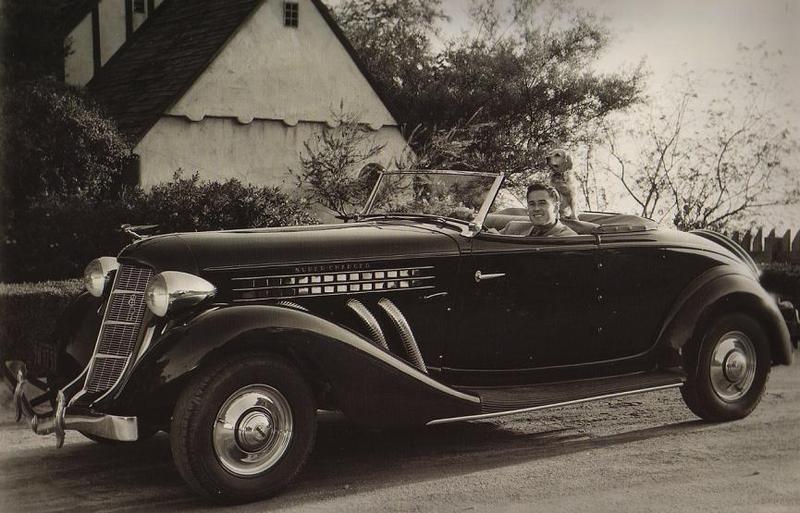
Errol's 1935 Auburn Speedster! Can you name the dog? Hint: starts with a “G”!

16 Feb

— David DeWitt

 
1 Comment

Posted in Candids


Errol with his little Mexican Jumping Bean Chum… know his name?

19 Apr

— David DeWitt

 
2 Comments

Posted in Candids


Mail Bag! Film Review: Errol Flynn’s Ghost film, Hello God (1951)

05 Jun

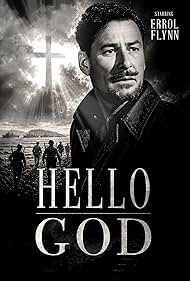
The Mail Bag brings us a most unusual film Review by Ralph Schiller, Errol Flynn’s Ghost film, Hello God …


Film Review by Ralph Schiller

Hello God (1951) was produced by William Marshall Productions.  It was filmed in black & white with a running time of 64 minutes.  It was written, produced, and directed by William Marshall.

British statesman Winston Churchill once said of Russia “a riddle, wrapped in a mystery, inside an enigma”.  His eloquent words could describe Hello God, Errol Flynn’s “Ghost film”, unseen for seventy-five years.

From 1933 until his death in 1959, Flynn made fifty-five feature length motion pictures. Two are missing. Murder At Monte Carlo (1935), filmed at the British Warner Bros. Teddington Studios, was destroyed in World War II when Luftwaffe bombs hit the studio film vault. Murder At Monte Carlo is number one on The British Film Institute (BFI) wanted missing films list. Hello God, is an even more elusive mirage, never telecast on American television (including local channels). Normally reliable accurate film historians have provided conflicting information on this film for decades.

The strange story of Hello God begins in 1950.

After fifteen years in Hollywood, Errol Flynn was still under contract to Warner Brothers, starring in one swashbuckler and adventure film after another. Flynn’s renewed contract allowed him to make one film per-year, outside the Warner lot for a major studio.  Errol Flynn was twice loaned-out toMetro-Goldwyn-Mayer to co-star with Greer Garson in the costume drama That Forsyte Woman (1949) and another adventure film based on Rudyard Kipling’s literary classic,Kim (1950). In 1949, Errol Flynn met William Marshall, a former band singer and second-string leading man at Republic studios.  Marshall, married to beautiful French film star Micheline Presle (also billed Prelle), was divorced from first wife Michele Morgan, another glamorous French movie star.

As producer and director, Marshall signed Errol Flynn to a multi-picture contract on February 18, 1950, which is documented by Robert Florczak’s book Errol Flynn, The Illustrated Life Chronology  (2022, Lyons Press).   Flynn would receive $2700.00 per day with a ten-day guarantee and half ownership of their first film.  Marshall, a World War II combat veteran, handed Flynn his screenplay with the working title Before You Sleep.  Errol Flynn was intrigued.

According to all sources, the retitled Hello God, stars Errol Flynn as the ghost of a dead American soldier on Anzio Beach.  He pleads for peace while introducing the stories of four American G.I.’s killed during the World War II invasion at Anzio.  The soldiers approach heaven and ask to be admitted even though they died before their lives on Earth were completed.

In 1968, a washed-up William Marshall published a thinly-disguised novel, The Deal (Bartholomew House Ltd.) in which he exposed the underside of Hollywood, his ex-wives, and especially Errol Flynn!

In the book, Marshall’s film director character Jarnigan purchases the American rights to a foreign film for peanuts.  Jarn quickly shoots a few scenes with the Baron (Flynn’s actual nickname) and inserts them into the edited film.  Jarnigan intends to ballyhoo the release of a new motion picture starring the Baron, one of Hollywood’s top stars.

Some film sources incorrectly state that Errol Flynn shot his scenes for Hello God in Italy shortly after completing location shooting in India for Kim.  Florczak’s book timelines Marshall filming all of Flynn’s Hello God scenes on location on the beach at Santa Barbara (forAnzio)in February, 1950.

Close-ups were shot in a film studio. Flynn was simultaneously filming Kim at the MGM lot with location shooting at Lone Pine, California (for the Himalayas of India).  Flynn’s Hello God co-star Sherry Jackson verified in a 2006 interview with this author that her scenes were filmed entirely at Santa Barbara, not Italy. After asking the author if he saw the film, Sherry Jackson said “Errol Flynn was a sweetheart and so handsome … [laughs] he gave me a dime and asked me to call him in ten years for a date!”

Errol Flynn never made it to 1961 but he would have been delighted with Sherry Jackson’s beauty and successful Hollywood career.

All sources verify after Hello God was completed, Errol Flynn feared starring in an anti-war movie during the Korean War would damage his reputation with the public. Flynn had his friend Charles Gross retrieve from the film lab the print and negative of Hello God. Flynn was convinced Jack L. Warner would tear up his studio contract because Hello God was not a major studio production!

Although William Marshall was furious, he recreated the film using out-takes and leftover footage. Flynn sued Marshall to prevent the film’s release and Marshall countersued.  According to James Robert Parish’s and Don E. Stanke’s book, The Swashbucklers (1976, Arlington House Pub.), the lawsuits kept Hello God out of U.S. movie theaters until 1958 when it was released by Cavalcade Pictures (distributor of foreign, exploitation films).

There is no evidence whatsoever of an American release of Hello God, not even movie art (posters, lobby cards, and lobby stills, etc.). Michael Freeland’s book The Two Lives Of Errol Flynn (1978, William Morrow And Co.) states Helo God never played anywhere “apart from a few sporadic showings in Europe.” Wikipedia quotes William Marshall, “Flynn doesn’t look his best in some of the rejected shots but we’ll have to use them unless this man coughs up the good ones. I like Flynn as well as anybody, but in business he’s pretty difficult. Somebody must be giving him bad advice … Everybody who has seen it says it’s a wonderful picture and Flynn does things in it he has never done before. He prays to God and he cries on the beach at Anzio.”

Errol Flynn’s manager Al Blum responded, “He (Marshall) represented to Flynn that he had a feature picture which needed only Flynn’s appearance in the Italian scenes and a commentary by Flynn to complete it. But what he really has is a hodgepodge of junk – old newsreels, clips from other pictures, bad photography, no quality – it’s just terrible. And, also, I’m a little afraid of its political aspects … At all costs Flynn will block the release – by court action if necessary.” Flynn eventually lost the 1957 court judgement and had to pay William Marshall $31,750.00 plus $2500.00 in legal costs.

​In spite of the bitter acrimony between them, Errol Flynn and William Marshall worked together again to make in France, the big budget The Adventures Of Captain Fabian (1951).  Marshall produced and directed, starring his beautiful wife, Micheline Presle. Flynn had the title role in this adventure film with a superior supporting cast including Agnes Moorehead, Vincent Price, and Victor Francen.  Flynn took an original screenplay credit on the film even though it was based on Robert T. Shannon’s novel, The Fabulous Ann Madlock.  William Marshall and Micheline Presle divorced in 1955, and the French movie star left Hollywood for France.

Errol Flynn never returned the prints and negative of Hello God to William Marshall, and may have destroyed them altogether. Marshall stored the prints, out-takes and negative for his version of Hello God at a Los Angeles film storage company.  In 1966 with Marshall’s rental fees in arrears, the company sent a formal collection letter to Mrs. William Marshall (Hollywood movie star Ginger Rogers) asking for payment.  They warned if the fees were not paid, the company would discard the film elements. Ginger Rogers and William Marshall were then estranged, headed for divorce.  Rogers had no intention of paying his debts.  In her autobiography Ginger, My Story (1991, Harper Collins), she wrote of William Marshall with great disdain and contempt, more than any other of her many ex-husbands.

In 1963, Marshall somehow persuaded the government of Jamaica that the island nation was destined to become another Hollywood. Dreaming of foreign money flowing into their economy, the Jamaican government had built Marshall his own film studio. There, Marshall produced The Confession starring his wife Ginger Rogers, Ray Milland, and Barbara Eden. A lessor distributor released the movie in 1964 to 2nd-run and Drive-In theaters.  When almost no one saw The Confession, it was unsuccessfully re-released, with the title Quick, Let’s Get Married! Ginger Rogers swore it was her worst film ever.  Marshall’s Jamaican studio was abandoned to rack and ruin. The author tracked down the film storage company which changed owners and its name. Speaking with a company executive, the author was told they no long had the film which was discarded long ago due to unpaid rental fees.

For all practical purposes, this was the end if the trail for Hello God.  Errol Flynn’s wish came true; no one ever saw it.  Then in 2013, a copy of Hello God was discovered in poor condition and sent to the George Eastman House & Museum in Rochester, New York for possible restoration.  Wikipedia claimed the print was discovered buried in the basement evidence room of the New York Surrogate Court!

The Moving Image Dept. of the George Eastman House & Museum said their copy of Hello God was from the Errol Flynn Estates. Either way, the film was terribly deteriorated and Eastman House was only able to restore eighteen minutes of 35MM film or about one-quarter of the motion picture.  The movie soundtrack was lost with surviving footage completely silent.

The author viewed the footage of Hello God at the George Eastman House & Museum.

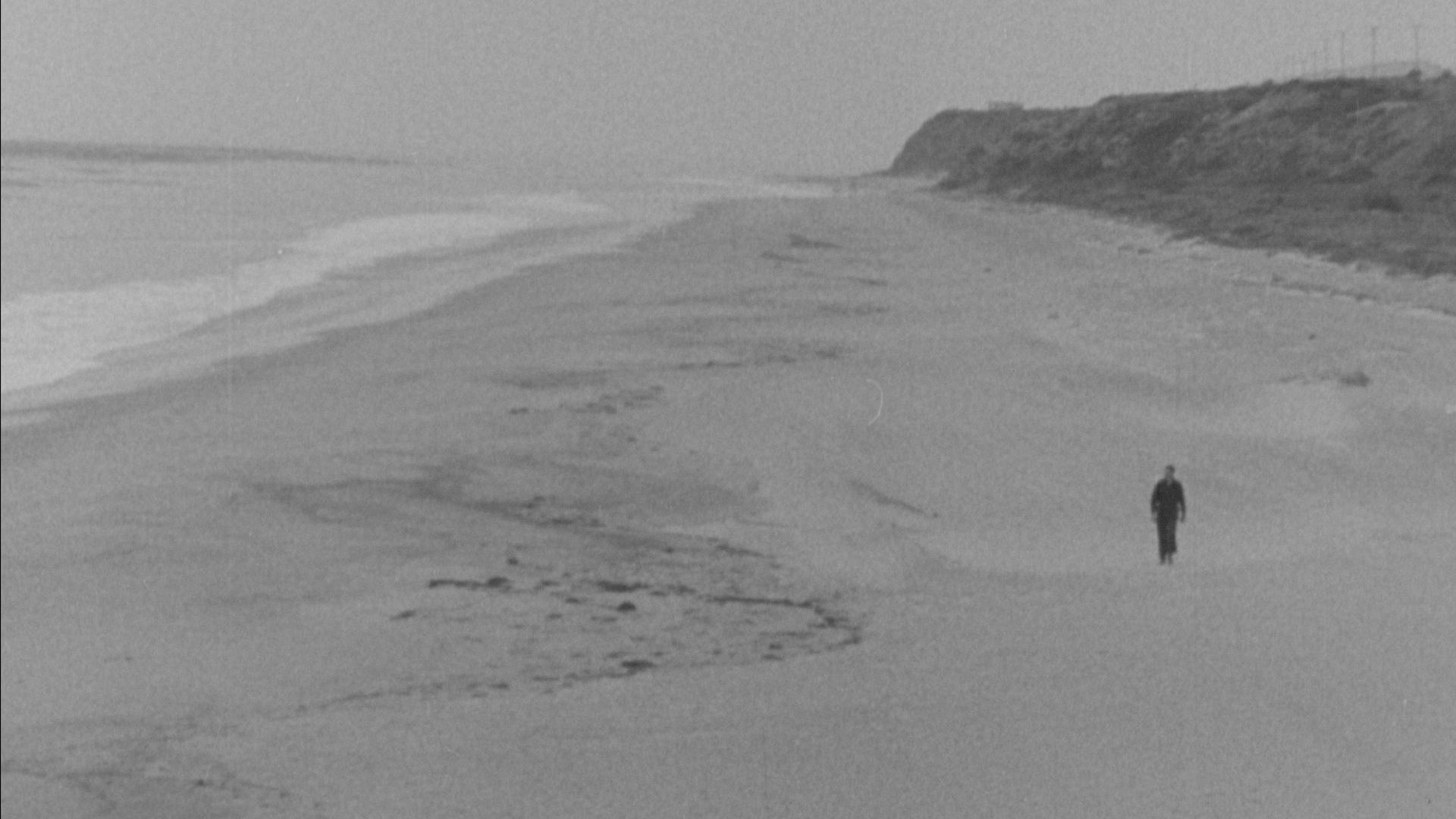
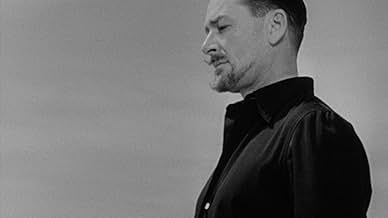
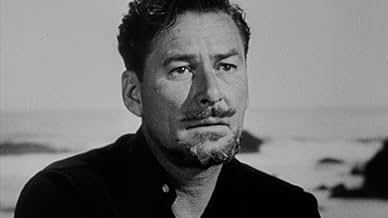
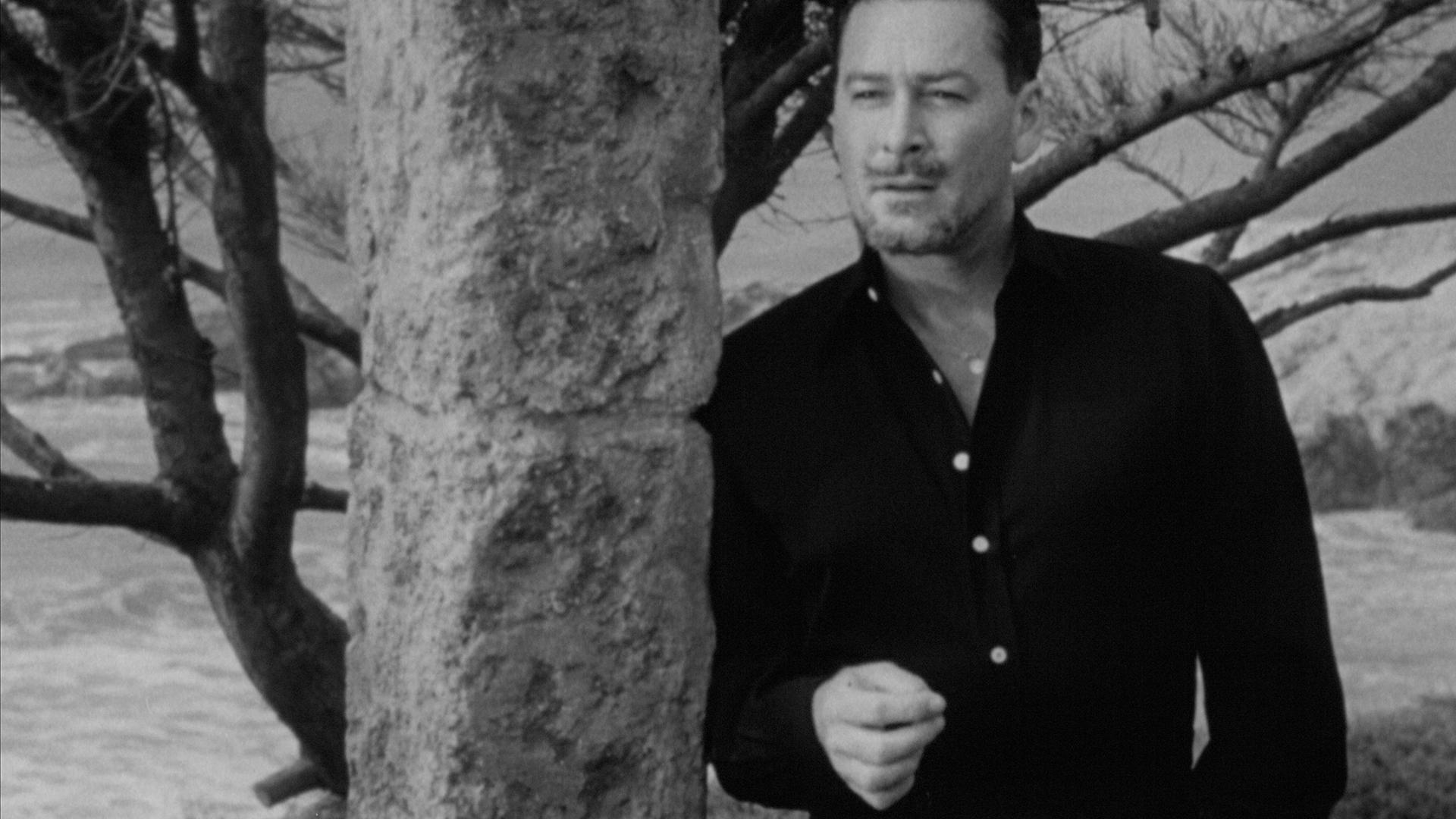
​The first of two reels begin with the trademark logo of William Marshall Productions, and opening credits.  After a poetic scroll about the futility of war, it fades to Anzio Beach at night, and dissolves to daytime with Errol Flynn (dressed head-to-toe in black, sporting his well-coiffed, Van Dyke beard from Kim) in longshot walking along the beach. Without a soundtrack, it cannot be determined if either William Marshall or Errol Flynn narrates.

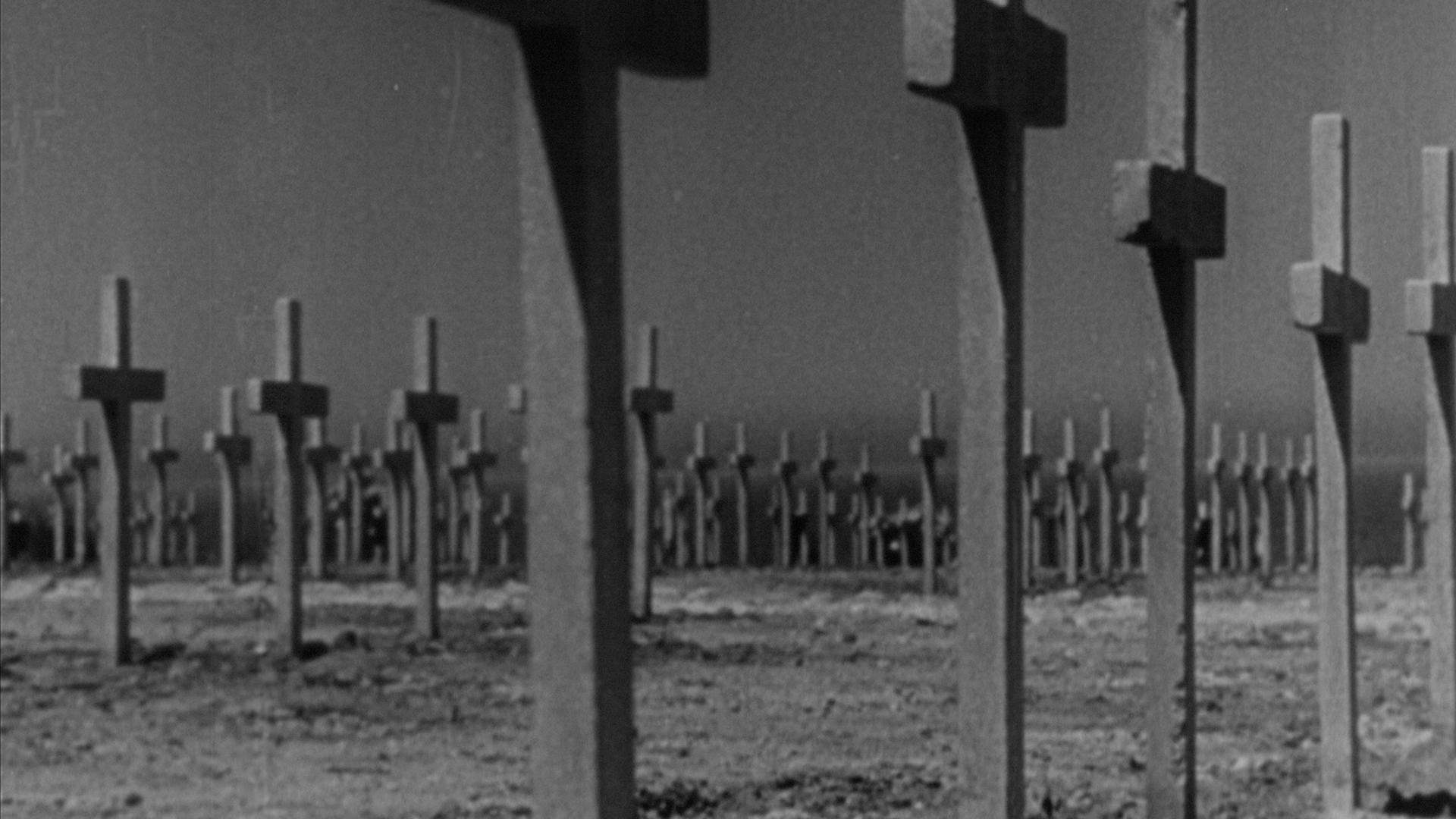
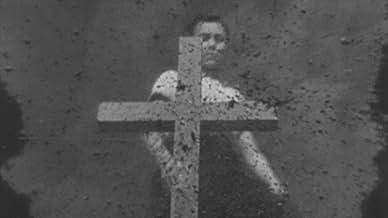
He walks through a cemetery filled with crosses of World War II soldiers killed at Anzio.

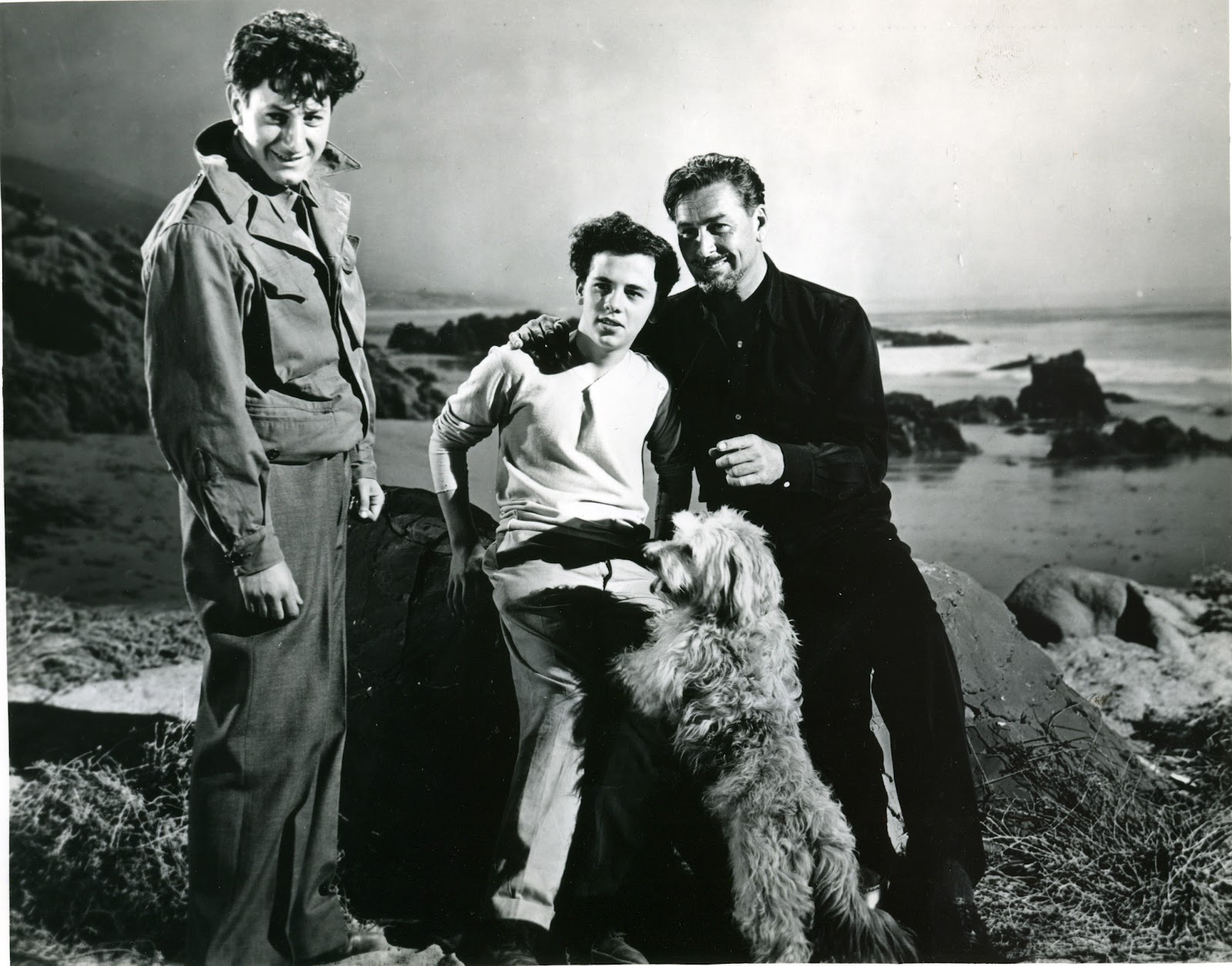
He sits on a large rock near the beach where he is joined by two adolescent boys (Joe Mazzuca and Armando Formica, American actors despite their surnames) and a sheepdog. Flynn cheerfully greets them and plays with their lovable dog.

The boys leave with their canine pal and an adorable, little Italian girl (Sherry Jackson) approaches Flynn. To her great astonishment, Flynn’s character stands up, clicks his heels, and gallantly kisses her hand like Robin Hood!

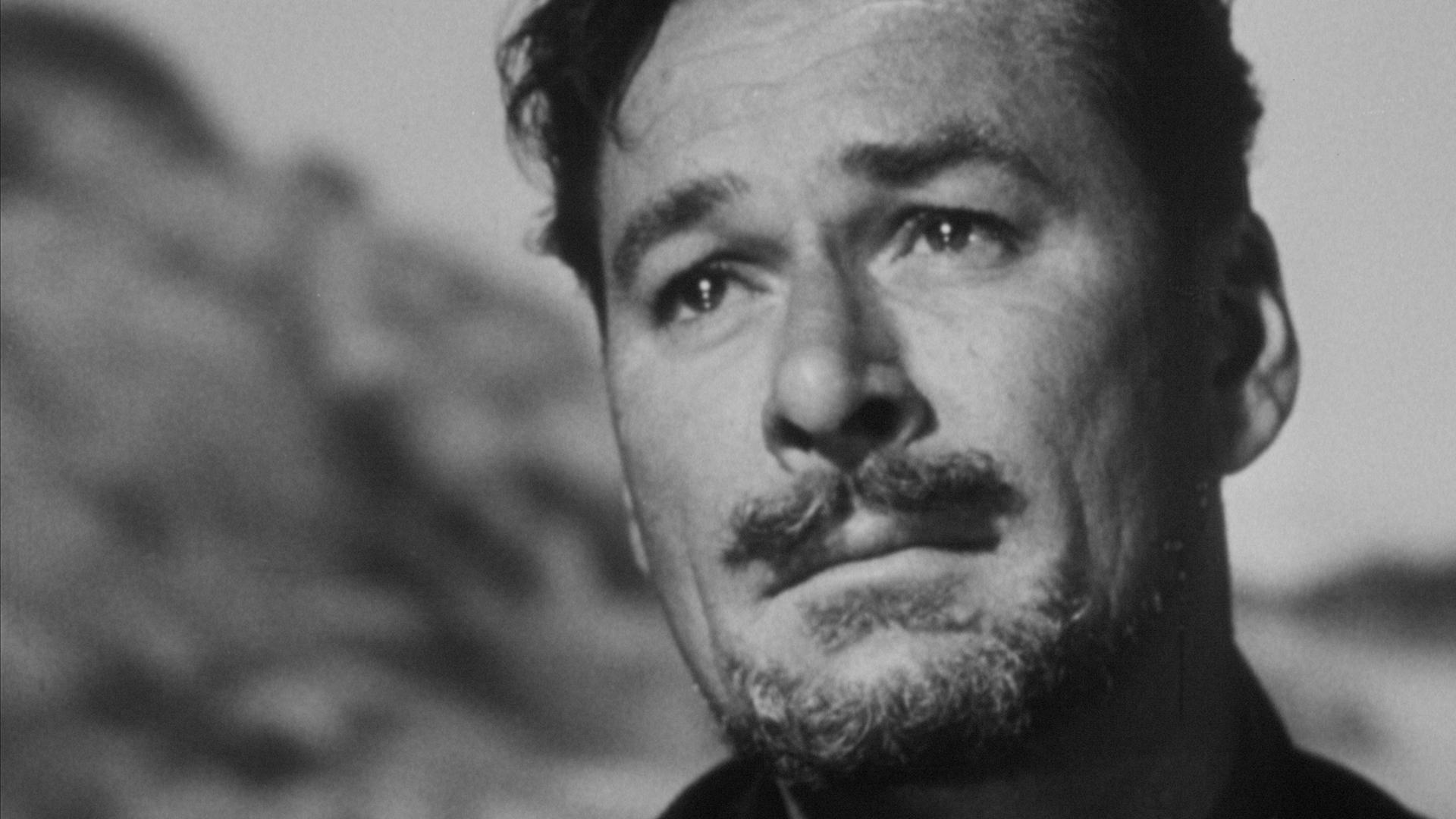
The happy little girl leaves and the boys return without their dog.  Flynn asks about their dog and gets the boys to laugh.  The boys leave and Flynn, in close-up, speaks directly to the audience as he introduces the stories of the dead soldiers. Even without sound, Errol Flynn emotes great sincerity and empathy for the brave soldiers, often looking up towards heaven.  At one point, he takes out a dead soldier’s wallet and begins telling his story but after a montage of endless crosses in the military cemetery, the film abruptly runs out.

Most film historians incorrectly thought Hello God was an exploitation film like Errol Flynn’s last movie Cuban Rebel Girls (1959). Instead, the curious Hello God is a profound bookend to a great anti-war film, All Quiet On The Western Front (1930, banned during World War II).

Silent or not, Errol Flynn does excellent dramatic work here. His character is an omnipresent, haunting, grieving figure who mourns gallant, fallen soldiers sent to heaven at the beginning of their young lives.

William Marshall, a wounded veteran decorated with a Purple Heart, and Errol Flynn were aiming high.  Except for a few seconds, almost none of the original Italian war movie footage survives. With a running time of just sixty-four minutes for the complete film, this surviving footage very likely contains the lion’s share of Flynn’s scenes.  Film historians claim Hello God has four separate stories.  If true they would be no longer than one-reel each. Without the complete footage, soundtrack, or Marshall’s screenplay, we may never know.

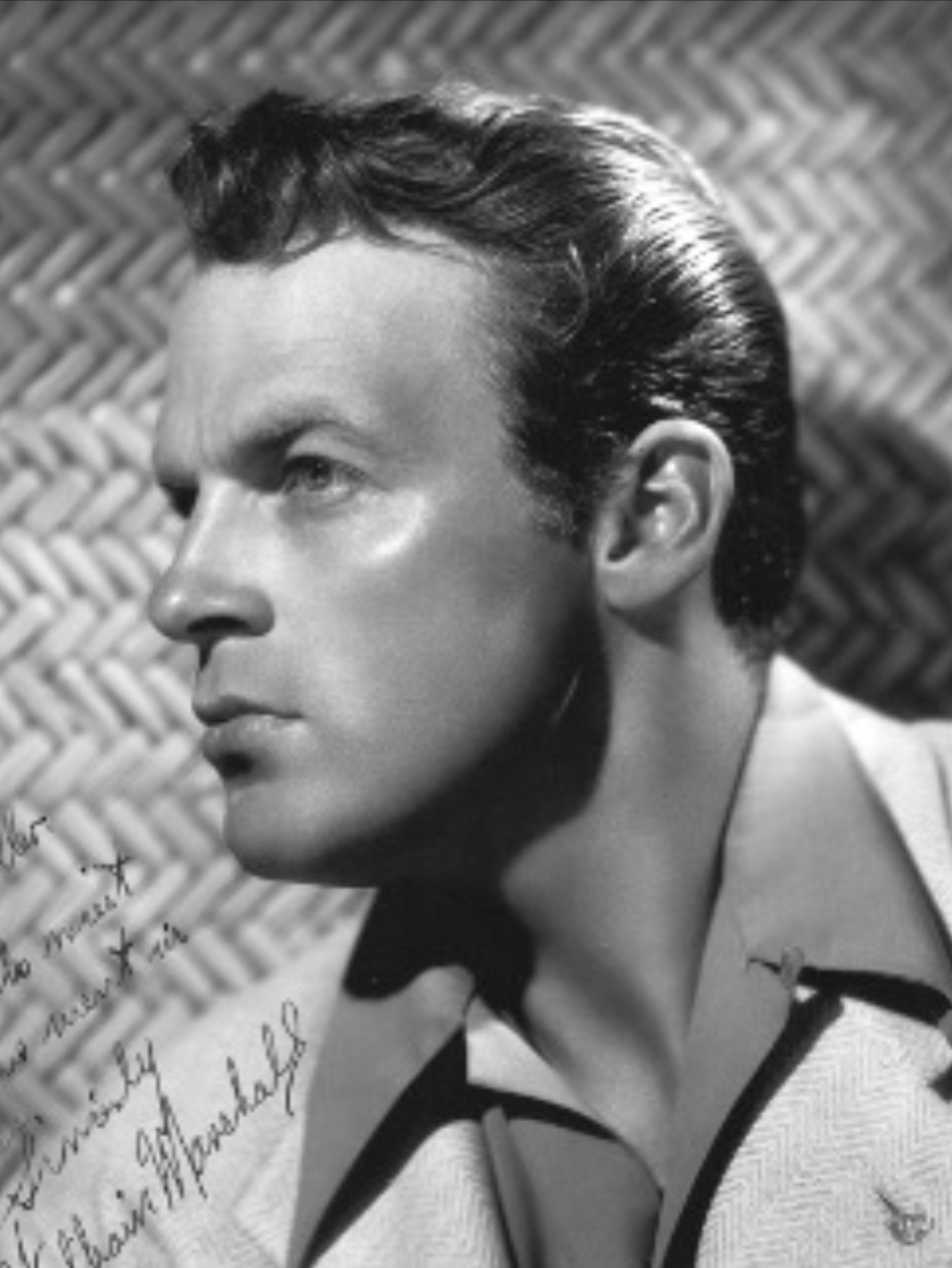
William Marshall

If anything, Hello God was a noble failure ahead of its time.  William Marshall was right about Hello God, and that Errol Flynn, who endured many scandals in his career, had nothing to fear.  We can only hope, however unlikely, that the rest of the film is discovered someday.

Thanks to the kind, generous cooperation of Beth Rennie, at the Moving Image Department, the George Eastman House & Museum (a leader in film preservation) with research assistance from Robert Florczak and Inga Klein.


Note:

When William Marshall married Michele Morgan in 1942, she was living in a new house specially designed and built for her. Marshall talked her into selling. Morgan agreed because she sensed something unsettling, frightening, about her house at 10050 Cielo Drive. In 1969, film director Roman Polanski and his beautiful actress wife Sharon Tate rented the house.

On August 9, 1969, followers of Charles Manson broke into the house and murdered the pregnant Sharon Tate plus four other people.

The house was demolished in 1994.


-Ralph Schiller


Thanks for this wonderful review Ralph and astonishing images! Special shout out to Karl Holmberg, too.

— David DeWitt

 
3 Comments

Posted in Main Page


Mailbag!

04 Apr

The Mailbag brings a response by expert Errol Flynn biographer and writer Thomas McNulty to a new biography recently out in by Patricia O’Brian …

Hello David,

Our good friend Karl shared with me the notice of Patricia O’Brien’s Flynn biography. Upon examining her credentials, I was hopeful. A Ph.D. scholar setting her sights on Flynn might have been a marvelous text. Unfortunately, I have seen the publishers hype as well, but worse than that I examined a transcript of her recent talk where I listened to these statements: “There have been so many cases of celebrity men going to trial since Errol Flynn, and I keep thinking what might have happened if he had actually been held accountable back in 1943.” Flynn, of course, was held accountable. That’s what being charged and put on trial means – accountability. In her discussion (the link is below) she is quite obviously wishes Flynn had been found guilty. But that’s not the worst of it. In an interview with “Financial Review,” the tag line is: “Jailing Errol Flynn might have stopped Epstein and Weinstein.” The Financial Review further blurbs: “If Errol Flynn had been called out, it could have been harder for serial offenders like Jeffrey Epstein to get away with what he did.” Shades of Charles Higham! My reaction to this is anger. This is precisely what it appears to be; an author being complicit in intentionally condoning and fabricating clickbait headlines to sell her book. It’s disgusting and unethical, but, sadly, there’s more. 

I heard from Dr. O’Brien via email in March, 2010. I’ll show you the text later. You’ll recall in the “Note and Sources” section of my book, which, incidentally, is more important than the bibliography, I had several notations that were confidential. Those individuals shared private information with me and preferred to remain anonymous. Dr. O’Brien requested I reveal my sources and provide her their contact information to assist her in her own work, which she described as being about New Guinea. I declined, and mentioned I thought her request was unprofessional (I don’t recall my exact words to her.) Her lack of ethics struck me as odd at the time given that she was signing her name as “Dr Patricia O’Brien, Visiting associate Professor, Center for Australian and New Zealand Studies.” 

She has an impressive background, but she’s participating in and propagating a hateful narrative that’s nothing more than an unprovable supposition. And all of this before the book is released in the United States! It’s already a # 1 bestseller in Australia. There’s more I can say here, but now we have to wait, we have to be fair and read the actual book itself. I am hopeful to find some quality research. 

I am not a fan of the Me-Too movement. I was abused by a woman at sixteen and the emotional trauma I experienced took me years to come to grips with. I don’t talk about that normally, but the narrative that men are inherently abusers is a false narrative. Did Dr. O’Brien consider how Flynn’s surviving children and grandchildren will feel by promoting this idea that a jailed Flynn would have prevented the abuse by people like Jeffrey Epstein? Does she understand what legitimate studies in cultural anthropology entail? From my admittedly biased perspective, Dr Patricia O’Brien has become an abuser herself.

Link to the Financial Review article (subscription required, but you can view the headlines:

www.afr.com…

Link to the YouTube video taken at the United States Study Center:

www.youtube.com…

Thanks for responding to this publication, Tom,  and I agree 100%, this is another Higham style attack on a man whose family is left wondering if their father will ever stop being the subjects of these ridiculous, unwarranted self-serving attacks?

d’

— David DeWitt

 
6 Comments

Posted in Main Page


Straight Outta Hobart

02 Mar

Dear Flynnstone,

one can never feel too save from the Ol’ swashbuckler’s spirit.

While watching “The Narrow Road to the Deep North“, a moving mini series filmed in Sydney after the namesake novel from Richard Flanagan, Errol is summoned by two fellow Aussies.

Simon Baker, best known as The Mentalist and who completed the Down Under- triad in James Ellroy’s “ L.A Confidential“ (www.theerrolflynnblog.com…) is comparing the protagonist Jacob Elordi in a scene to Flynn.

Elordi who starred as Elvis in „Priscilla“, as the monster in Frankenstein and as monsterous Heathcliff in “Wuthering Hights“ alongside Australian beauty Margot Robbie, is widely considered as the next big matinee idol. He even is in the mix to become the new 007. Then again, which young leading lad isn‘t…

If he does, maybe Errol Flynn paved the way transcending time, space and lifelines.

Enjoy,

— shangheinz


Big O to the Rescue

15 Sep

Dear Flynnstones,

enjoy the transcript of Martin Chilton‘s Telegraph UK- essay from July 7th, 2021

“Hollywood‘s blackmailer in chief: The dirt cop behind Condidential, the tabloid the stars feared.“

(Errol employed his services once and this blog‘s own Steve Hayes lives to tell the tales.)

“Being a private detective is a dirty job. There is no two ways about it,” Fred Otash admitted at the peak of his reign as Hollywood’s most notorious, sleazy private investigator. The former vice cop worked for anyone who paid him: The White House, the mafia, film studios, politicians and gossip magazines. He drew the line only at working for “communists”.

James Ellroy, author of L.A. Confidential, has featured Otash as a fictional character in four books, including his newly-released novel Widespread Panic. For nearly a decade, the best-selling crime author, along with director David Fincher, has been trying to get an HBO series about Otash, called Shakedown, off the ground.

Otash’s resumé reads like a who’s (slept with) who of the 20th-century movie world and he was up to all sorts of dirty tricks in cases involving Marilyn Monroe, Barbara Payton, Bob Hope, Rock Hudson, James Dean, Bette Davis, Judy Garland, Robert Mitchum, Edward G. Robinson and Lana Turner, among many others. Ellroy, whose new novel imagines Otash in purgatory, confessing his sins, described him as “the hellhound who held Hollywood captive”.

Otash, the youngest of six children of Lebanese immigrants Habib Otash and Marian Jabour, was born on January 6 1922 in Methuen, Massachusetts. After being thrown out of high school for fighting, he worked as a lifeguard at the Miami Biltmore Hotel, before enlisting in the Marine Corps in 1942. “I did intelligence work for the marines,” the burly, 6’ 2” soldier later admitted. After being discharged in 1945, he joined the Los Angeles Police Department, working first as a traffic cop and quickly moving to vice, where he worked for the following decade.

He soon became a well-known figure on Sunset Boulevard, catching drug dealers and sex offenders for the LAPD during the day and mixing with celebrities at the Hollywood Palladium at night. One of his regular details was arresting the sex workers who preyed on ex-servicemen, getting them drunk and “rolling them for their money”. He also worked at Santa Monica beach, “drilling holes in the men’s changing rooms” to arrest those he described offensively as the homophobic slur “f__”. The experience only deepened his morose view of human nature. “We caught plenty of priests, rabbis and politicians,” he told television interviewer Skip E. Lowe more than three decades later.

Otash quickly developed a sharp nose for celebrity scandal and soon became a “fixer” for top stars. He later bragged that he helped James Dean get off a charge for stealing caviar from a food shop, and managed to get a case against Eroll Flynn dropped after the star of Robin Hood was arrested for stealing an off duty policeman’s badge.

In 1950, on his 28th birthday, Otash married Doris Houck in Beverly Hills. She was a struggling actress, whose most recent film – 1947’s Brideless Groom, a comedy starring the Three Stooges – had done little for her career. The honeymoon period was soon over and their relationship was fractured by a paternity battle over Houck’s daughter, Colleen Gabrielle, who was six months old when they wed. Houck at first claimed that Colleen was fathered out of wedlock by her previous husband, an oil worker called Edward G Nealis. She then claimed that “she really didn’t know who was the baby’s father”. Although paternity was decided in favour of Otash, the relationship was permanently soured. They agreed to divorce after only nine months, by which time Houck was working as a clerk at an aircraft plant.

Although their first divorce petition was halted after they agreed to a reconciliation, it was not long before his philandering and appalling domestic violence caused a permanent split. In June 1952, under the headline ‘Vice Squad Officer’s Wife Given Divorce’, the Los Angeles Times reported on the tawdry revelations at the Santa Monica Superior Court. “She received an uncontested divorce on testimony that Otash struck her while she was pregnant,” the paper reported, adding that the blow caused her to suffer a miscarriage. Houck shocked the court with her testimony about Otash’s behaviour. “He gave me one day to get out of the house and told me he would not be responsible for his actions if I did not,” she said.

Luckily for Otash, the court case came before the launch of Confidential, a monthly magazine which started in December 1952. The publication, whose pursuit of scandalmongering was described as a “reign of terror”, thrived on revelations about Hollywood celebrities, and Otash knew he could feed their hunger for smut. Confidential became one of his primary sources of income after he left the police force in 1955 – following what was described as a “personality conflict” with LAPD Chief William H. Parker – along with the money he earned doing work for studio bosses such as Howard Hughes, and top Hollywood attorneys such as Melvin Belli and Jerry Giesler.

Otash, a master at strong-arming witnesses, gathered evidence to help them defend clients. “I spent 10 years putting people in jail and the next 20 years keeping them out of jail,” he joked to Lowe.

Otash made few press appearances in this decade. He did one interview with prime time host Mike Wallace, who described him as the “most amoral” man he’d ever had on his show. Otash admitted to Wallace, in this 1957 interview, that he earned more than £100,000 a year (around $1m in today’s money) for his activities. When asked how he could “justify invading people’s privacy”, he replied unabashedly that “if you can see it or hear it, you are not invading any privacy.”

Wallace grilled Otash about his reputation for violence when he was a vice cop, specifically asking how he earned the nickname ‘Gestapo Otash’. “Well, I have batted a few heads,” replied the man known affectionately in the movie world as ‘Mr. O’. Otash later inspired Jack Nicholson’s hard-boiled private eye Jake Gittes in Chinatown. Screenwriter Robert Towne said he studied Otash’s detective work, especially his antics in marital dispute cases, admitting “I drew on him for the character” in Roman Polanski’s 1974 classic.

Wallace was not alone in taking a dislike to Otash. Over the years, Ellroy has described Otash, whom he met several times in Miami in the 1970s, as “a rogue cop,”, “a shakedown artist”, “a dips__”, a “c__sucker”, “a sack of s__”, “a con artist”, “a bulls__ter, and a man it was “impossible to trust”. Otash has been a character in The Cold Six Thousand, Blood’s a Rover, Shakedown and July 2021’s Widespread Panic – and Ellroy admits to a fascination with a man who spent much of his life making money by revealing people’s most intimate secrets, unconcerned by how many lives he wrecked in the process.

In an interview in June 2021 with the LA Times, Ellroy talked about Otash’s modus operandi. “He went out and greased all the bellmen, and he went in there and hot-wired specific rooms and suites at all the high-line LA hotels. He paid desk managers a retainer to steer cheating celebrities into those suites and rooms, which were bugged 24 hours a day. He was down in the nitty-gritty of that first decade of big-time bugging, wiretapping and electronic surveillance.”

Fred Otash was the inspiration behind Chinatown’s Jake Gittes

After moving to America, fledgling actor and screenwriter Steve Hayes, who was born in Streatham, London, became the manager of Googie’s Coffee Shop on Sunset Boulevard. In 1955, he met Otash there and started working occasionally for Otash’s private investigation bureau. His tasks included taking surreptitious photographs of actress Anita Ekberg to “catch her screwing”. Otash sold them to Confidential. “I hated the job and as my writing progressed, I gave up PI work. I found it sleazy,” Hayes admitted.

Otash was well-rewarded by Confidential for any stories of adultery and he became a specialist at “outing” homosexual celebrities. Otash boasted about his exposé stories on pianist Liberace and actor Tab Hunter. He even did a “background check” on Ronald Reagan, who was an acquaintance. “I’ll work for anybody but communists. I’ll do anything short of murder,” he said. For many years, his work as an FBI informant meant the authorities ignored his activities.

Otash originally came to the attention of Hughes during his cop days, when he was paid in cash to help get a drugs charge against actor Robert Mitchum dropped. Although the ploy was unsuccessful, Otash remained a friend of the Mitchum family. Mitchum’s younger brother John, also an actor, once gave a memorable account of a visit to Otash’s luxury apartment in Beverly Hills, published in the 2001 book Robert Mitchum: Baby I Don’t Care, in which he described desks covered with recording and listening devices, and a room full of cameras with zoom lenses. It was clear that Otash, “a big, mean man”, was at the centre of a “quasi-blackmail” operation. “It was command central for Confidential’s fact-gathering and surveillance agents,” said John Mitchum. “The place was filled with big, tough looking guys, and some of them looked like they were packing heat.”

Robert Mitchum was one of the few stars to befriend Fred Otash

Otash himself always carried a gun strapped to his calf, driving around in a surveillance van that was disguised as a television repair truck. He knew almost every scrap of Hollywood gossip and became the go-to ‘fixer’ for the stars. Bette Davis hired him to snoop on her husband Gary Merrill, in full knowledge that his methods were dubious. An FBI file on Otash stated that he used “a seemingly inexhaustible list of call girls” to gather information, prowling Hollywood by night in a chauffeured Cadillac full of the women he called “his little sweeties”. He had sources who were higher-placed than sex workers, though, and later confessed that, during the 1950s, he was being fed information by people on his payroll within the FBI, CIA, LAPD and Department of Justice.

One of the most highly-publicised cases of the era was when a grand jury convened in Los Angeles in May 1957 for a libel and obscenity trial against Confidential. The magazine’s young Irish attorney Arthur Crowley instructed Otash to serve subpoenas on 117 stars – including Ava Gardner, Frank Sinatra, Gary Cooper and Elvis Presley – who had appeared in Confidential articles. The move prompted a rush of celebrities leaving America for a sudden vacation in Mexico, desperate to avoid becoming embroiled in what was dubbed “The Trial of a Hundred Stars”. Crowley quipped that “it looked like the Exodus from Egypt”.

Otash later admitted that he tipped off friends such as Sinatra, “that ballsy guy John Wayne” and Clark Gable. He let Gable “off the hook” by telling him the best time to “sneak out of his ranch”. The jury were unable to reach a verdict in the case, and Confidential later cut a deal with the studios agreeing that they would no longer “publish exposés of the private lives of movie stars”.

Ava Gardner, who was the victim of Fred Otash’s smear campaigns

It may have been anxiety over lost income from Confidential that caused Otash to branch out in a risky direction the following year, when he became involved in horse racing crimes for mobsters eager to knobble horses owned by rivals. Otash was caught injecting depressant drugs into horses at Santa Anita racetrack. In 1959, UPI reported that a grand jury investigation found Otash guilty of bribing jockeys and conspiracy to dope horses. Otash called in favours, however, and his felony conviction was later downgraded to a misdemeanour and eventually expunged from his record. He got away with a suspended sentence. “I was in jail a couple of times but always got out the next day,” he joked to Lowe.

Eager to drum up new business, he ran promotions for the Fred Otash Detective Bureau in local newspapers. His marketing did not go without hiccups. The adverts printed in November 1960 were full of typos (his surname was spelled ‘Ostash’ and the copy suggested choosing your ‘investor’ carefully, when it should have said ‘investigator’). He also got in trouble with additional ads after adding bogus recommendations from the FBI and the United Nations. He was ditched by the FBI as an informant and, in 1965, had his licence revoked by California’s Bureau of Private Investigators.

His most notorious activities in this era centre on his skulduggery with Marilyn Monroe and President John F. Kennedy – and it’s here, if that’s even possible, that the Fred Otash story becomes even murkier and more complicated. Otash later claimed that, around 1961, he was hired by mafia bosses to “dig up information on Kennedy”, reporting back on any rendezvous the politician had with women. He bugged houses Kennedy visited for liaisons and gained access to the most intimate scenes, later telling Ellroy that Kennedy was a “two-minute man”, who was “hung like a cashew”.

Otash often said that he knew all the true stories from “the greatest time in Hollywood history” and there is no doubt he was fond of spreading rumours. In Widespread Panic, Ellroy includes a scene in which Otash dishes the dirt on dozens of stars, including Natalie Wood, Johnny Weissmuller and Burt Lancaster, whom Ellroy’s fictional private eye calls “a sadist with a well-appointed torture den in West Hollywood. Pays call girls top dollar to inflict pain on them”.

Otash claimed he was bugging Monroe from 1961 and he gave numerous conflicting accounts of her mysterious death. In one interview he insisted it was “an accident”, in another he claimed, “I know for a fact that she committed suicide. She felt she was passed around and used and having nothing left to live for”. In 1985, he told the LA Times that on August 5 1962, the night of the actress’s death, he had been hurriedly hired by actor Peter Lawford, to “do anything to remove anything incriminating” from the death scene that linked Monroe to Lawford’s brothers-in-law, President Kennedy and Senator Robert Kennedy, both of whom allegedly had affairs with Monroe.

A year later Otash played 11 hours of tapes to writer Raymond Strait – the man who had ghosted Otash’s 1976 autobiography Investigation Hollywood: Memoirs Of Hollywood’s Top Private Detective – that were supposedly recorded during and after Monroe’s death. In the book Marilyn Monroe: A Case for Murder, Strait told author Jay Margolis that “Fred was afraid of the tapes” because they included evidence of a row with Robert Kennedy and a disturbing altercation hours later with two other men, moments before she died. “It was horrible,” Strait later told television host Joan Rivers. “After hearing those tapes, there’s no doubt in my mind that Marilyn was murdered.”

In June 2013, 21 years after Otash’s death, it emerged that the former private detective had kept 11 boxes of secret files in a storage unit in the San Fernando Valley. His daughter Colleen, “aggrieved” by what she called Ellroy’s “insulting” portrayal of her father in his novella Shakedown, decided to counter this “horrible fictional depiction” of Otash by making public the notes he left her, one of which claimed he’d been conducting surveillance of Monroe on the day she died. “I listened to Marilyn Monroe die,” he alleged.

The audiotapes and transcripts, including those in which Otash claims “I did hear a tape of Jack Kennedy f___ Monroe”, have never been publicly released. Matt Belloni, chief executive of the Hollywood Reporter, later told CNN that the files his journalist reviewed, “contain elements that are not 100 per cent verifiable… they are his recollections to his daughter. So what he said and what is actual truth is not necessarily the same.”

Colleen, who was listed as General Partner/Manager of Fred Otash Productions in Redondo Beach, California, also released other surveillance tapes made by her father which revealed more of his nefarious dealings. They included accounts of how he covered up an “emotionally disturbed” Judy Garland’s drug use, and they also featured recordings made in January 1958 in which Rock Hudson’s wife Phyllis confronted her husband about whether he was gay.

Hudson was caught admitting “physical” relationships with young men. At the time, the tape would have created a sensation – his homosexuality wasn’t public news until 1985, when he issued a press statement announcing he had AIDS – and instead of making it public, Otash played it privately to Columbia Studios president Harry Cohn, who reportedly agreed to become an informant in return for Confidential suppressing the information.

Otash exposed the inner workings of Confidential magazine

This was a common tactic for Otash, and it’s no surprise that he was known as Hollywood’s “blackmailer-in-chief”. He didn’t care and would usually reply “alimony is just legal blackmail” to anyone who questioned his morals. Asked late in life whether he had any regrets, he said the only thing he would have done differently in life would have been to “study law”.

The 1970s were perhaps the quietest time for Otash, who moved to Miami at one point to work as head of security for the cosmetics company, Hazel Bishop, Inc, and its subsidiary, Lilly Dache. When the New York Times asked him about this job, he said he was happy to have no more involvement in investigating “adultery, child neglect, prostitution and those things.” His opinions on the Watergate Scandal were sought and he dismissed the amateurs who used a Xerox machine rather than camera equipment during their break-in at the Democratic National Committee headquarters in 1972. “I still can’t believe the Republican party could have hired such a bunch of idiots,” Otash said. “I’ve been on about 25 Watergates and never got caught. I’ve tapped about 600 phones in countries all over the world and never got caught.”

The lure of Hollywood proved strong, however, and in the late 1970s Otash made his way back to LA to take over the management of the Hollywood Palladium. In 1978, he tried to stage boxing events at the nightclub, but the city denied him permission. He continued to work as a freelance security consultant, later claiming that he was employed by Universal Pictures during the making of The Blues Brothers, helping them solve the problem of “John Belushi shoving coke up his nose” on set.

In the late 1980s and early 1990s, Otash did a few television interviews – Ellroy said “Fred was making a lot of ancillary dough… getting 7,500 bucks a pop to talk about JFK’s womanising, James Dean, the inner workings of Confidential” – and began working on a book called Marilyn, Kennedy and Me, which was supposedly optioned by Penguin. He spent about six months a year at his flat in Cannes, even though he said he disliked the French. “At the end of the war we should have let the Germans keep them,” he remarked. When not working on the draft of his book he said he loved nothing better than “checking out the topless and nude beaches”.

On October 4 1992, after returning to his West Hollywood home, he attended a Friars Club dinner to celebrate completing the first draft of Marilyn, the Kennedys and Me. He went home in the early hours, before suddenly calling for a taxi to take him to Los Angeles International Airport. When there was no answer at his apartment, the doorman, alerted by the driver, called Otash’s friend Manfred Westphal – a publicist who was Colleen’s business partner – who found the 70-year-old under the kitchen table, dead of a heart attack. Otash, who smoked four packets of cigarettes a day as an adult, and regularly consumed large quantities of bourbon, had been sickly for years with emphysema and high blood pressure.

Otash is buried at Hollywood Hills’ Forest Lawn Memorial Park in a plot called, appropriately, Murmuring Trees. Before he was even in the cold ground, and only two hours after his death, Otash’s executor, Crowley – the man he’d worked with on the famous Confidential trial 38 years previously – stripped the apartment of tapes and documents, removing the red filing cabinet that contained the former private detective’s most sensitive files. “He put a shackle on the door, emptied the condo, and nothing inside was ever seen again,” Westphal told the Hollywood Reporter. Crowley died in 2010 and with him, it seems, went some of the answers to Otash’s darkest secrets about Hollywood’s sleaze.

Here is the direct link: Hollywood’s blackmailer-in-chief: the dirty cop behind Confidential, the tabloid the stars feared

Wow,

— shangheinz
 

Going Loco

27 Jul

Dear Flynnstones,

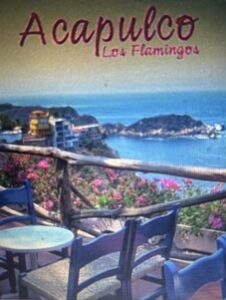
in the 1950s Errol & Amigos apparently acquired the Hotel Los Flamingos in Acapulco.

Known as the Hollywood Gang, John Wayne, Fred McMurray and Red Skelton, to name a few, partied hard at their hideaway south of the border.
Liz Taylor and Clark Gable came to visit.
In order to get a little sleep now and then, co-patron Johnny Weissmuller built his villa, the Casa Tarzan very nearby.

Rooms are still for rent.

Enjoy,

— shangheinz


At the Fair

10 Jul

Dear Flynnstones,

here is a transcript of the essay by Hadley Hall Meares published in Vanity Fair on April 7th of 2021.

Mad, Bad, and Dangerous to Know: The Mythical Life of Errol Flynn

Errol Flynn’s My Wicked, Wicked Ways is a canonical celebrity autobiography—as outlandish and problematic as it is utterly absorbing.

Born in 1909 in Tasmania, Errol Flynn captivated the world, careening through life like a Hemingway antihero brimming with toxic masculinity. When his autobiography, My Wicked, Wicked Ways, was released posthumously in 1959, he again shocked the public—and even his famous friends. “It is indeed as outspoken as it is reputed to be,” his friend Noël Coward sniped, “but with a sort of outspokenness which curdles the blood. Such a wealth of unnecessary vulgarity.”

From his early days biting off sheep testicles on an Australian farm to his reign as an international superstar, Flynn recounts his amoral adventures in deceptively eloquent prose that blunts his often sordid stories. Whether he was learning to drink odorless vodka on set from Ann Sheridan, smoking weed with Diego Rivera, wooing Princess Irene of Romania, or using cocaine on the tip of his penis as an aphrodisiac, Flynn was out for himself, with little care for the wreckage he left along the way. “I am dangerous to be with because, since I live dangerously, others are subject to the danger that I expose myself to,” he writes. “They, more likely than I, will get hurt.”

The Real Tasmanian Devil

Growing up in Tasmania, mainland Australia, and England, Errol Leslie Thomson Flynn decided quickly that the normal rules of human behavior did not apply to him. “I have been in rebellion against God and government ever since I can remember,” Flynn writes. His favored companions were the wild animals—tigers, kangaroos, opossums, and, yes, Tasmanian devils—kept in the backyard by his beloved father, Theodore, an esteemed professor of biology.

As a child, Flynn constantly butted heads with Marelle, “my young, beautiful impatient mother, with the itch to live—perhaps too much like my own.” She considered him a “devil in boy’s clothing,” and according to Flynn, frequently beat him. When Flynn was seven, he was caught playing doctor with a neighborhood girl under the porch, and received a particularly severe thrashing.

That was the last straw. “This is no place for me, I decided. I’d leave home, get a job,” Flynn writes. He ran away, attempting to find work at nearby farms.

After three days on the road, he was finally returned to his frantic mother. According to Marelle, Flynn had driven an easy bargain while looking for work: “He asked only five shillings a week as wages, saying that would do him, as he ‘never intended to marry.’”

Heart of Darkness

By the age of 17, Flynn had been expelled from his latest exclusive boy’s school and was running with the infamous “Razor Gang” of young toughs in Sydney. Determined to make something of himself, and with his family’s seafaring blood coursing through his veins, in 1926 he took off for the island of New Guinea.

Flynn gloried in his years in the brutal, rough-and-tumble Australian colony, and believed they shaped his moral character (or lack thereof). According to Flynn, during these years he worked as a colonial government lackey, managed a coconut plantation, and was a boat captain, a fisherman, a scammer, and a failed prospector in the gold fields.

By his own admission, Flynn witnessed the horrors of colonialism—and actively participated in them. He became a “recruiter,” marching into the jungle of New Guinea to persuade indigenous men to work as indentured laborers. At night he attempted to educate himself, reading the classics by the light of a hurricane lamp, while lizards and bugs swarmed around the single light. “I took a look at where I was,” he writes, “roaming from spot to spot…looking for gold, bumping and bumbling about like a blind bumblebee, hoping for a chance, plunging at a jungle with bare hands.”

According to Flynn, this reckless life came to a head when he and a group of laborers were ambushed in the jungle. His assistant, a young boy named Ateliwa, was killed. “I jumped behind a tree with my revolver in hand…. I fired as fast as I could, and I hit one of the raiders right in the neck,” he writes.

Although no official record of these events has ever been found, Flynn claims he was arrested and charged with murder. At the subsequent trial, he says he was saved by an old gold prospector, whose testimony helped secure his acquittal. When he finally left New Guinea, it was not the murder trial that drove him away, but a particularly severe case of “nail in the hoof,” otherwise known as gonorrhea.

The Great Lover

Flynn’s improbable journey to stardom began in New Guinea, when a film executive named Joel Swartz chartered a boat so that he could shoot B-roll while traveling on the treacherous Sepik River. Swartz was impressed by the boat’s flashy young captain, and eventually cast Flynn as Fletcher Christian in 1933’s In the Wake of the Bounty, which filmed partly in Tahiti. Filming this low-budget movie sparked something in Flynn and made him determined to escape the South Seas for England.

After stealing loose gems from his wealthy sugar mama and hiding them in the hollow of a shaving brush, Flynn began his trek to England with an equally amoral Dutch doctor. The two blundered across the world, cheating at cockfights in the Philippines, getting scammed by a beautiful, opium-smoking sex worker in the casinos of Macao, and defecting from the Royal Hong Kong Army Volunteers. Finally, in England, Flynn found work as a stage actor, and was discovered by Warner Brothers at the Stratford-upon-Avon Festival.

By 1935, Flynn was a swashbuckling Hollywood sex symbol, the star of Captain Blood, and married to the tempestuous Lili Damita. Celebrated as a great screen lover, Flynn admits to being awkward and shy around his costars, particularly the “lovely—and distant” Olivia de Havilland. “There was the time she found a dead snake in her panties as she went to put them on. She was terrified and she wept. She knew very well who was responsible,” he writes.

This behavior was not going to fly with Bette Davis, Flynn’s costar in 1939’s The Private Lives of Elizabeth and Essex. “Bette was a dynamic creature, the great big star of the lot, but not physically my type; dominating everybody around, and especially me,” he writes. Davis was particularly aggrieved that Flynn was being paid more than her, which he agreed was ridiculous since “she was a far better actress than I could ever hope to be an actor.”

In one scene, Davis was required to give Flynn a light slap. But during a rehearsal in front of hundreds of extras, Davis “lifted one of her hands, heavy with those Elizabethan rings, and Joe Louis himself couldn’t give a right hook better than Bette hooked me.”

Embarrassed, Flynn confronted Davis in her dressing room. “She didn’t turn around,” he writes. “She just looked into the mirror, dawdled at her makeup with me behind her, cautiously, like a boy with cap in hand.”

She quickly let Flynn know what was up. “If you can’t take a little slap, that is just too bad,” she exclaimed. “I can’t do it any other way!… That’s the kind of actress I am—and I stress actress!”

A rattled Flynn, his ego (and face) bruised, backed out slowly and went to his dressing room, where he promptly threw up.

John Barrymore’s Ghost

One day Flynn was on the MGM lot when he came upon a drunken man in full Renaissance costume slumped on a bench: “His eyes opened slowly, like an owl’s. He transfixed me with a hard stare. I started to pass on, but he straightened up a bit and cocked his left eyebrow….”

“Pray be seated, fellow voyager,” the man said. It was none other than the legendary John Barrymore, the “Great Profile” himself, now blurred by alcoholism. Flynn found a father figure in “Dear John,” who drank, disrespected women, and expounded on literary ideals in ways Flynn found admirable. He was soon an honorary member of “the Olympiads,” Barrymore’s all-male circle, which included the artist John Decker, Anthony Quinn, and W.C. Fields.

One night, Barrymore arrived at Mulholland House, Flynn’s infamous bachelor pad—popular with cowboys, stuntmen, and crooks—overlooking the San Fernando Valley. Barrymore’s antics soon drove his jaded host to distraction. It was, Flynn writes, “the most frightening three weeks I had since I was in the New Guinea jungle.”

“Jack thought it was a waste of time to go to the bathroom if there was a window close by,” Flynn recalls. One night, Flynn asked him to stop peeing out the window since it had removed all the varnish. “Certainly m’lad,” he replied and promptly relieved himself in the fireplace.

“Barrymore took years dying, stalling his exit,” Flynn writes. When he finally did pass away in 1942, Flynn claims that director Raoul Walsh bribed the undertaker to let him take Barrymore’s body on a little trip, to Flynn’s favorite chair at Mulholland House. “As I opened the door I pressed the button,” Flynn recalls. “The lights went on and my God—I stared into the face of Barrymore! His eyes were closed. He looked puffed, white, bloodless…. I let out a delirious scream.”

Flynnanigans

Flynn bitterly believed himself a “phallic symbol,” notoriously equated with sex. He was also a braggart who constantly advertised his sexual prowess and peccadilloes.

But in 1943, Flynn’s predatory behavior caught up with him. He was charged with two counts of statutory rape involving two 17-year-old girls. While he admitted to a consensual encounter with accuser Peggy Satterlee, he claimed to barely know accuser Betty Hansen. Besides, he quipped, “who approaches a prospective sweetheart asking her to whip out her birth certificate, or driver’s license, or show a letter from her mother?”

The trial was a media sensation, and Flynn became a national joke—and an even bigger sex symbol. Satterlee testified that Flynn kept his shoes on during their encounter, a perfect joke, since his film They Died with Their Boots On had just been released. Young men around the world bragged they were “In Like Flynn,” and “women banged on the doors of Mulholland House like ice drops in a hailstorm.”

Despite his professed inner turmoil over the trial, Flynn couldn’t help himself. “I still had some will left,” he writes. “Some of that I directed to a very lovely-looking redhead who occupied a cubicle in the lobby entrance of the City Hall. Day by day I passed by her and watched how she sold chewing gum….” This young woman was 18-year-old Nora Eddington, soon to be his second wife.

Flynn was acquitted, but he had in no way learned his lesson. “I might have been guilty as hell—under the law, that is,” he writes. “But in the world of day-to-day common sense…everybody knew that the girls had asked for it, whether or not I had my wicked ways with them.”

Lush Life

By the early 1950s, Flynn was a broke joke—which, according to the star, was everybody’s fault but his: “I felt used. Used by the studio. Used to make money. Used by the press for fun. Used by society as a piece of chalk to provide the world with a dab of color.”

With his third wife, Patrice, and baby daughter in tow, Flynn lived aboard his beloved yacht, Zaca, in the Mediterranean, diving, swimming, and drinking with the likes of Rita Hayworth, King Farouk of Egypt, and Prince Rainier. “I laughed,” he writes. “My friends laughed. I had pals. They had yachts. We dined on their yachts or they dined on ours.”

Everywhere Flynn went he carried a suitcase labeled “Flynn Enterprises,” which contained vodka, quinine, glasses, and a Bible. Dissolute and despondent, he relied more and more on alcohol. His famous face had become bloated and gray. But his new physique would, improbably, lead to a career renaissance in the mid-1950s as Flynn began playing drunken rogues, including his hero John Barrymore in Too Much, Too Soon. “I make more today being a shadow of my former self than I did when I was my former self,” he writes.

In the years before his death in 1959, Flynn spent more and more time secluded on his Jamaican estate—his four children far away in America, his only companion his last girlfriend, Beverly Aadland, whom he met when she was just 15 years old. With a sliver of self-awareness, he was proud of his career in films, but not much else. “Maybe I haven’t been such a loss after all,” he writes. “Anybody who can bring a few moments of happiness to another human life certainly can’t be wasting his time in an otherwise fear-ridden and often very drab world. Maybe it hasn’t all been so futile. Maybe it wasn’t all a waste.”

Read the original here:

www.vanityfair.com…

Enjoy,


— shangheinz


A Topper Tidbit! Errol Flynn Tennis in 1935

29 Apr

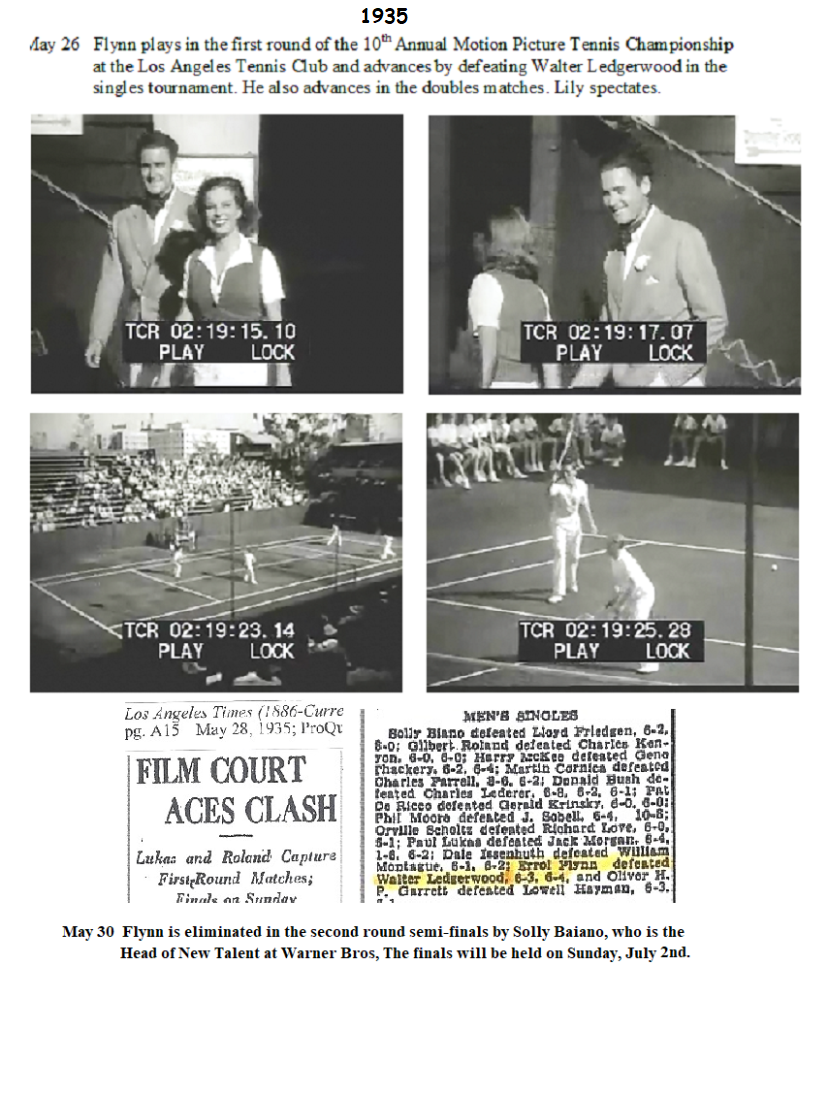
Here is an article and some screen grabs of Flynn playing in a  tennis tournament. Lily went to the club with him as a spectator. He played in the singles tourney and was eliminated, but he continued on in the doubles matches and won.

Enjoy!

— Topper