Long ago but not far away (in a seaside hamlet known as
Palm Beach) there dwelled a family of great size and prominence
known as the Munns. The Munns clan was comprised of a
“cornucopia of cousins” with last names like Astor, Biddle,
Drexel, Pulitzer, Renssalaer, Spreckels, Vanderbilt and Wanamaker. (One of the renown Munn cousins was a nun, none other than St. Katherine Drexel.)
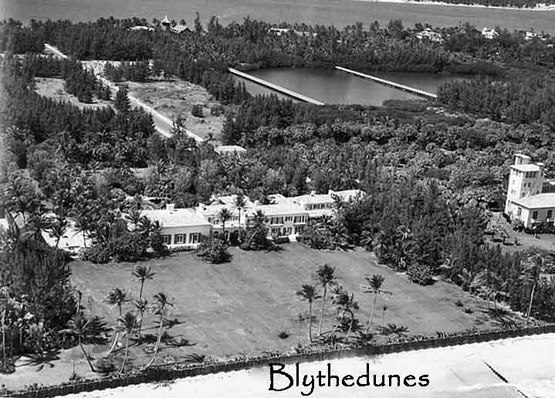
The link, info and imagery below include a wealth of Munn shots
and multiple Munn mansions.
One of the illustrious Munns was Countess de Munn,
and this brief story below is one of her most Flynntastic,
written by the legendary Lloyd Pantages.
————
Lloyd Pantages – Los Angeles Examiner I Cover – May 27, 1936
The Countess De Munn started out to Hollywood
with a South American wildcat as a present for
ERROL FLYNN, but while walking it on the deck
of her yacht the kitty jumped overboard and SANK.
So FLYNNSIE is minus a zoo at the moment.
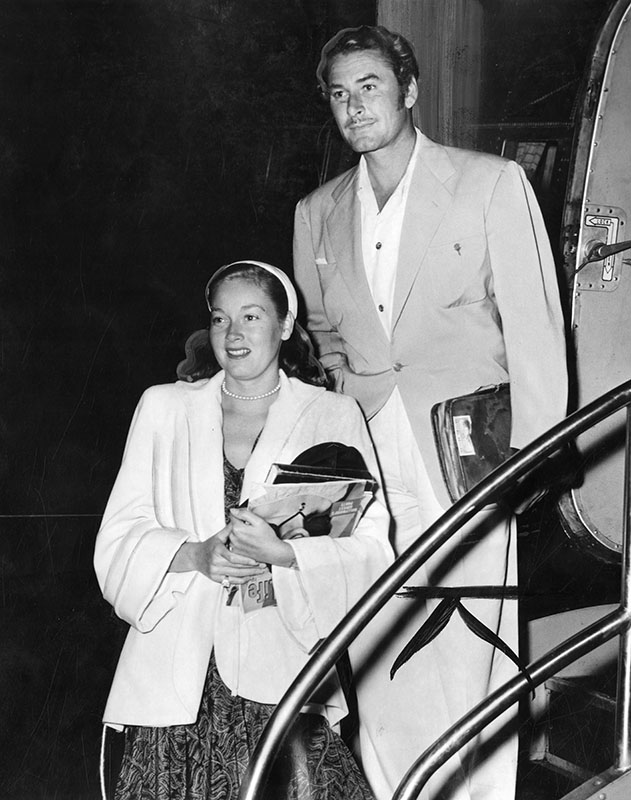
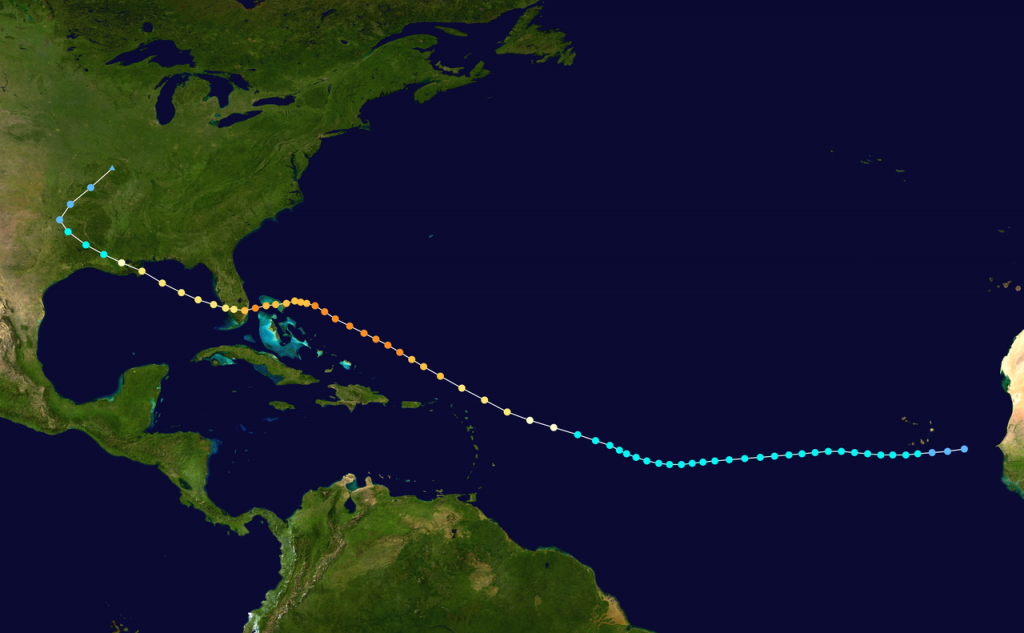
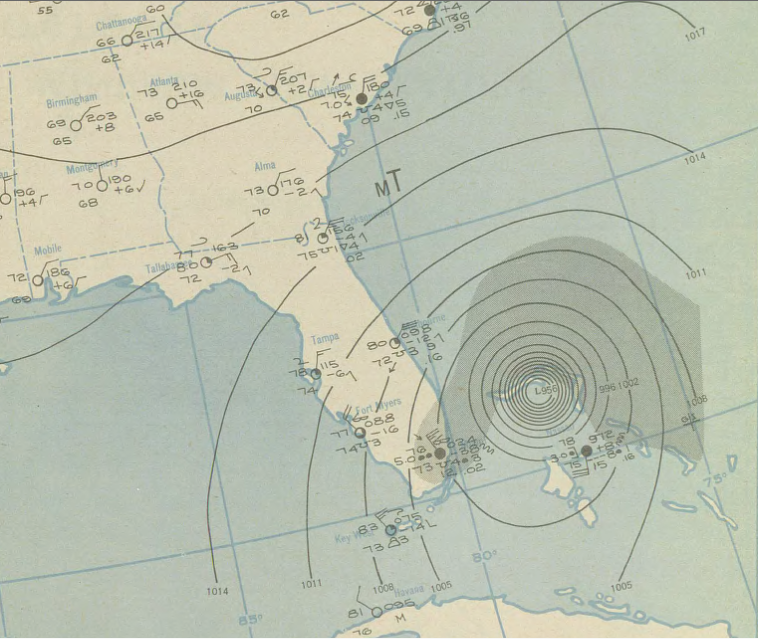
With hurricane season rapidly approaching in Florida, here is a rarely seen photo of Errol and Nora arriving in Miami in the wake of “Hurricane George”, “one of the most powerful and largest storms ever to hit SE Florida.” www.wunderground.com…
1947 was the first year the U.S. Air Force officially assigned names to hurricanes. The worst hurricane that year was Hurricane George, aka “the Fort Lauderdale Hurricane”, because of the Category 4 havoc it caused in Fort Liquordale. It caused extensive damage in Louisiana and Mississippi, also.
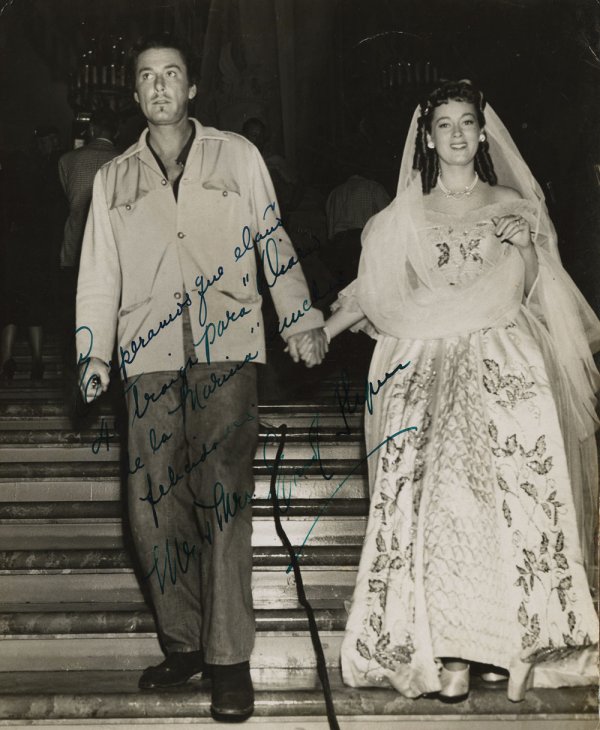
“Errol Flynn and his wife, Nora, are pictured on their arrival here by plane from Jamaica. Their flight course closely paralleled the course of the hurricane. ‘Shocking and sad, ‘ Flynn said of storm-wrecked Miami.” Flynn and wife are shown on the stairs of an airplane.” September 20, 1947.
In October, the long-delayed filming of The Adventures of Don Juan began in California.
Orange represents Category 4 winds:
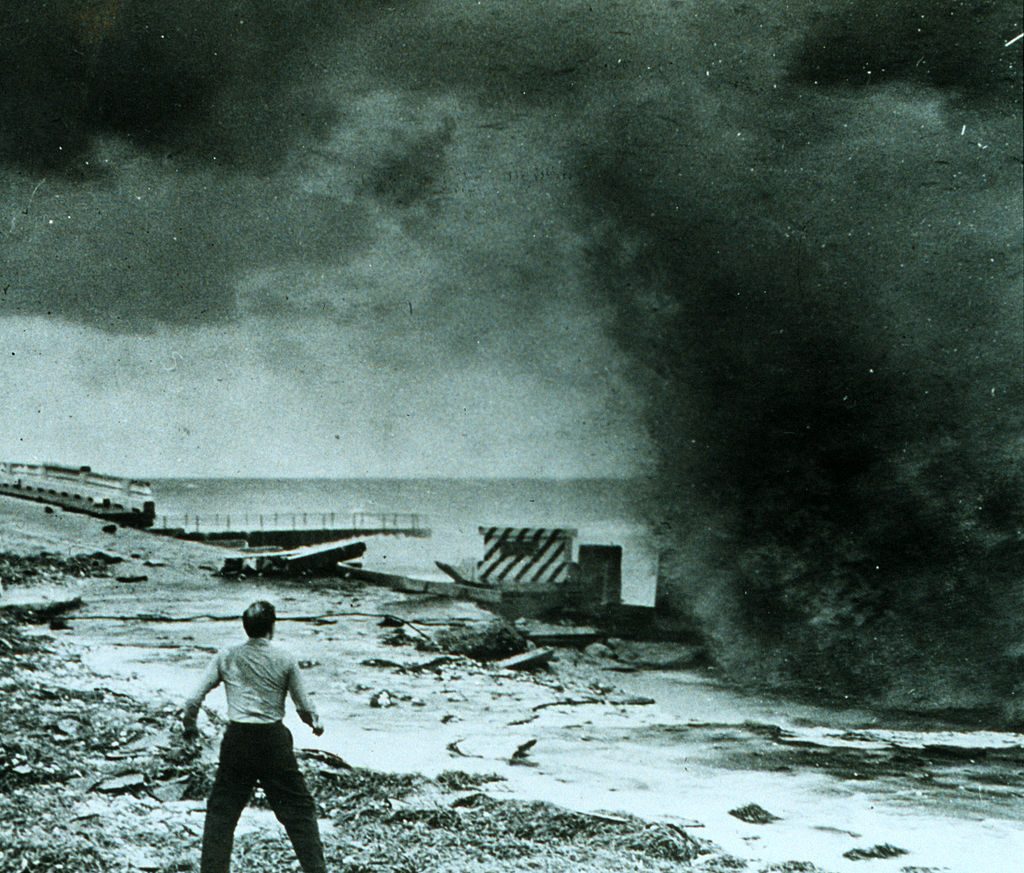
Man on Miami Beach, where there was major flooding and damage, including to 334 hotels:
In what number one song did the singer sing about going to Mexico with Errol Flynn?
– Errol was in the news quite a bit for traveling south of the border before (and after) the release of this song
– It hit the top of the charts in the same month Errol was appearing with one of his most beautiful co-stars, with the same first name initial as his.
– It was performed by a very well-known big band.
– It was recorded again, about seven years later, by one of the most popular singers of all time, a major celebrity who knew Errol from having worked with him several years earlier in a Warner Brothers film.
– Errol’s name was replaced in recordings with “You know him” (rather than “Errol Flynn”), but it was a direct and widely recognized reference to Errol.
– In live. professional performances of this song, and amateurversions sang by female fans of Flynn, Errol’s name was sometimes sang as the true lyric. (i.e. “Errol Flynn” rather than “You know him”)
Los Angeles Evening Herald Express
Jimmy Starr – April 29, 1937
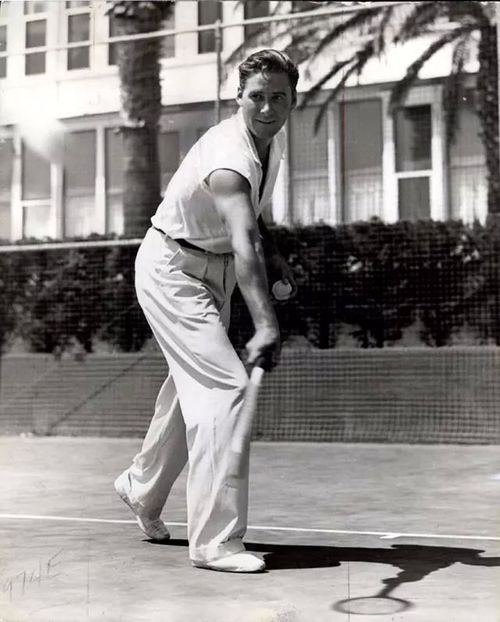
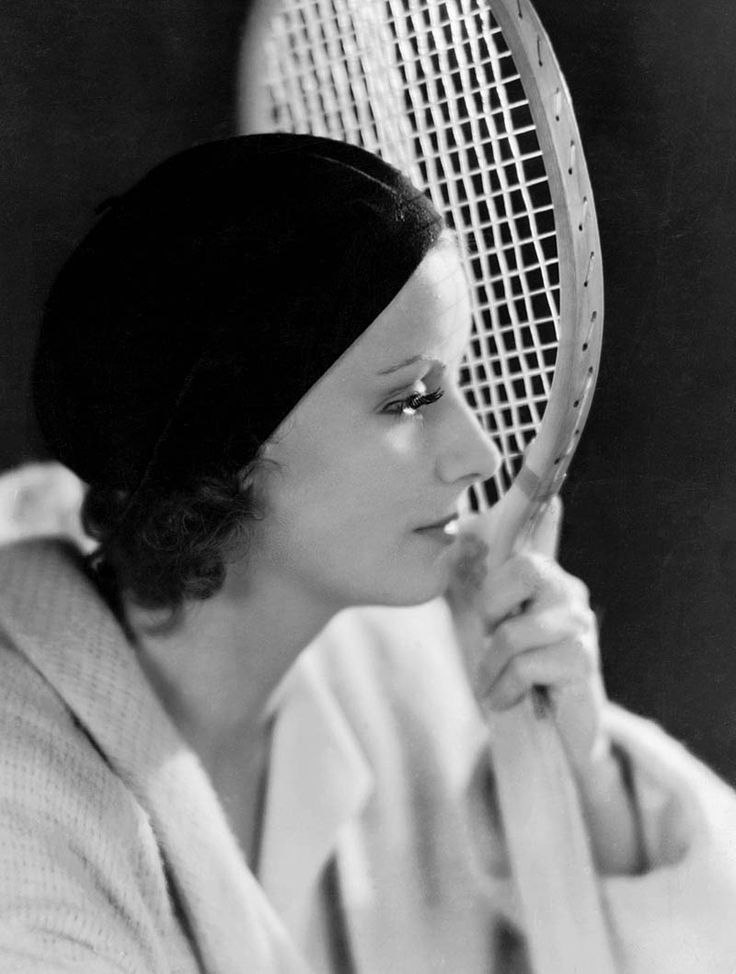
Already ranked as one of the movie village’s tennis greats,
Gilbert Roland took it upon himself to name Hollywood’s 10
best racquet wielders.
On the set of Paramount’s The Last Train from Madrid, Gilbert
put Garbo in the top spot among feminine tennis players, while
Errol Flynn equals her in the men’s division. Others are
Marlene Dietrich, Cedric Gibbons, Constance Bennett, Gary Cooper, Carole Lombard, Harold Lloyd, Elizabeth Allen and Ronald Colman.
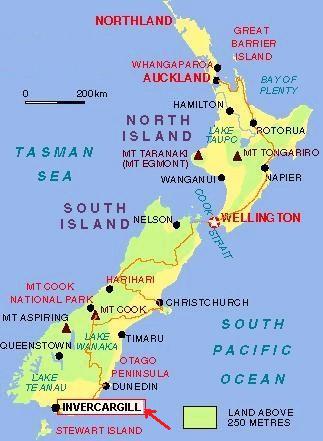
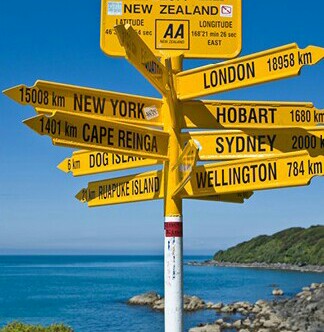
Errol helps save south South Island from broken bottles, monkey parades, idle, dissolute and aimlessly wandering youths.
from THE SOUTHLAND TIMES (April 2017)
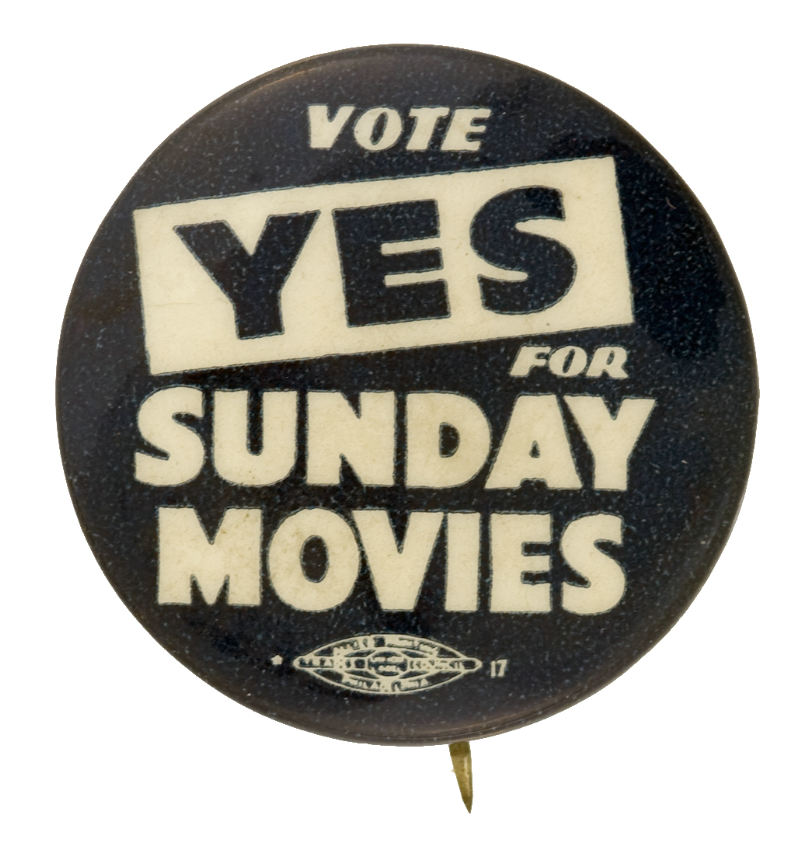
“Movie Screening”
“The first Sunday movie screening in Invercargill was in February 1910 when there was a “cinematograph entertainment” on a Sunday to aid the hospital fund.
After lying low for many years the issue arose again in 1961.
The arguments were predictable. Most churches waved their arms in horror at the thought that a day of rumination and self-flagellation should be polluted with entertainment, yet the dissolute youths of the town needed films of good character to stop them breaking bottles.
GC Tapper told the council committee investigating the question, “Although not enthusiastic about picture theatres being open on Sundays I now hold the view that something must be done about the idle youths wandering aimlessly about the streets on Sunday evenings and a six month trial with suitable films is now definitely called for.”
The Baptist Union said, “We consider that it is a violation of the sacredness of the Lord’s Day upon which our Christian community is based. We do not believe that there is any evidence of a real need for this because, from observation, there has not been seen any large groups of young people aimlessly wandering our streets on a Sunday night.”
The Catholic Church said, “There is no objection to the screening of films on Sundays. Once our people have fulfilled their obligation of worshipping God on Sundays, they may take part in any form of lawful recreation.”
Another submitter said, “If the opening of cinemas on Sunday evenings would reduce monkey parading, why does it not do so on Saturday evenings or Bank holidays when they are open. Furthermore, increasing facilities for Sunday sports, and the official recognition and sanction of them, have already drawn thousands of young people from the church services and robbed the Sunday Schools of their teachers.”
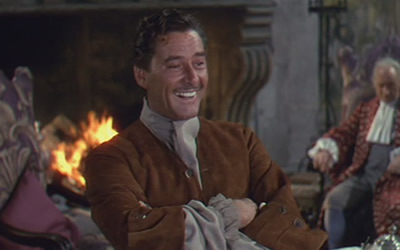
The Master of Ballantrae, a movie of an improving nature, was screened on Sunday, March 12, 1961. The Master of Ballantrae was a 1953 British Technicolorfilm starring Errol Flynn. It was an adaptation of Robert Louis Stevenson’s famous novel of the same name.”
welcome to a new installement of a Flynn film Errol wasn`t in.
The year of 1959 marked the death of Our Man Flynn, which brought the cloak and dagger genre to a full stop. Just when the Old Swashbuckler hung up his boots, the Caucasian Chin, Kirk Douglas, put on his sandals to plough the field of sword and sand movie extravaganzas. Just like Charlton Heston had done successfully in “Ben Hur” prior that year. Not only did Douglas secure the services of one blacklisted author John Trumbo for “Spartacus”, but also of a young director named Stanley Kubrick, whom he had met while filming “Paths of Glory”.
Originally Kube had planned to do “Lolita”, a film version of the Nabokov novel, deemed untransmittable to the screen due to its paedophilic context. Nevertheless the Bronx born filmmaker was dead set to achieve the impossible. While Hollywood Studios readily declined the offer to finance the precocious project, the film was made three years later in England instead.
Errol Flynn had been approached to play Professor Humbert Humbert and enthusiatically accepted the offer under the condition he was to play opposite of his own nymphette, Beverly Aadland. But the package deal fell flat, mainly because Errol`s last love at 16 (!) already was too old to depict a 12-14 year old teenager. Had it gone through, Flynn would have been reunited with another real life love of old of his, since Shelley Winters had been cast for the female lead.
Other leading actors considered for the main role were Laurence Olivier, David Niven and Peter Ustinov. Ultimately it was James Mason`s turn to portrait Prof. Lovesicko.
Vladimir Nabokov did write a script for the screen adaptation of his lust story and came up with a 700 page treatment. We can take a peeping tom`s look here: www.openculture.com… and it also sells here: www.amazon.com…
Before Sue Lyon got to wear those heart shaped sunglasses and sucking lollipops, Jill Hayworth, Joey Heatherton, Tuesday Weld and Hayley Mills were considered for the part of little Lolita. The director later said that French teenie star Catherine “Zazie” Demongeot would have been a good choice also.
Tamar Hodel, the daughter of the number one suspect in the Black Dahlia murder, claimed in a Vanity fair article, that singer Michelle Phillips from “The Mamas and the Papas” originally procured young Lyon with the novel and gave her a rubdown what it was all about: www.vanityfair.com…
Sue, who attended the premiere in New York City at age 15, would have been still to young to buy a ticket for the movie legally: www.youtube.com…
Peter Sellars came up with a stellar performance as Clare Quilty. He remembered his Golden Globe awarded role fondly: “Quilty was a fantastic nightmarish character, part homosexual, part drug addict, part sadist, part masochist, part anything twisted and unhealthy you can think of. He had to be horrifying and at the same time funny. I had never met anyone at all like this so I just had to guess, to construct an imaginative idea for myself of what such a person must be like. When I saw myself on the screen, I thought ‘This time you’ve done it – no one will ever believe this.’ But then in the U.S. I actually ran into a couple of people who might almost have been role models for the character and I began to think, ‘Oh, well, perhaps you weren’t so far out after all.” It is commonly seen as blueprint for his next character in the Kubrick film “Dr. Strangelove.”
Somehow this unmakeable movie material sparked the careers of all involved. One can only wonder if our Hollywood hero had walked away from an Academy Award in order to do “Cuban Rebel Girls”.
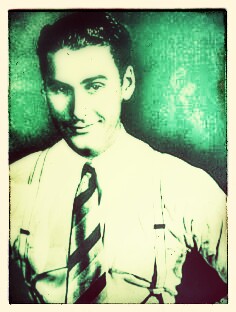
Still widely regarded as an Irishman, even more so in his Hollywood hey days, how Irish was Errol in reality? Genetically and culturally?
The name Flynn and his father’s apparent ancestral and professional connections to Ireland seem to indicate Errol had some significant percentage of Irish blood, but how much? He also seemed to treasure and/or at least play up his Irish. He may not have liked being portrayed as a American-Irish motorcycle cop, as he was initially by Warners, but he did seem to relish the roles of Peter Blood and Gentleman Jim. His fighting spirit appeared Irish in nature also. And he did go by Flynnie in his early days. How much of it was real, and how much was theater, perhaps designed to make big green off of the huge population of Irish-American movie fans?
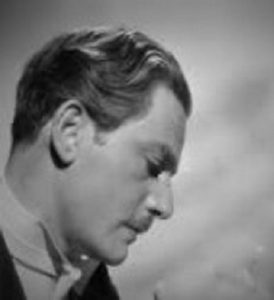
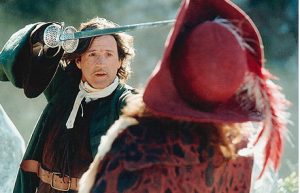
As we are still sitting on the fence, as it were, I thought I would pose this question? Who is this sword-handy Flynnian-looking actor, and what was his real Christian name? (Clue: He appeared in a film that included a memorable fencing scene.)
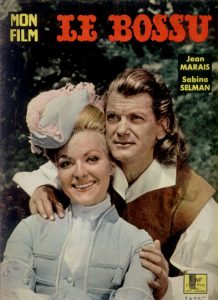
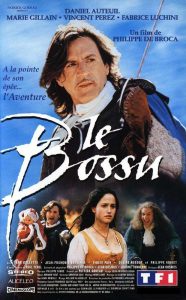
One of the greatest films made about fencing, and a must for all Flynnianados, is the 1990s French film, ‘Le Bossu’. I always give the French credit when it’s due, because it hardly ever is.
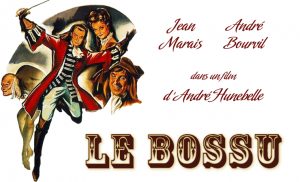
Based on the 1858 historical novel, Le Bossu by Paul Feval, set in 18th Century France, there are two adaptations. The first was made in 1959, with Jean Marais, Andre Bourvil, and Sabina Selman.
Le Bossu, 1959
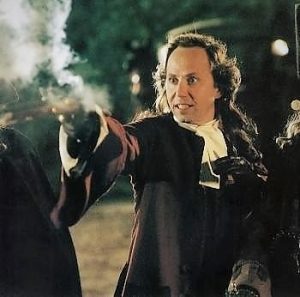
But the film to which I refer is the second, superior adaption of 1997, starring Daniel Auteil, Marie Gillain and Vincent Perez. (See film poster, below.)
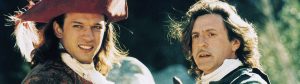
Above right, Auteil and Perez (Perez is wearing the splendid red tricorn).
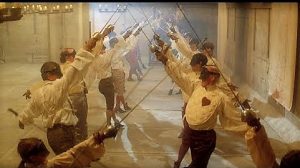
The plot concerns a swordsman, Henri Lagardere (Auteil), who challenges the Duke de Nevers (Vincent Perez) to a friendly duel in the hope of discovering the secret of the lethal ‘Nevers Attack.’ The opening scene is set in France’s premier fencing academy and is one of the most exhilarating and diverting beginnings to a film since Errol unbuckled his swash.
The two men become friends and the Duke teaches Lagardere his fencing manoeuvre. Soon after, Nevers marries his pregnant mistress, Blanche, but, on the day of the wedding is murdered by his evil cousin, the Comte de Gonzague.
(The Comte is a villain to rival Basil Rathbone in sheer malice, and is played to the hilt, as it were, by Fabrice Luchini, who adds his own dash of sexual perversion.)
As the Duke dies in his friend’s arms, he makes Lagardere swear to avenge him and to care for his infant child, who, to the latter’s consternation turns out to be a girl, Aurore.
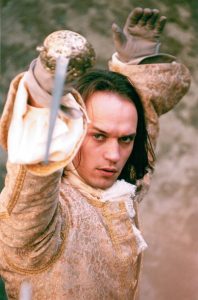
Perez demonstrates the Nevers Attack. Below, the deliciously evil Comte de Gonzague.
Errol would have loved this film, for it incorporates so many of the elements of his best swashbucklers – a period setting, witty dialogue, good old fashioned villains, beautiful and aristocratic maidens and the perpetual fight for justice in a world ruled by the rich and high-born.
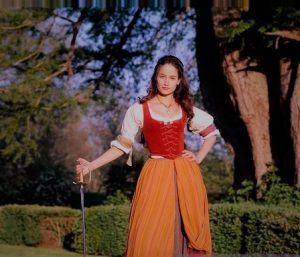
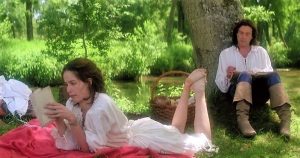
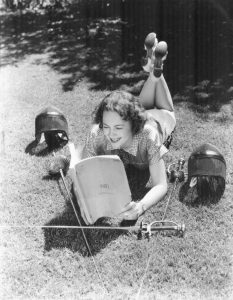
There is also a touching romance – between Aurore, as she grows into a beautiful young woman, and a wary Lagardere. Played by the classically lovely Marie Gillain, here is a heroine in the spirit of Livvie, who can use a sword almost as deftly as the hero.
(Marie Gillain as Aurore, pictures 1 and 3, and Olivia on the set of ‘Captain Blood’, picture 2.)
‘Le Bossu,’ which means ‘the hunchback’, (I won’t spoil the film by explaining how the plot turns) had its name changed to ‘On Guard’, when it was released in America. Don’t ask me why. There may have been a hunchback protest, as Monsieur le Comte has a bit of a thing for them. Perhaps hunchbacks are le vice Francaise? I know they are not le vice Anglais, because the French always claimed that was spanking. Neither are they le vice Allemande, which the French said was buggery.
Nonetheless, The New York Times praised the movie’s ‘unabashed gusto’ and another prominent critic calls it ‘one of the best swashbucklers in movie history.’ Auteil’s performance is ‘simply wonderful’… ‘his compact build and the precision he has always brought to his physical movements make him particularly suited to the elegant brio of the fencing scenes.’
I first saw ‘Le Bossu’ when it was released in the UK and I revisit it again and again, as I do, though not as much, of course, ‘Captain Blood.’ It has a similar joyousness about it, leavened by tragedy, and Auteil, in my view, is one of the most engaging and complex actors of his generation.
It’s a shame he doesn’t look like Errol, but he has a sex appeal that is all his own. And you know what they say about men with large noses.
As we have been Bonding – as it were – I thought I would pose a quiz question.
Although Errol embodied Bond is so many ways, Fleming, sadly, did not seem to make that connection. This was probably because he was too myopic and snobbish. In fact, he was a social mountaineer; the Edmund Hillary of social climbers.
So my question is, what is the name of the man Fleming most admired and wanted to be (and that includes physically)?
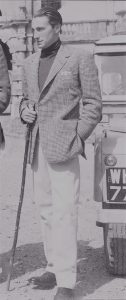
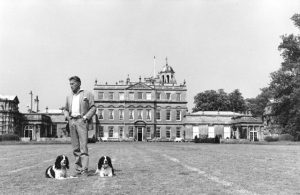
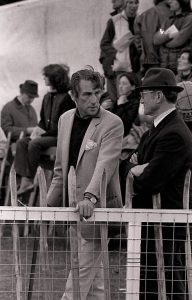
In public, Fleming often gave contradictory answers when asked upon whom he had modelled James Bond. In private, however, he frequently named my ‘mystery man’ (pictured below). I know this is true because Fleming used to stay with my father in Wiltshire, and the ‘mystery man’s’ late wife was my Godmother.
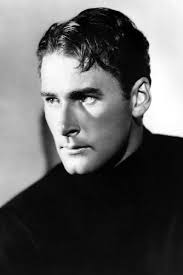
Coincidentally, he bore a striking resemblance to Errol, and the two actually met at a dinner party in Italy.
Mystery Man
Errol
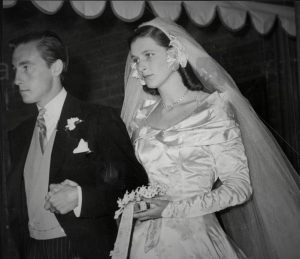
Clue 1: My ‘mystery man’ wasn’t a member of the Intelligence Services, a Government official, a writer, an ornithologist, an actor or any of the people usually mentioned. Fleming first met him in 1951 and later attended his wedding (below). (Interestingly, his wife, according to one of Fleming’s letters, was ‘my ideal of what a girl should look like, and how she should act’, which qualifies her for the distaff side of all the Bond novels published after 1955.)
Clue 2: In ‘From Russia With Love’, Fleming pays tribute to my ‘mystery man’ and his wife. When Bond and Tatiana have to flee from SMERSH, they are given false names. The names Fleming chose were their names.
Clue 3: A well-known sport was named after the ‘mystery man’s’ house.
Clue 4: The man is still living and has been called ‘the handsomest …. in England.’
So, what is his name?
My ‘mystery man’ outside his family house, and at the horse trials