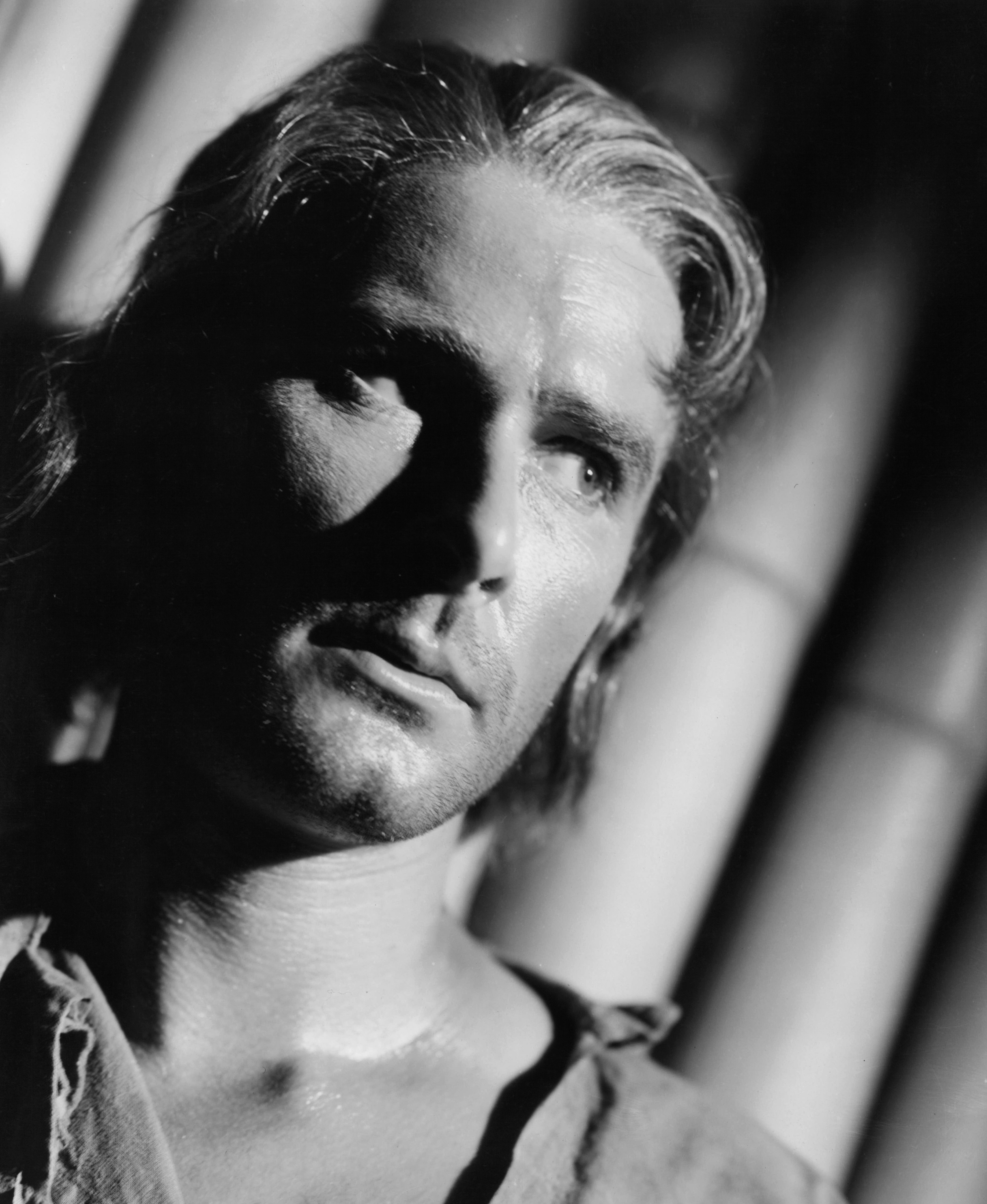
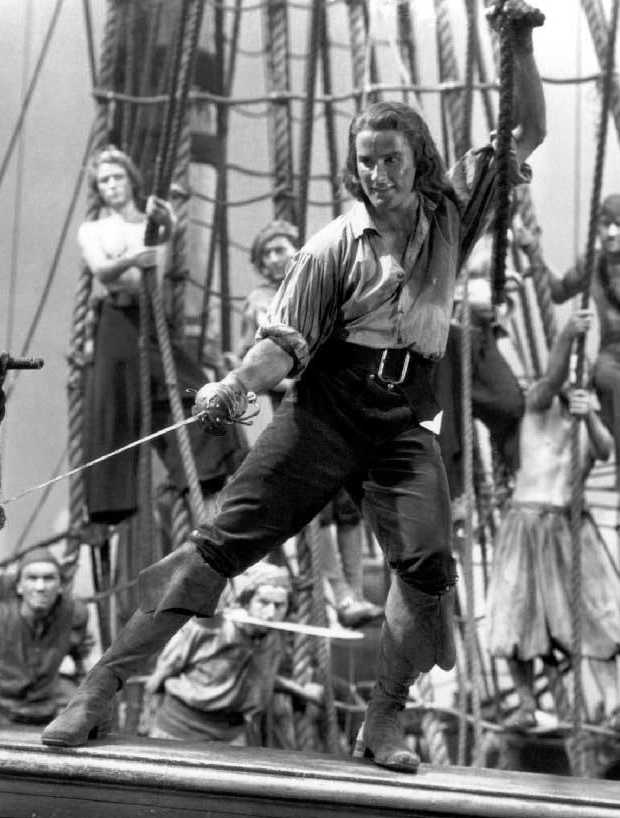
A very good blog called Post Production has a great posting about Captain Blood! Linc Hurst and Tom McNulty are mentioned in the article…

Thanks to Karl Holmberg
— David DeWitt
A very good blog called Post Production has a great posting about Captain Blood! Linc Hurst and Tom McNulty are mentioned in the article…

Thanks to Karl Holmberg
— David DeWitt
— David DeWitt
Mr Fegerl wishes to share the attached pages from the William Tell script with you. They basically trace the tragic role of Maria, played by Austrian actress Waltraut Haas. Please note: Mr Fegerl is not in possession of the entire script. Hope you enjoy.
P.S. I scanned and corrected the pages, sorry if I overlooked any mistakes. There is one hand-written correction which I marked with a different writing.
— Inga
I got the idea for this post from Tina and Brian’s dispute about Errol being a cinematic God in Europe. I have been interested in the topic for a while, too, so I had a look at when which of his films were released in Europe. I wish I could find some statistics, but apparently, there are no records of the time before 1960. So all I can do here is point out some particularities that struck me when comparing release dates, titles etc. It might be interesting for US-Americans and Britons to see how the film titles were translated into German, too. So let’s go.
<?xml:namespace prefix = o ns = “urn:schemas-microsoft-com:office:office” />
Interestingly, Austria was somewhat ahead of Germany before the war. When I saw the dates on imdb, I was at first dubious, but then I got a confirmation that indeed some of Errol’s films were released quite shortly after they were released in the USA. These were Captain Blood (1936), The Charge of the Light Brigade (1937) and The Prince and the Pauper (1938). They were shown undubbed, which I found remarkable for the time.
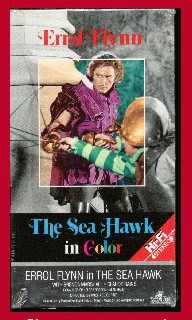
Then – a long time nothing, I think you can imagine why. It started again in the late 1940s, this time both in Germany and in Austria. By the way, we’re speaking of West Germany here only, and from now on, the films were dubbed and the titles were translated. The Sea Hawk was released in both countries in 1947, then Austria was going ahead again by releasing Dive Bomber, Boots and San Antonio in <?xml:namespace prefix = st1 ns = “urn:schemas-microsoft-com:office:smarttags” />1949. In Germany, the “boom” did not start until 1950: six of Errol’s most well-known films were released – Dodge City (March), Captain Blood (May), Virginia City, Robin Hood (both in September), San Antonio and Light Brigade (both in October). This was even topped in 1951 with seven other well-known films: Don Juan (January), Montana (March, just a little over a year after the US release), Prince and Pauper (April), Rocky Mountain (September), Silver River (October), Essex and That Forsyte Woman (both in November).
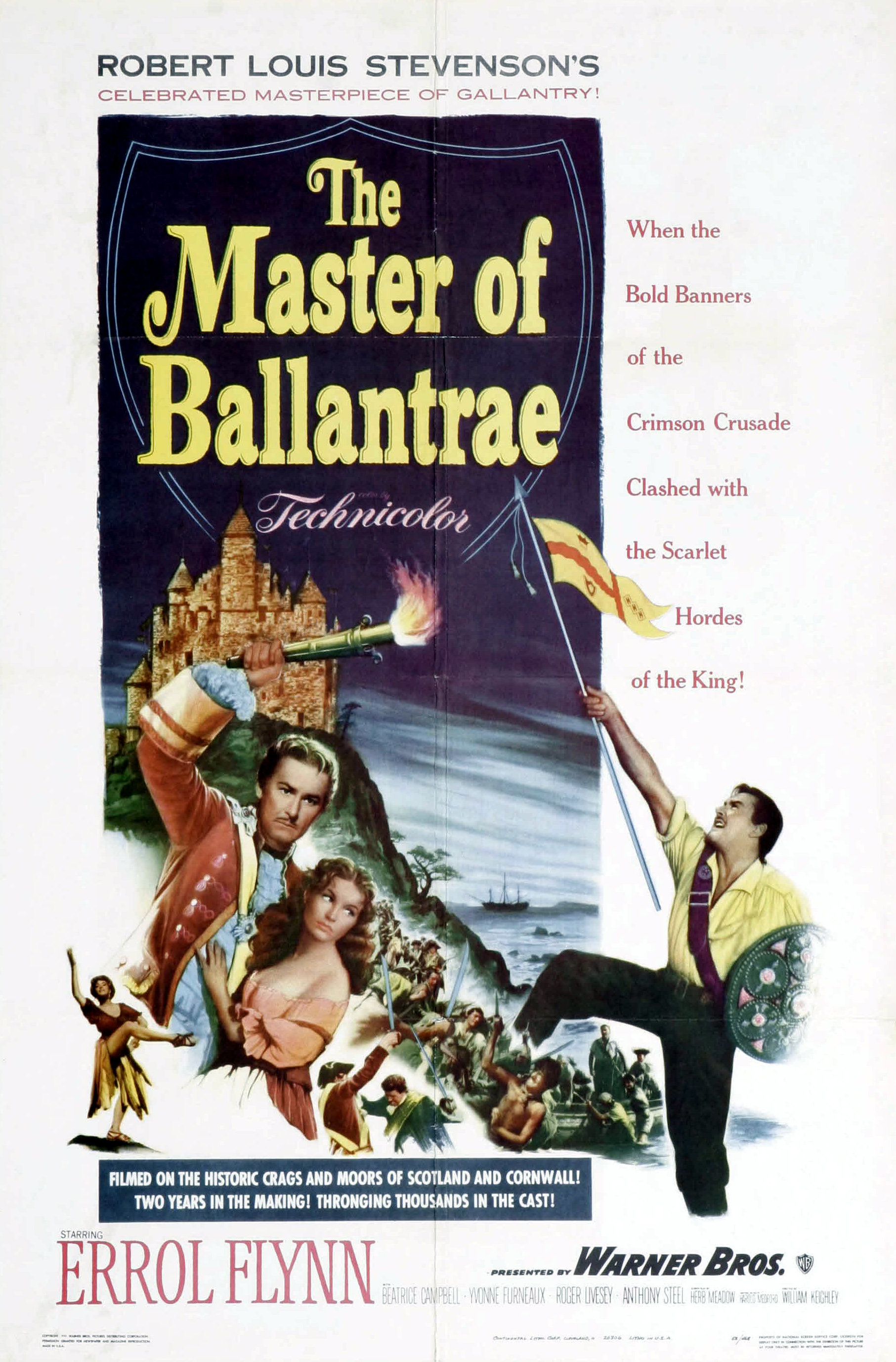
From then on, the releases became less frequent – only 4 films in 1952, two more recent ones (Kim and Captain Fabian) and two older ones (Objective Burma! and Boots). Two very recent ones, Against All Flags and The Master of Ballantrae, were released in 1953. Afterwards, the current films Errol made were released relatively soon, after having been dubbed, of course, and only two more older ones, Uncertain Glory in 1954 and Santa Fe Trail in July 1959, were shown in German cinemas. In Austria, the releases during the 1950s were a little less, mainly because some films had been shown earlier in Austrian cinemas than in German ones.
After the advent of television, a few films premiered in the new medium: The Sisters and Footsteps… in 1963 and 1964, Edge of Darkness, Northern Pursuit, Desperate Journey and Four’s A Crowd in 1977 (for whatever reason…), The Perfect Specimen in 1989 and Cry Wolf in as late as 1995! But many of those have not been shown on TV as long as I can think (which is at least for 10 or 15 years).
This leaves us with a long list of films which have not been dubbed and never been shown on German television! Green Light, Another Dawn, The Dawn Patrol, Escape Me Never, Lilacs in the Spring, King’s Rhapsody, Dive Bomber… no dubbed version existent! There is one of The Big Boodle, and of Too Much, Too Soon, but I could not find the release dates. Interesting here is Never Say Goodbye. I was convinced that there IS a German version because I had seen the specifically produced German lobby cards with a German title (cf. below, they're beautiful and really big (larger than A4)). But I found out that eventually, it was NOT dubbed and never shown, neither in cinemas nor on TV – which is a real shame, as this is one of my favourites and I was always looking forward to showing the German version to my family – once it would be broadcast again. But… no chance, apparently! Maybe I should dub it myself…
However, I believe that the fact that so many of Errol's films were released in the early 1950s shows enough about his huge popularity in Austria and Germany.
Another interesting point is the change of titles that took place quite often. Some German movie titles of Errol’s films are equal or rather similar to the English title, for example Montana, Against All Flags, Istanbul, The Roots of Heaven, The Charge of the Light Brigade (though this one is sometimes also known as The Treason of Surat Khan), and The Love Adventures of Don Juan. But others have been changed considerably. Here is a list of the most interesting back translations:
Edge of Darkness – Rebellion in Trollness
Northern Pursuit - Bloody Snow
Never Say Goodbye - Master of the Situation
The Big Boodle - Chase through Havanna
Too Much, Too Soon - Her Life was a Scandal
Footsteps in the Dark - Mr X gone astray
The Perfect Specimen - A Guy to fall in Love with
Cry Wolf - Curse of Madness
Captain Blood - Flying the Jolly Roger
San Antonio - A Man of Action
The Prince and the Pauper - With an Iron Fist (!)
Elizabeth and Essex - Favourite of a Queen
Boots - His Last Charge
Master of Ballantrae - The Buccaneer
Uncertain Glory - Cross My Heart
The Sun Also Rises - Between Madrid and Paris
As you can see, the “new” titles reflect the contents of the films. Supposedly, nobody in Germany would have had any relation to Master of Ballantrae, Captain Blood or Elizabeth and Essex, as they are not part of popular German (literary) culture. However, I have no idea why Prince and Pauper is sometimes named With an Iron Fist.
Interesting is also that five of Errol’s film have the word “Herr”, i.e. “Master”, in the German title where there is no “master” in the original title: Master of the Situation (Never Say Goodbye), Master of the Seven Seas (Sea Hawk), Master of the Wild West (Dodge City), Master of the Rough Mountains (Rocky Mountain), The Master of the Silver Mines (Silver River)… I think this reflects Errol’s image very well – the hero who would ultimately win the lady’s hand – at least in four of five cases.
Hope you enjoyed this one a little, and if there is anything to correct, Tina, please feel free to do so.

— Inga
Generally, this film is considered as one of Errol’s worst films. Right after its release, the reviews were devastating, and its image is still quite bad. One of the reasons is certainly the rare appearance of the titular character. Captain Michael Fabian is hardly seen on screen and does not really experience any great adventures. The protagonists are clearly Micheline Presle and Vincent Price. But Errol had – supposedly – his share in writing the script. I had the idea to write a post about this film when I got hold of a collection of articles from the French press, compiled by director William Marshall himself. Apparently, he collected every little piece of paper where his film was mentioned, which made a reconstruction of part of the background possible.
<?xml:namespace prefix = o ns = “urn:schemas-microsoft-com:office:office” />
After a (I admit, maybe a bit lengthy) plot summary, you will learn something about the shooting of the film. I also included some rather funny Trivia episodes before summarising the reviews of the French press. I did not include the list of the newspaper articles this post is based on, if anybody is interested, please contact me.
A huge “Thank you” to Rachel for correcting my mistakes!
Plot Summary:
The story is set in New Orleans in 1860. It begins at St. Charles Street, the street of the rich and beautiful. Lea Mariotte (Micheline Presle), servant in the house of the Winthrops, is bullied and degraded by her mistress Cynthia (Zanie Campan). In presence of her fiancé George Brissac (Vincent Price), Cynthia makes fun of Lea’s mother having been hanged for sorcery. After the Winthrops have left for their plantation for a few days, Lea is consoled by her Auntie Jezebel (Agnes Moorehead). She organises a party for Lea and her poor outlaw friends in the house of the Winthrops. Suddenly, George Brissac returns unexpectedly and makes advances towards Lea, whom he pretends to love. When the jealous servant Phillipe (Roger Blin), who is himself in love with Lea, notices this, he attacks and knocks George down. Lea knocks Phillipe down with George’s cane. Shocked about the death of the servant, George calls the police, having promised to Lea to tell the truth – that she acted in self-defence. But when George returns with Constable Gilpin (Jim Gerald), he claims that he passed by the house accidentally, saw the light, and when he entered the house, he saw Lea over the dead. Lea’s protest does not help, she is arrested.

Twenty minutes into the film, there comes Errol’s entrance. We see him in a washtub aboard his ship, the “China Star”. He is taking a bath and getting ready to go ashore, elegantly dressed. After offering a few presents to the ladies he knows, he enters Madame Pierrot’s tavern (hence the alternate title of the film). While he is having a drink, he is addressed by an obscure subject named Emile, who works for the Brissacs, Fabian’s nemesis since they tricked his father into disaster. After some to and fro, Fabian finds out that the Brissacs are involved in a court trial against Lea Mariotte, whom Fabian does not know at this point. But since the Brissacs are embroiled in this case, Fabian is so, too. He forces Emile to tell him everything about the case and then turns up in the courtroom, where he saves Lea just in time from being condemned. He tells the district attorney and the judge (an uncle of George Brissac) that he knows about the true background of the case, and they consequently release Lea.
Lea leaves the courtroom together with Fabian and Aunt Jezebel. The three of them watch the performance of a group of showmen with marionettes, during which Jezebel steals Fabian’s watch, which is in turn secretly taken by Lea.
They continue on their way and enter a boutique where Fabian buys clothes and everything a lady needs for Lea. She wants to please him, but he remarks that he has seen women of all shapes and sizes – she is nothing new to him. There is clearly a parallel to Errol himself, as in so many of his films. And considering the fact that he has written the script himself, this is not really surprising…
While Lea is being dressed up, Fabian returns to Mme Pierrot’s Tavern and buys it from her. Shortly afterwards, Lea and Jezebel appear and Fabian offers her the Tavern as a present – a first step towards St. Charles Street. Fabian subsequently visits George Brissac and forces him to give him 5,000 Francs – otherwise he would tell what he knows about the murder of Phillipe.
In the meantime, Lea has installed herself in the Tavern. She reasserts her goal of “marrying St. Charles Street” (“The whole street?” Fabian quips). Fabian discovers his stolen watch, but Lea tells him that she has only taken it from Jezebel, who originally stole it. She would like to keep it as a clock next to her bed. Fabian leaves it to her and they kiss, after which Errol disappears from the screen for some time.

Mme Pierrot’s Tavern is now called “Chez Lea”. Lea cleverly tricks two of George’s friends into having his bachelor party at her Tavern. On the evening before the marriage of George and Cynthia, a half-cut George and his party turn up in the Tavern. He mentions his strict Uncle Henri (Victor Francen) but also asserts that he still is his own master.
Soon, Lea and George leave the Tavern, and George admits that he has been thinking of her all the time. Lea skillfully leads him to his house. Even though George tries everything to avoid waking up Uncle Henri, scandal breaks lose when Lea starts shouting and making noise: she is going to stop the marriage of George and Cynthia. Of course, Uncle Henri comes to see what is wrong, starts an argument with his nephew and is choked to death by George. Shocked at his deed, he askes Lea to help him. Together, they bury the corpse in a shed. While Lea finishes the job, she also buries George’s jacket in the grave. Then she makes her demand: George and she are now eternally bound together because of this secret and she wants him to marry her. George reluctantly has to agree.
When Cynthia finds out about this scandal, she turns up together with her whole family and wants to bring George to his senses. But he only confirms that he is going to marry Lea. Cynthia leaves, hoping that George will be reasonable again one day.
When Lea is packing her clothes in the Tavern, Fabian turns up again. He has heard that Lea is going to be Mrs George Brissac and confronts her about the issue. She declares that he was never entitled to her. For a moment, it looks as if Fabian wants to kiss her, but then he repels her quite brutally and cynically congratulates her for marrying St. Charles Street. He leaves.
After the marriage, Lea slowly realises that she got what she wanted, but that it does not make her happy. She starts arguing with George who is worried because more and more people want to know what happened to Uncle Henri. After Lea has angrily left the room, George discovers Fabian’s watch and thoughtfully toys with it…
In the meantime, Lea calls on Fabian at his ship and confesses her love to him. At first, he does not want to believe her – she has hurt him too much – but they end up kissing and Lea asks him to take her with him. Fabian reminds her that she is married – and Lea returns to George inorder to solve the problem.
George has decided to act and calls on Constable Gilpin to ask him for an investigation of the disappearance of his uncle. While the policemen search the grounds (one wonders why they had the idea to search there at all, and especially in the shed…), Lea is astonished at the composure of George. It is easily explained when the police find Fabian’s watch together with the corpse…
Fabian is arrested and even visited by George Brissac, who enjoys his triumph. Fabian tells him to his face that he murdered Henri in the presence of Lea and was thus forced to marry her.
George organises a gang of men who are willing to lynch Fabian for a certain amount of rum and money. While they are storming the prison, Fabian is freed through a tunnel by his men who are led by Aunt Jezebel. She is killed in the course of events, but Fabian and his sailors reach the harbour, where the final showdown takes place. Fabian drowns George in a fight in the water, and Lea is killed when Fabian’s ship explodes and the mainmast falls right on her. She is freed by Fabian and declares her love again before she dies in his arms.
Background:
The film was shot in France. Originally, it was supposed to be made in both a French and an English version. After some difficulties, however, William Marshall managed to get permission to shoot it in English only – under the condition that another French film would be shot by him half a year later.
The French press covered the shooting of the film quite in detail and raised great expectations. All the worse was the disappointment after the release of the film. But let’s go step by step.
Errol Flynn himself was said to have written the script, in cooperation with William Marshall. Almost every article emphasised this fact. One source claimed that they had bought the idea from a Hollywood scriptwriter. Other sources even say that it was based on an unpublished novella by Flynn with the title “The Bewitched”. This was also one of the designated titles for the film, which was changed several times in the course of filming. The press often mentioned “The Bargain” or “Bloodlines” as English titles. Flynn authorities (McNulty/Behlmer/McCarty) say that the script was based on the novel “Fabulous Ann Madlock“ by Robert Shannon, and that Flynn was later sued by Charles Gross for back wages for collaboration on the script. It’d be interesting to find a copy of this novel – so far, I have not been able to locate one.
The production firm was originally called “William Marshall Production in cooperation with Errol Flynn“ and had formed for three films; besides “Captain Fabian”, the lost “Hello God”, which had already been finished, and another project with the title “Confession” was planned, from an original story by William Marshall. At the beginning, the director was Robert Florey, and according to…, he stayed during the entire shooting as a kind of assistant, but William Marshall took over direction. Florey had spent a long period of time in New Orleans to study the original location. He brought along a huge amount of sketches and notes which he turned over to set designer Max Douy. One day later, however, his atelier was destroyed in a fire. Luckily, Florey had a good memory.

The production also had problems with the costumes. Making those for the male actors in France would have taken too long, so they were finally ordered from Britain. The search for doubles for the unusually tall gentlemen Flynn and Price was diffcult as well: in the end, blocks of wood had to be put under the feet of the doubles…
Errol was also asked why he had now turned producer, and his answer was that it had been difficult for him as an actor to flirt with his female colleagues because the director always kept a wary eye on him. Now, as the producer, his hands were free – but he would reserve one for his fiancée.
Filming began on Monday, August 7th <?xml:namespace prefix = st1 ns = “urn:schemas-microsoft-com:office:smarttags” />1950, in the Studios de la Victorine in Nizza. Errol Flynn was scheduled to arrive about ten days later. Six weeks, until the beginning of September, were planned for shooting on the Côte d’Azur. The external shots were to be made in Nizza and Villefranche because they resembled New Orleans in 1860 more than New Orleans itself – said Errol.
On August 22nd, according to one newspaper, Errol still has not arrived, even though he was supposed to be there. Another newspaper claimed on the same day that he had arrived since August 21st… On the 24th, the “Figaro” announced that Mr Flynn had finally arrived in France… Obviously, there was some confusion amongst the press. According to several papers, Flynn “disappeared” for a while (according to “Cinémonde”, he was at the Parisian hotel Prince de Galles), probably because he wanted to go to New York for some days with his new fiancée Patrice Wymore after the break-up of his engagement with Princess Ghika. At first, it was said that a role in the film was reserved for La Ghika, which is not the case in the final film (the American Film Institute Catalog, p. 10, says it was the role of Cynthia Winthrop).
In Nice, Flynn had a room in the Hotel Negresco, which he mainly used to telephone – he spent the nights on the Zaca, which was moored in the harbour. During filming, William Marshall was said to be very strict – in the American way. Even his wife Micheline Presle suffered from it – she could not even go for a swim in the Mediterranean. The night scenes of the burning ships were shot in Villefranche, the marionette scene where Jezebel steals Fabian’s watch was shot in Cagnes-sur-Mer. The prison scenes from the end of the film were made in the studios in Nice. In general, studio shooting in Nice was rather difficult because the studios were not soundproof, but close to the airport so that they often had to interrupt and wait until an airplane passed by.

From September 11th onwards, shooting was scheduled to continue in Paris, but accoding to some newspapers, it was not finished on the Côte d’Azur by September 16th. On September 26th, a newspaper reported that the money was gone and that both protagonists might be sued by their home studios, Warners resp. Fox for Micheline, because of “decrease of market value” (?). This, however, was promptly denied by Marshall on October 3rd, who wrote a counter statement which was published in the same paper.
The crew moved on to the Billancourt Studios in Paris, where they shot the Tavern and court scenes. The underwater fight at the end between Vincent Price and Errol Flynn was shot in the Lutetia swimming pool in Paris. At this time, Vincent Price was already a bundle of nerves. To the New York Herald (an article written, by the way, by Art Buchwald!), he complained how diffcult it was to earn one’s money as an actor and that he was fed up with water. For that reason, he preferred to travel back to the US by plane instead of going by ship. While Errol was pampered and dried by Patrice, Vincent stayed in the water, freezing, saying that he felt like a trout.
Shooting was delayed again when Errol had an accident boarding his yacht shortly after his marriage with Patrice. The film was not finished at the beginning of December. Around December 17th, Errol disappeared another time without telling someone. The crew had returned to Nice to re-shoot some scenes during four days and one night and to finish it off on December 19th. When the bailiff wanted to get hold of the Zaca, he could only watch it disappear on the horizon towards Palma de Mallorca…
Trivia:
Of course, many young ladies swam over to the Zaca to get Errol’s autograph. He wondered why the pens they gave him were always dry. Soon, he found out the reason: A clever businessmen had the idea to sell impermeable small bags to the ladies. Errol said he might have to think about profit sharing.
During the filming, Errol had a bet with Bill Marshall that he would come on location by ski. Marshall did not doubt that Errol might fill the streets of Nice with artificial snow – but in the end, Errol arrived on waterskis.
One day, Errol did not turn up in time for shooting. He let Marshal know that producer Flynn had ordered actor Flynn to be on time, but that yachtman Flynn had demanded a delay of 30 minutes. Marshall replied that it was fine – Mr Flynn yachtman would pay the fine that was demanded from Mr Flynn actor to Mr Flynn producer.
Reviews of the French press:
Whereas the reports about the shooting of the film were all positive and showed a certain excitement that such a great Hollywood star made a film in France, the reviews after the release were mostly devastating. One of the few positive reviews was published in Paris Presse (29/03/1951), who praised the realisation and the acting of Micheline Presle. The worries they had had in advance were unfounded. But there were more negative voices. Why had the crew come to France to make such a typically American film? Here are some of the criticised points:
About the actors and their performance:
Micheline Presle was generally praised, she would give everything within the limits she had to face – but not much more. She interpreted her role with much refinement, but the character she portrayed did not offer much. Lea was seen as a relatively unsubstantial figure so that Micheline was only like a shadow. Others criticised her constant changes of disposition, her inconsistency. But at least, as opposed to Errol Flynn and Vincent Price, Micheline showed a certain potential. Funny enough, the American press was of an opposite opinion. I found a vintage review of the New York Times (unfortunately, the link I saveddoes not work anymore) which said that Ms Presle was not a good actress…
Of Errol Flynn, they criticised mainly his casual, almost sloppy acting. Malicious tongues spoke of a poise next to which even the Sun King Louis XIV would get inferiority complexes. He had created for himself the role of a good-looking, cynical captain which fit him like a glove and reminded one of other roles of his. Regrettable that he was satisfied with such a commonplace character – but it was his own fault. There were, however, also some papers who regretted that he had only a small role – one wanted to see him smile, fence, win!
Victor Francen was deplored for his small role, but generally praised, as well as Agnes Moorehead’s interpretation of her role. Vincent Price came off badly – he was considered too lax, too weak.

Direction/Realisation:
Some newspapers praised the scenery and costumes of the film. It was called “splendid”, but remained “an album of images” (Ce Soir 31/03/1951). The film ranked among the great Hollywood films with wonderful scenery and costumes – but of course, not all of these were necessarily masterpieces. But at least, this film was not boring – this is what several reviews stated. Typically Hollywood, and one got what one expected – which was not necessarily bad.
Marshall had made a solid Hollywood film, some said – but why did he come to France to shoot it? These pictures could have been shot in any harbour of the world (or, according to one paper, on the moon). The crowds of people were too small, the streets too empty, there was not enough space, not enough movement and life.
Even the fight scenes, which were praised during shooting because of the choreography by Don Turner, could not thrill the reviewers: a few punches here and there, some men falling into the water to swim away and crawling to dry themselves. Not even did the explosion of the ships produce much noise. (L’Écran Francais 26/03/1951). Marshall's career as a director was not very promising.
About the script and the story as such:
Errol Flynn had never been a very good actor and one had been happy that he now dedicated himself to script writing. But here, too, his talent was only “quite nice”.

A snappy commentator remarked that the story was set in 1860 when psychoanalysis had not yet been invented. (Parisien Libéré 04/04/1951)
The story was too much composed: it was amazing that the ship’s mast fell down exactly on Micheline Presle, who then had enough time just to utter her love to Fabian before dying.
The story as such offered enough stuff for big drama, but the end product was merely a standardised anecdote/little tale. Worse even: L’Écran Francais speaks of the “stupidity“ of the story and the realisation which lacked humour.
In spite of the negative reviews, these numbers should speak for themselves: in one week, about 50.000 Parisians watched the film, opposed to 39.000 who watched “Andalousie”. In comparison: the week before, only about 17.000 Parisians went to the cinema at all…
In my view, the story as such would have quite some potential. There exists a French synopsis, in which the events are told from Lea’s point of view. This synopsis offers a lot of material which could fill the plot holes in the film. For example, it explains that Lea’s family was originally rich and was tricked into disaster by the Brissacs. It also establishes a link between Lea and Fabian and generally explains a lot about the motives for Leas actions – things which are missing in the film. If they had been told via a voiceover, flashbacks or something similar, this might have been a whole different – and more plausible – film. It lacks, somehow, a golden thread, which, in my opinion, is due to the direction. It is sad that a basically good story is not properly converted and that the potential it had was not realised.

— Inga
I found those wonderful pictures from “Footsteps in the Dark” and thought you might like them. Sorry for the strange format, they're from a newspaper clipping:


— Inga
Hi Folks
You may remember some time ago before Christmas, Crossed Swords was released on Dvd Officially in a brand new remastered print.
There has since been some confusion due to other lesser quality versions previously available, as to whether the new release is as good as reported by some fans on here and other sites, including myself. Well if in doubt, please check out my review on Amazon.com, which i believe i had previously posted on here as well.
As the price had also been a bit off putting for many fans ( Originally $49.95 ) , however i contacted the Customer Services Director and told her that the heavy price was putting people off from buying the Dvd, despite the rarity and Excitement it's release generated.
I am pleased to tell you, that they have agreed to lower the price for web based Flynn fansites only, and only with the link i am providing for you now….this is great news, it is now a more reasonable $29.95, which is more like it…..not many of us are rich these days.
HOT NEWS / CROSSED SWORDS DVD / REMASTERED / LOOKS FANTASTIC / SPECIAL OFFER FOR FLYNN FANS ONLY WITH THIS LINK.
http://godzillaflix.com/index.php?main_page=product_info&cPath=48&products_id=133
The link has a special code on the product ( Crossed Swords Pris GD ZZ) to
identify it is the Special Offer
Cheers
Darren
— InlikeFlynn